A Guide to the Duties of Treasurer of Non Profit Organization
Discover the essential duties of treasurer of non profit organization. This guide covers financial stewardship, budgeting, reporting, and legal compliance.
The treasurer of a nonprofit or church is the financial heart of the organization. Their core job is to manage the money, make sure every dollar is used wisely, and keep the organization on the right side of the law. Think of them as the chief financial guardian, handling everything from budgets and reports to protecting assets and upholding the organization’s integrity.
The Treasurer as the Guardian of the Mission

The treasurer's role goes way beyond just crunching numbers. They are a strategic guardian of the mission, a steward of the organization's financial health. It's less about being a historian who just records what happened and more about being a ship’s navigator, charting a course that ensures the organization can continue doing its good work for years to come.
At the very center of this responsibility are the fiduciary duties. These are the legal and ethical promises the treasurer makes to always act in the best interests of the nonprofit. Getting this right is how you build unshakable trust with the board, your donors, and the very community you serve.
The Three Fiduciary Duties
The treasurer’s decisions are guided by three core duties. These aren't just suggestions; they are the pillars that support the organization’s financial health and public reputation.
Duty of Care: This is about being diligent. A treasurer must act with the same common-sense caution that any reasonable person would when managing someone else’s money. It means paying attention, asking good questions, and not making decisions in a vacuum.
Duty of Loyalty: This one is simple: the nonprofit always comes first. The treasurer must put the organization's interests ahead of their own personal or professional gain. It’s about avoiding conflicts of interest and ensuring every financial move is made purely to advance the mission.
Duty of Obedience: The treasurer is responsible for making sure the organization follows the rules. This includes complying with all laws and regulations, but it also means ensuring that all activities align with the mission stated in the nonprofit's governing documents.
A great treasurer doesn't just count the money; they make the money count. Their true value lies in translating complex financial data into a clear story of mission impact, giving leadership the confidence to make informed, strategic decisions.
From Bookkeeper to Strategic Leader
The role has really grown over the years. Of course, accurate bookkeeping is still fundamental, but today's treasurer needs to be a strategic partner. They're the one analyzing financial trends, spotting potential risks on the horizon, and offering the kind of forward-looking advice the board needs to plan for the future.
For many organizations, especially churches, this gets even more complex when you factor in things like designated gifts or restricted grants. Managing these different pots of money requires real skill. Honestly, to do the job well today, you have to move beyond clunky spreadsheets. Tools built specifically for nonprofit finance, like the church accounting software Grain Ledger, are no longer a luxury—they’re essential for turning financial management into a true asset for the mission.
Crafting the Financial Blueprint for Your Mission
One of the most critical jobs a treasurer takes on is leading the charge on the annual budget. This isn't just a numbers game; the budget is the financial blueprint that turns your organization's mission into a tangible action plan. It's the document that puts real dollars behind big goals, making sure every program and ministry has the fuel it needs to make an impact.
The treasurer is the captain of this process. They huddle with program managers, the executive director, and other key leaders to pull together realistic forecasts for both income and expenses. This collaborative approach makes sure the final budget is rooted in reality, reflecting not just the cost of what you're doing now, but also what you hope to achieve next.
From Draft to Board Approval
Once a draft budget is on paper, the treasurer's role pivots. Now, they become the storyteller and advocate for that plan. They have to present the proposed budget to the finance committee and, eventually, the entire board of directors. This is far more than just walking through a spreadsheet; it's about explaining the narrative behind the numbers.
The treasurer connects each line item back to the organization's strategic goals, fields tough questions, and guides the discussion toward a final, board-approved budget. This approval isn't just a formality—it’s a crucial governance milestone that officially sets the organization's financial course for the year ahead.
The budget is the mission in dollars and cents. A thoughtful, well-managed budget ensures that financial decisions are always aligned with purpose, preventing the organization from drifting away from its core objectives.
The Power of Keeping a Watchful Eye
Creating the budget is just the starting line. A core part of the treasurer’s job is keeping a constant, watchful eye on how things are tracking against that plan. This means regularly comparing actual income and expenses to what was budgeted.
This ongoing oversight allows the treasurer to spot variances—places where you're over or under budget—long before they become big problems. Catching a program that’s spending too fast in the first quarter gives the team time to adjust, instead of facing a major shortfall at the end of the year. This is what true financial stewardship looks like.
For a deeper dive into managing these financial details, check out our guide on fund accounting for nonprofits.
The Right Tools Make All the Difference
Trying to monitor a budget effectively with manual spreadsheets is a real headache, especially for churches and nonprofits that deal with restricted funds. You simply can't use a donation given for the youth mission trip to pay for an unexpected roof leak. Tracking these separate pots of money by hand is just asking for errors and can land you in serious compliance trouble.
This is where having the right accounting software becomes a game-changer. For a treasurer at a small to mid-sized church, stewarding the annual budget is the foundation of financial health. In fact, a 2023 analysis showed that nonprofits where the treasurer actively managed and approved the budget saw overspending drop by as much as 25%. That's a huge deal when it means keeping funds available for your core mission.
A tool like Grain Ledger is built specifically for this challenge. It automatically tracks different funds right within your budget, giving you a real-time picture that prevents money from getting mixed up. This gives the treasurer the clarity and confidence they need to steer the organization's finances, making sure the blueprint you drafted at the start of the year becomes a successful reality.
Translating Numbers into a Narrative of Impact
Financial reports aren't just about spreadsheets and balances; they're about storytelling. One of the most important jobs a treasurer has is to take all that raw financial data and weave it into a clear, compelling story for the board, donors, and other stakeholders. You're showing them exactly how their support is bringing the mission to life.
Think of each financial report as a chapter in your organization's story. By preparing and explaining them, you give your leadership team the confidence and clarity they need to make smart, mission-focused decisions.
The Three Essential Financial Stories
Every nonprofit treasurer needs to be fluent in three core financial statements. Each one answers a different—and equally vital—question about the organization's health.
- The Statement of Financial Position: This is your organization's financial snapshot on a specific day. It lists what you own (assets), what you owe (liabilities), and your net worth. It answers the fundamental question: "How financially stable are we right now?"
- The Statement of Activities: This report tells the story of your financial performance over a period of time, like a month or a full year. It shows all your revenue and expenses, revealing if you ended with a surplus or a deficit. It answers: "Did we operate in the black or the red?"
- The Cash Flow Statement: This one is all about the money moving in and out. It's critical for understanding your organization's liquidity—making sure you have enough actual cash to pay the bills. It answers the crucial question: "Where did our cash come from, and where did it go?"
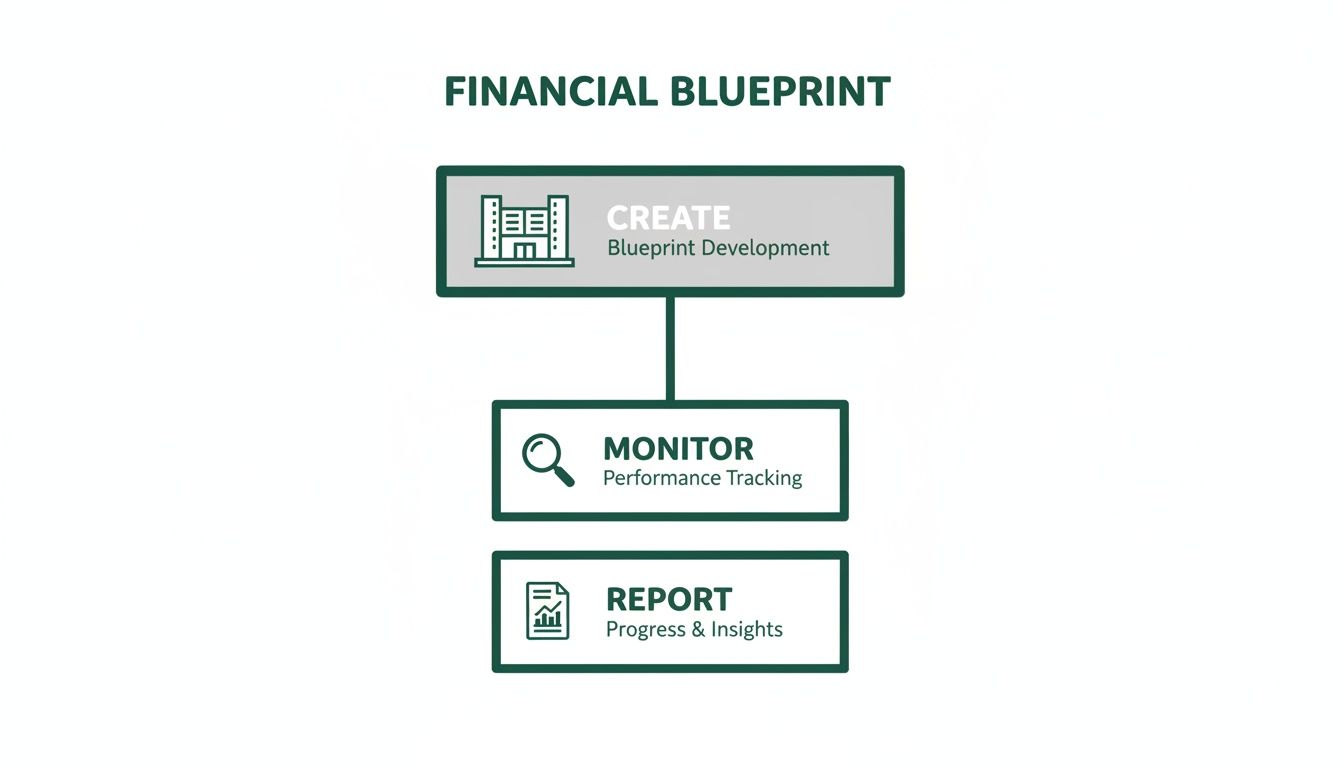
This process of creating, tracking, and reporting is a continuous cycle that turns data into powerful insights.
Here's a quick look at these essential reports and what they tell you.
Essential Financial Reports and Their Purpose
| Report Name | What It Shows | Key Question It Answers |
|---|---|---|
| Statement of Financial Position | A snapshot of assets, liabilities, and net assets on a specific date. | What is our overall financial health at this moment? |
| Statement of Activities | Revenue, expenses, and changes in net assets over a period of time. | Did we earn more than we spent over the last month/quarter/year? |
| Cash Flow Statement | The movement of cash from operating, investing, and financing activities. | Do we have enough cash to cover our immediate obligations? |
| Budget vs. Actual Report | A comparison of planned income and expenses against actual results. | Are we on track with our financial plan? Where are we over or under? |
Understanding these reports is the first step; explaining them clearly is the next.
Making the Story Make Sense to Everyone
A great treasurer knows how to present this financial story so that anyone can understand it, not just the accountants in the room. Your board of directors likely has people from all sorts of backgrounds, so you can't get bogged down in technical jargon.
Instead of just showing a spreadsheet, use charts to highlight trends. Summarize the key takeaways in plain language. Most importantly, always tie the numbers back to the mission.
For instance, don't just report a $10,000 expense for "program supplies." Explain that this $10,000 provided after-school tutoring materials for 50 children in your community. That simple shift turns a dry line item into a powerful story of impact.
The real goal of your financial reports isn’t to prove you’re a good bookkeeper. It's to build trust and give your leadership actionable insights to drive the mission forward.
This kind of transparency is the foundation of trust with your donors and supporters. It shows them their contributions are being managed wisely and are making a real difference. In fact, organizations that provide regular, clear reports tend to have 35% fewer audit findings, which shows just how much good reporting strengthens governance. For more on this, you can explore detailed guides on nonprofit treasurer responsibilities from industry leaders.
Taking the Headache Out of Storytelling
Let's be honest: manually pulling together these reports, especially for a church with multiple restricted funds, can be a massive headache and an open invitation for errors. This is where accounting software designed specifically for nonprofits and churches becomes a treasurer’s best friend.
For churches juggling designated funds for missions, building projects, or youth groups, a tool like Grain Ledger is built to handle this complexity right out of the box. It automates the creation of these essential fund-based reports, making sure they’re always accurate.
This frees you from being buried in spreadsheets. Instead, you can focus on the truly valuable part of your role: interpreting the numbers and sharing the incredible story they tell.
Navigating Compliance and Preparing for Audits
Beyond managing the day-to-day books, a treasurer steps into the critical role of the organization's frontline guardian against legal and regulatory risks. It's a complex world of requirements, and ignoring them can lead to serious trouble. Think of compliance not as a box to be checked, but as a core part of maintaining public trust and making sure your organization is around for the long haul.
This means keeping a close eye on deadlines and details. The treasurer ensures the annual IRS Form 990 is filed accurately and on time, that payroll taxes are handled correctly, and that the organization complies with all state-specific registration and charitable solicitation laws. A slip-up in any of these areas can bring on heavy financial penalties, put the nonprofit's tax-exempt status at risk, and do lasting damage to its reputation.
Staying Audit-Ready All Year Long
For many, the annual audit feels like a dreaded final exam. But a savvy treasurer knows the secret: turn it into a smooth, year-round process instead of a last-minute fire drill. The goal is to be "audit-ready" at all times.
This really comes down to maintaining clean, organized financial records from January 1st to December 31st. It's all part of the treasurer's fundamental fiduciary responsibility—a duty to act in the organization's best financial and legal interests. When the external auditors arrive, the treasurer is their main point of contact, providing documents, answering questions, and making sure the entire process runs efficiently.
An audit isn't a test you cram for; it's the final exam of a year's worth of diligent financial management. A clean audit is one of the most powerful endorsements of a treasurer’s effectiveness and an organization's integrity.
Once the audit is over, the work isn't done. The treasurer presents the findings to the board and takes the lead on implementing any recommendations. This feedback is pure gold, helping to strengthen internal controls and fine-tune financial processes for the future. Central to this is the concept of an audit trail, which you can explore in our guide on the definition of an audit trail.
The High Cost of Non-Compliance
Staying on the right side of the law and preparing for audits aren't just administrative tasks—they are essential for protecting the organization and upholding the trust of its donors. The stakes are incredibly high. Between 2018 and 2023, non-compliance fines hit a staggering $5.2 billion across U.S. nonprofits.
In 2022 alone, 15% of small nonprofits faced audits triggered by simple filing errors. The good news? Organizations with proactive treasurers saw zero penalties, proving just how valuable this role truly is. You can see more about these findings at TreasuryXL.
This is where a solid accounting system becomes a treasurer's best friend. For churches and nonprofits, a tool like Grain Ledger is designed specifically for these challenges. It simplifies record-keeping, automatically keeps restricted funds separate, and builds a clear, traceable financial history. This kind of built-in support makes daily tasks easier and transforms audit prep from a massive annual project into a simple confirmation of good stewardship.
Safeguarding Assets with Strong Internal Controls
A proactive treasurer does more than just report on the numbers; they actively build a fortress around the organization's financial resources. The cornerstone of this fortress is a robust system of internal controls.
Think of these as the specific policies and procedures you put in place to protect assets from fraud, prevent waste, and catch honest mistakes before they spiral into major problems. This isn't just about bureaucracy—it's about honoring the trust placed in you by donors and the community you serve.
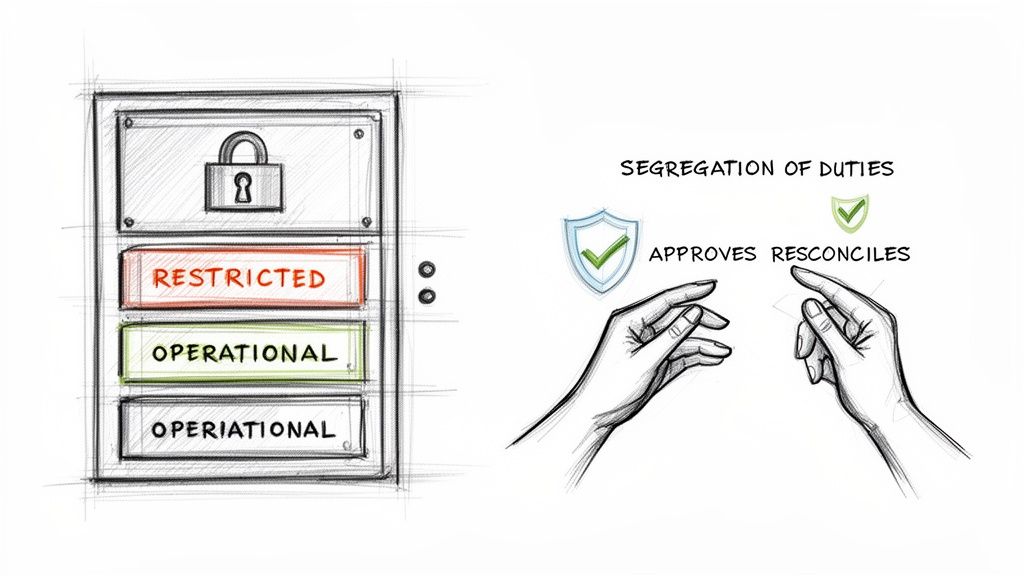
The Bedrock Principle: Segregation of Duties
If you take away only one concept from this section, let it be the segregation of duties. It’s the single most effective way to protect your organization's money.
The idea is simple: no one person should have control over every part of a financial transaction from beginning to end. You want to create a system of natural checks and balances where different people handle different steps.
For example, the staff member who approves a bill for payment should not be the same person who signs the check. The volunteer who opens the mail and counts the offering should be different from the person who makes the bank deposit or reconciles the account later. This separation makes it incredibly difficult for fraud to happen without collusion, which is a much higher bar for someone to clear.
"Implementing a clear separation of duties is the first and most effective defense against financial mismanagement. It protects both the organization’s assets and the individuals who handle them by removing the opportunity for error or misconduct to go unnoticed."
Even in a small church with just a few volunteers, you can make this work. A volunteer can count and log donations, the treasurer can prepare the deposit slip, and a board member can review the bank reconciliation each month.
Building Your Financial Firewall
Protecting your organization's assets requires a multi-layered approach. Here's a practical checklist of essential internal controls every church treasurer should champion. These practices, when followed consistently, create a secure financial environment.
Key Internal Controls Checklist for Church Treasurers
| Control Area | Best Practice Example | Why It's Important |
|---|---|---|
| Cash Handling | Use two unrelated people to count all cash collections, who then sign a count sheet. | Creates accountability and significantly reduces the risk of theft or miscounting. |
| Check Signing | Require two authorized signatures on all checks over a set amount (e.g., $500). | Ensures a second set of eyes reviews significant expenditures before money leaves the account. |
| Bank Reconciliation | A person who does not handle deposits or payments reconciles all bank statements monthly. | Quickly uncovers unauthorized transactions, bank errors, or discrepancies between your books and the bank's records. |
| Expense Approval | Require receipts for all reimbursements and formal approval from a supervisor before payment. | Prevents unauthorized spending and ensures all expenses are legitimate and documented. |
| Financial Policies | Maintain a board-approved manual outlining all financial procedures. | Creates clear, consistent rules for everyone to follow, reducing confusion and the risk of ad-hoc decisions. |
| Access Control | Limit access to accounting software, check stock, and online banking to only essential personnel. | Reduces the opportunity for unauthorized individuals to access or alter financial records and assets. |
Putting these controls into practice is a team effort. The finance committee, often led by the treasurer, is crucial for developing and updating these policies. You can learn more about their vital role by reading about church finance committee responsibilities.
The Special Case of Restricted Funds
One of the most critical duties a treasurer handles is the management of restricted funds. These are donations given for a very specific purpose—think of a building campaign, a specific mission trip, or a scholarship fund.
Using these funds for anything other than the donor's specified intent is a major breach of trust and can even land the organization in legal hot water. The challenge is keeping these "pots of money" separate from the general operating budget.
Trying to track this with spreadsheets is a recipe for disaster. It’s incredibly easy for human error to creep in, leading to funds getting mixed up. This is where accounting software designed for nonprofits becomes a non-negotiable tool.
For churches and nonprofits, a solution like Grain Ledger is built on a fund accounting framework from the ground up. This means the system is designed to automatically enforce these restrictions. When a designated donation is recorded, it's locked to its specific fund. This makes it impossible to accidentally use building fund money to pay the electric bill, giving the treasurer perfect clarity and protecting the organization's integrity.
From Record-Keeper to Strategic Financial Leader
The old-school image of a nonprofit treasurer is someone hunched over a ledger, just keeping the books. But in reality, the role has grown into something far more vital. The best treasurers today are strategic partners, actively helping to guide the organization's financial future, not just documenting its past.
This isn't just a change in mindset; it's a shift powered by technology. When the tedious, manual grind of transaction entry, bank reconciliations, and fund tracking is handled automatically, the treasurer is liberated. Instead of drowning in spreadsheets, they can finally dedicate their time to high-impact work—like financial forecasting, risk analysis, and strategic planning with the board.
The Technology That Makes It Possible
Modern, purpose-built software is the engine behind this change. These tools are designed from the ground up to understand the unique world of nonprofit finance, automating the very tasks that used to eat up a treasurer's entire day.
What does this technology actually do?
- True Fund Accounting: It automatically keeps restricted and unrestricted funds separate, ensuring you stay compliant without messy, manual workarounds.
- Automated Reporting: You can generate critical financial reports, like the Statement of Activities and Statement of Financial Position, with just a click—no more late nights wrestling with formulas.
- Integrated Systems: These platforms connect directly to your giving platforms and bank accounts, which means no more hours spent on manual data entry or painful reconciliations.
The point of technology isn't just to make the treasurer's job easier. It's to make their contributions more valuable. Automation takes care of the what, freeing up the treasurer to focus on the so what—the story the numbers are telling and what it means for the future.
Executing Your Duties with Excellence
We've walked through all the core duties of a nonprofit treasurer in this guide, from budgeting and reporting to compliance and internal controls. A modern accounting platform is the key to performing every single one of those duties with more precision and less effort. For churches, a solution like Grain Ledger is built to connect these powerful features directly to a treasurer's day-to-day responsibilities.
By embracing this shift, the treasurer stops being a historian and becomes a navigator. They evolve into a confident financial leader who uses data to actively drive the mission forward, equipped with both the information and the time to make a real strategic difference. To make this leap, it often helps to get expert guidance on how strategic nonprofit IT support can provide the right foundation for your mission.
A Few Common Questions Answered
If you’re stepping into the treasurer role, or even if you’ve been at it for a while, you probably have some practical questions. Let's tackle a few of the most common ones we hear from financial stewards.
How Much Time Does This Role Actually Take?
This is the big one, isn't it? The honest answer is: it depends. The time commitment can swing pretty wildly based on your organization's size, the complexity of its finances, and the tools you have at your disposal.
A good ballpark figure for a volunteer treasurer is 5-10 hours per month. That covers the basics like reconciling bank accounts, pulling together financial reports, and showing up for meetings.
That said, expect that number to jump during busy seasons like budget planning or the annual audit. This is where having the right tools makes a world of difference. Modern accounting software can be a game-changer. For a church, something built specifically for them, like Grain Ledger, automates the tedious stuff—think transaction coding and fund tracking. That alone can cut your manual data entry time by up to 50%, freeing you up to focus on the big picture instead of getting bogged down in the details.
If You Had to Pick One, What Is the Treasurer’s Most Important Duty?
While every task is important, they all stem from one core principle: the fiduciary duty of care. This is your fundamental obligation to manage the organization's money with the same prudence and diligence that any reasonable person would.
Think of it as the bedrock for everything else you do. It's why you create a realistic budget. It’s why you sweat the details on legal compliance and demand accurate financial reports. It’s the driving force behind setting up strong internal controls to protect every dollar.
The duty of care is more than a legal term; it's a promise to be watchful. It means you’re the one asking the tough questions, double-checking the numbers, and always, always acting in the best financial interest of the mission you serve.
Can We Just Use Standard Business Accounting Software?
You can, but it's like trying to fit a square peg in a round hole. While it's technically possible to make general business software work with a bunch of clunky workarounds, it simply wasn't built for the way nonprofits—and especially churches with restricted funds—operate.
Too often, treasurers end up relying on a patchwork of complicated, error-prone spreadsheets just to keep track of designated giving. That's not just inefficient; it's a huge risk.
This is where true fund accounting software is a lifesaver. A system like Grain Ledger is designed from the ground up for how a church actually works. Its entire structure is built around funds, ensuring that every donation and every expense is handled correctly right from the start. This brings the clarity, accuracy, and accountability you need to be a good steward and maintain trust.
Ready to give your treasurer the right tools and build real confidence in your church's finances? Grain Ledger offers true fund accounting designed to simplify stewardship, automate reporting, and ensure every dollar is directed toward your mission. Schedule a Demo today and be the first to see accounting software that finally gets church finance.
Ready to simplify your church finances?
Start free with church fund accounting, or watch a product demo first.