A Practical Guide to Fundraising for Churches
Master fundraising for churches with our guide on planning campaigns, engaging donors, and managing funds to maximize your ministry's impact.
Successful fundraising doesn't just happen. It's not about passing a plate and hoping for the best; it’s born from a clear, shared vision that connects the act of giving directly to the heart of your church's mission. When you get this right, you’re not just asking for money—you're inviting your congregation to become partners in ministry.
Building a Foundation for Sustainable Giving
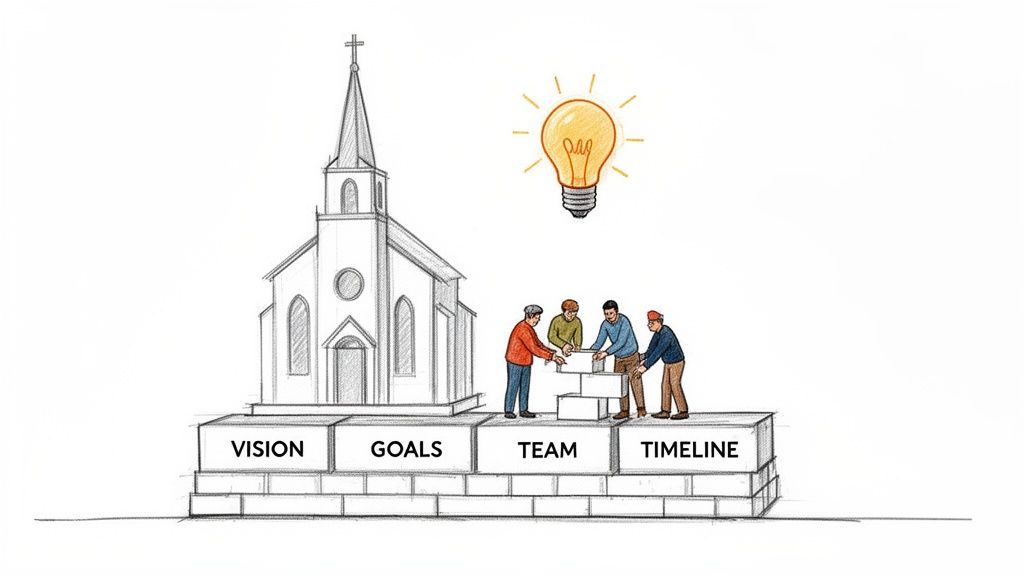
Before you can inspire generosity, everyone needs to know what you're working toward. A scattered, reactive approach—always fundraising to cover the latest budget shortfall—quickly leads to donor fatigue and lackluster results. The key is to build a proactive strategy grounded in purpose.
This foundational work ensures every campaign, event, and appeal tells a small part of a much larger, cohesive story. When your congregation understands the "why" behind the need, their desire to get involved grows exponentially. Giving is transformed from an obligation into a meaningful act of worship.
Define Your Vision and Set Clear Goals
Start with the most important question: "What will these funds help our church accomplish for God's kingdom?" The answer has to be more than "keeping the lights on." It needs to be a compelling vision people can rally behind.
Maybe you're raising money for a new youth center, a local missions outreach, or upgrading the sound system to finally fix that awful feedback loop during worship. Whatever it is, get specific.
Once the vision is clear, attach real numbers to it. Instead of a vague goal like "raise money for the new building," get concrete: "Raise $50,000 by December for the initial architectural plans for our new children's ministry wing." This clarity gives donors a tangible target they can help you hit.
Exploring a variety of proven best ways to raise money for charity can also help build a robust and diverse financial strategy.
A well-defined goal isn't just a finish line; it's a powerful communication tool. It lets you tell a story of progress, celebrate milestones, and show people exactly how their contributions are making a real difference.
If the goal feels huge, break it down. Smaller, manageable phases make the target feel much more achievable and create natural opportunities for positive updates that keep the momentum going.
Assemble a Dedicated Fundraising Team
Fundraising should never be a one-person show. A small, dedicated team brings a mix of skills, shared ownership, and crucial energy to the effort. This group doesn't have to be large, but it absolutely has to be passionate and organized.
Your team should have people with different strengths. Look for natural connectors, detail-oriented planners, and creative storytellers. Assigning specific roles from the start ensures nothing falls through the cracks.
Consider these key roles for your team:
- The Chairperson: This person leads the team, keeps everyone focused on the finish line, and is the main point of contact for church leadership.
- The Communicator: They’re in charge of crafting the campaign’s message—writing announcements, managing social media, and telling compelling stories of impact.
- The Organizer: This is your logistics guru who handles event planning, coordinates volunteers, and keeps the campaign calendar on track.
- The Treasurer Liaison: This person works hand-in-hand with the church treasurer to ensure every dollar is tracked, provide financial updates, and maintain total transparency.
Create a Realistic Timeline and Calendar
Finally, a timeline gives your plan the structure it needs to succeed. It's what prevents those last-minute scrambles and ensures your fundraising activities are thoughtfully spaced out, so you don't overwhelm the congregation.
Map out your key dates: the campaign launch, any major events, communication deadlines, and milestones you want to celebrate. A smart timeline also respects the natural rhythm of your church calendar, steering clear of major holidays or other big events. This kind of strategic planning shows respect for your members' time and resources, helping you build a culture of generosity that will last for years to come.
You’ve got a clear vision and a team ready to go. Now comes the fun part: figuring out the best way to raise the money. The thing is, not every fundraising idea you see online will work for your church. The real secret is matching the campaign to your congregation’s personality, your resources, and the specific goal you're aiming for.
Think about it this way: a small, tight-knit church might raise a surprising amount of money—and build incredible community—with a simple potluck dinner or bake sale. But a larger church with a younger crowd could see huge success with a peer-to-peer digital campaign for a summer mission trip. It all starts with knowing your people.
Matching the Campaign to Your Goal
The size and timeline of your goal should be the biggest factor in your decision. Are you trying to fund a massive, long-term project, or do you have a smaller, more immediate need? The answer will point you in very different directions.
Capital Campaigns These are the fundraising marathons. You run a capital campaign when you’re tackling something huge and transformational, like a new building, major renovations, or paying off the mortgage. They're a big undertaking, often spanning a few years, but they have the power to rally your entire congregation around a goal that will leave a lasting legacy.
Project-Specific Drives When the need is more immediate—say, funding the youth group's mission trip, upgrading the sound system, or supporting a local food pantry—a focused, short-term drive is your best bet. These campaigns have a clear beginning and end, which creates a natural sense of urgency that encourages people to give right away.
For example, Cranbrook Church in Devon did something really creative. They organized an 18-day, 256-mile walking trek to raise money for a new worship space. It was a tangible, event-based approach that perfectly matched their specific goal and got the whole community excited.
Finding the Right Mix: Traditional Events vs. Digital Fundraising
Churches today have more fundraising tools available than ever before, from classic community events to slick digital platforms. The most successful strategies I’ve seen almost always blend the old with the new.
Before we dive into the specifics, let's look at a few popular campaign types side-by-side to see how they stack up.
Comparing Church Fundraising Campaign Types
This table breaks down some common approaches to help you see what might be the best fit for your church's needs and resources.
| Campaign Type | Best For | Key Benefit | Considerations |
|---|---|---|---|
| Capital Campaign | Major, multi-year projects (e.g., new building, debt retirement). | Unites the congregation around a singular, legacy-defining vision. | Requires extensive planning, a dedicated team, and a long timeline. |
| Pledge Drive | Annual budget needs and ongoing operational expenses. | Creates a stable, predictable stream of income for the year. | Can feel routine; needs fresh messaging to inspire generosity. |
| Event-Based | Community building and funding specific, tangible items (e.g., playground). | High engagement and fellowship; brings people together for a cause. | Logistically intensive; requires significant volunteer manpower. |
| Peer-to-Peer | Mission trips, youth camps, or cause-based initiatives. | Expands your donor base by leveraging personal networks. | Success depends on empowering and equipping your fundraisers. |
| Text-to-Give | In-service appeals, special offerings, or disaster relief. | Incredibly fast and convenient; captures in-the-moment generosity. | Best for smaller, impulse donations. Requires setup and promotion. |
Each of these has its place. The key is understanding their strengths and weaknesses so you can build a balanced, year-round giving strategy.
The Power of In-Person Connection
Traditional, event-based fundraisers are fantastic for building community. There's just something special about getting people together. Think about things like:
- Church Dinners or BBQs: These events are all about fellowship and provide a relaxed, low-pressure setting for people to contribute.
- Concerts or Talent Shows: What better way to raise money than by showcasing the incredible gifts right within your congregation?
- Silent Auctions: Get members and local businesses to donate items or services. It creates a lot of buzz and a little friendly competition.
The magic of these events is that they tie giving to a shared, memorable experience. The downside? They take a lot of work and a small army of volunteers to pull off.
Embracing the Digital Shift
On the other hand, digital campaigns offer unparalleled convenience and reach. While giving to religion hit a massive $146.54 billion recently, its overall share of charitable giving has been slowly declining. But here's the hopeful part: churches that fully embrace online giving options have seen a 32% increase in overall donations. It's clear that technology is no longer optional.
A balanced fundraising strategy meets people where they are. It combines the high-touch engagement of in-person events with the high-tech convenience of digital giving to maximize participation.
Here are a few digital tools that are now essential:
- Online Giving Portals: A simple, secure giving page on your church website is non-negotiable. It should be easy to find and even easier to use.
- Text-to-Give: Perfect for capturing spontaneous generosity during a service or at an event. People can give in seconds right from their phones.
- Peer-to-Peer Fundraising: This is a game-changer. Members create their own fundraising pages and share them with friends and family, dramatically expanding your reach beyond your four walls.
To make it even easier for people to give, it’s worth exploring the features of modern fundraising tools like QR code platforms. They can instantly bridge the gap between a physical announcement in the bulletin and a digital donation on a smartphone.
Ultimately, a hybrid approach is your best bet. Host that community fish fry, but put QR codes on every table that link directly to the playground fund. This kind of multi-faceted strategy ensures you connect with every type of giver in your church, building a sustainable culture of generosity for years to come.
Communicating Your Mission to Inspire Generosity
Let’s be honest: a clear goal and a great campaign idea are just the starting point. The real heart of successful church fundraising is how you talk about it. People give to a vision they can see and believe in, not just a line item on a budget. Your job is to connect their desire to be generous with the real-world impact they can make.
This means you’ve got to move beyond simple announcements in the bulletin. We need to tell a story that pulls people in, showing them—not just telling them—how their gift will change lives, strengthen our community, and push the mission of the church forward.
Crafting a Compelling Case for Support
Your "case for support" is really just the story behind why you're raising money. It’s the answer to the question every single person asks, even if it's just in their head: "So what? Why should I give to this?" A powerful story always focuses on the people who will be helped, not just the project that needs funding.
For example, instead of saying, "We need to raise $20,000 for new chairs," paint a picture. Talk about the growing families with young kids and the elderly members who need comfortable, safe seating to fully be a part of worship. You’re not raising money for chairs; you’re raising it for people.
Make sure your message is:
- Vision-focused: Always connect the immediate need back to the church's bigger mission. How does this project actually help us be who we say we are?
- Urgent (but not desperate): Create a sense of timeliness. Explain why this needs to happen now without sounding like you're panicking.
- Impact-driven: Use real stories and testimonials to show the tangible difference a donation will make. Let people see the outcome.
Tailoring Your Message for Different Groups
Not everyone in your congregation is in the same place. A first-time visitor needs a completely different conversation than a founding member, right? If you segment your communication, your appeal will hit home on a much deeper level.
Think about who you're talking to:
- Long-time Members: These folks are already invested. You can be more direct with them, focusing on their legacy and their continued commitment to the church’s future. A personal letter or a face-to-face chat over coffee often works wonders here.
- Newer Families: This group is often looking for a place to put down roots. Show them how the campaign will benefit their kids or create more ways for them to connect with others. Social media, short videos, and engaging emails are great tools to reach them.
- First-time Visitors: With this group, the goal is simply a warm introduction, not a hard ask. Your communication should clearly and simply state your church's mission and the good you're doing. Make it easy for them to learn more without feeling any pressure to give.
The most effective fundraising communication doesn't just broadcast a message; it starts a conversation. It meets people right where they are and invites them into a story that's bigger than themselves.
Understanding giving patterns can also really sharpen your strategy. Did you know the average church donation is around $210? And while nearly 44% of all gifts are under $100, those smaller donations only add up to about 8% of total giving. On the flip side, while only about 3% of gifts are over $1,000, they account for a whopping 27% of all funds raised. This just shows how important it is to build relationships with everyone, at every giving level.
The Art of the Follow-Up and Donor Stewardship
The fundraising campaign doesn't end when someone makes a donation—in fact, that's when the most important work begins. Donor stewardship is simply the ministry of thanking, informing, and appreciating the people who have given. It’s what turns a one-time gift into a long-term partnership.
A prompt, personal thank you is an absolute must. That generic email receipt is fine for tax records, but it does nothing to build a relationship. A handwritten note, a quick phone call from a pastor or volunteer, or even a short video message can make a donor feel truly seen and appreciated.
Beyond that first thank you, keep sharing the story. Send out regular updates on how the project is going. Show pictures of the new youth center being built. Share a testimony from someone who benefited from the missions trip. This closes the loop and proves that their gift is making the difference you promised it would. That kind of transparency builds incredible trust and makes people far more likely to give again. Part of that trust is showing them the numbers in a clear way, which is why accurate financial updates are so critical. For more on this, check out our guide on creating clear church financial reports.
Honoring Donor Intent with Fund Accounting
The moment donations start arriving, the real work of stewardship begins. It's one thing to inspire generosity; it's another entirely to manage those gifts with the integrity they deserve. This is where many churches hit a major hurdle: making absolutely sure every single dollar is used exactly as the donor intended.
This responsibility is about more than just depositing checks. It demands a specific financial discipline known as fund accounting. Unlike a typical business budget that treats all income as one big pot of money, fund accounting creates separate financial buckets for different purposes.
This distinction is the bedrock of donor trust and financial transparency.
Why Fund Accounting Is Non-Negotiable
Let’s get practical. Imagine a family gives a generous gift specifically for the youth mission trip. If that money lands in the general fund and accidentally gets spent on utility bills, you haven’t just made a bookkeeping error—you’ve broken a promise. This is the exact problem fund accounting solves.
It draws a clear, unbreakable line between different types of money:
- Unrestricted Funds: Think of these as your general tithes and offerings. They can be used for the day-to-day operational costs—salaries, mortgage payments, ministry supplies, you name it.
- Restricted Funds: These are donations earmarked for a specific purpose, like a building fund, a benevolence fund, or that missions project. This money is legally and ethically tied to that one purpose and can't be used for anything else.
Keeping these funds properly separated means your church can confidently report back to donors, showing them exactly how their specific contribution made a difference. This isn't just good practice; it's a powerful ministry tool.
The Tools for Transparent Tracking
Trying to manage designated funds manually with spreadsheets is a recipe for headaches and human error. As your church grows and your fundraising becomes more targeted, you need systems that can handle this complexity automatically. The right technology makes honoring donor intent simple and scalable.
We're seeing a clear trend in church giving: the rise of directed donations. In fact, giving where donors designate funds for specific needs grew to 31% from 27% in 2015. This tells us that modern givers want more control and transparency over where their money goes.
True financial stewardship isn't just about balancing the books; it's about honoring the trust placed in you by your congregation. Fund accounting provides the framework to do that with excellence and integrity.
To pull this off, you really need a two-part solution: a flexible online giving platform and a true fund-based accounting system. Your giving platform should let donors easily pick a fund when they give, and your accounting software has to be able to receive that information seamlessly.
This is where the entire donor communication process comes full circle.
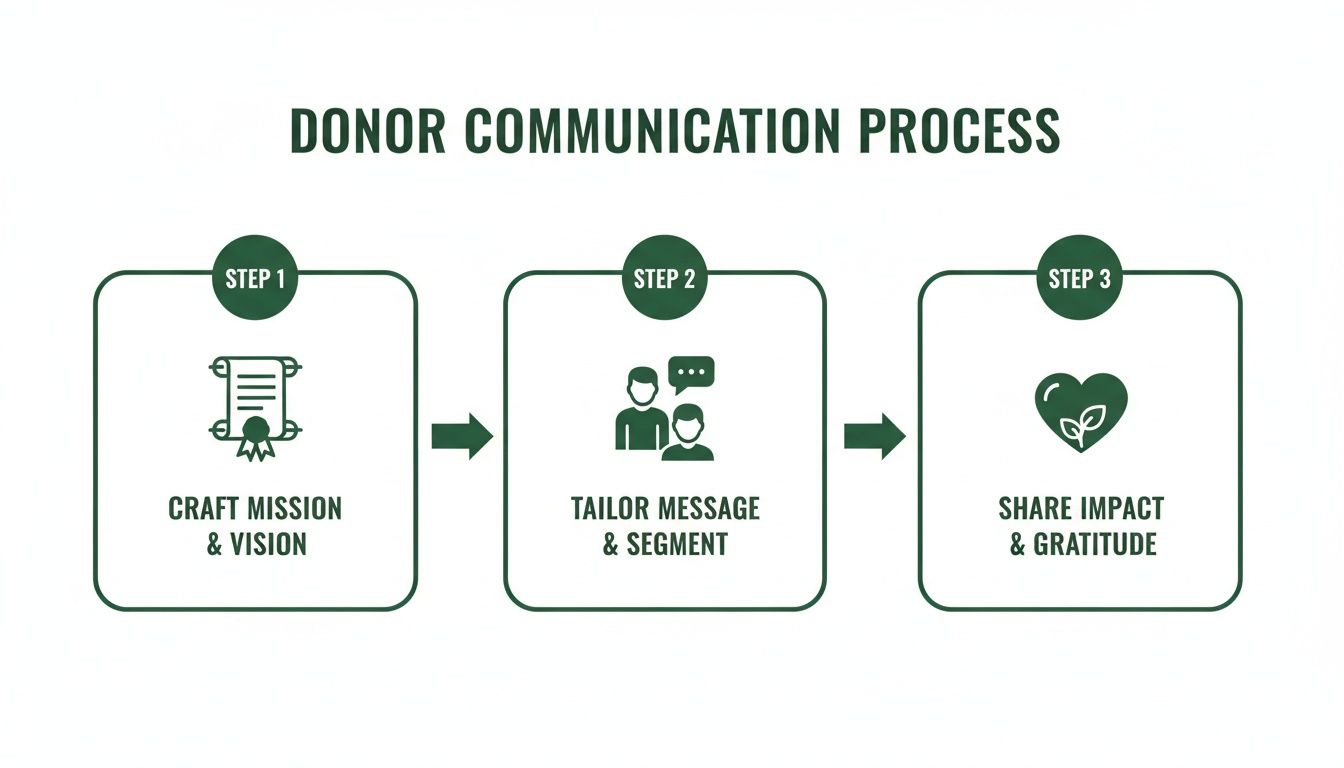
The journey from crafting a clear mission to sharing its impact is precisely what motivates donors to give to a specific fund in the first place.
Choosing an Accounting System Built for Churches
This is where most general business accounting tools fall short. They are designed for profit-and-loss, not for managing restricted funds. You can try to create workarounds, but they’re often clunky and prone to error, leaving your treasurer to manually patch everything together.
For seamless and accurate tracking, a purpose-built church accounting solution like Grain Ledger is a game-changer. Its native fund architecture automatically tracks every dollar from the moment it's donated to the moment it's spent, ensuring complete transparency for your board, congregation, and any auditors. Because Grain Ledger is built from the ground up for churches, it integrates directly with your giving platforms.
This means a designated gift for the "Building Fund" automatically flows into the correct "Building Fund" account without anyone touching it. You can instantly run a report showing every donation and every expense tied to that fund. This level of clarity simplifies financial oversight and makes reporting a breeze. You can learn more about the principles behind this in our guide on fund accounting for churches. A system like this removes the guesswork and ensures every gift is honored correctly, every time.
Driving Consistent Support with Recurring Giving
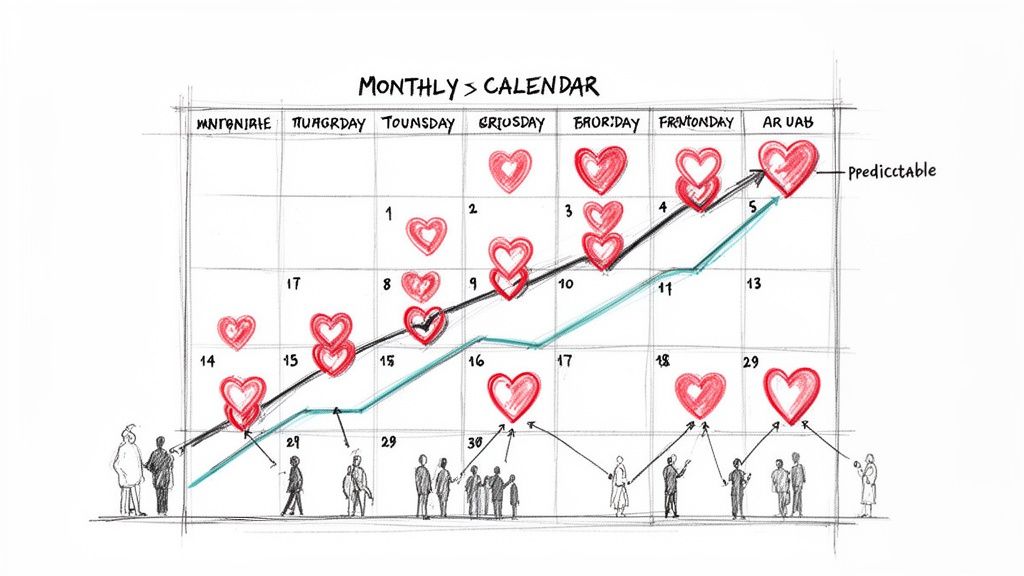
Most church leaders know the feeling of the financial rollercoaster. Generosity floods in around Easter and Christmas, but the summer months can bring a serious cash-flow drought. Trying to plan a ministry budget around this feast-or-famine cycle is a nightmare.
The best way to flatten those peaks and valleys is by building a strong foundation of predictable, automated donations. While you'll always have big seasonal campaigns, a healthy recurring giving program is what gives you financial stability and the confidence to plan for the entire year. It’s a strategic shift from relying on spontaneous generosity to building a sustainable culture of consistent support.
Lean Into Giving Seasons to Build Consistency
It's smart to understand the natural rhythms of giving. The end of the year is a powerhouse for church fundraising, with December alone often accounting for 14.34% of all annual giving. This is your prime opportunity to share your vision and make a clear ask for support.
But an even more important trend is the move toward automated giving. Recently, recurring giving volume shot up 11% year-over-year, which shows a definite preference for how people want to support their church. This shift provides the stable funding you need to break free from depending solely on those big seasonal pushes. You can read more about current church giving trends here.
A wise financial strategy uses both seasonal generosity and consistent stewardship. Don't just use the high-visibility year-end season for one-time gifts. Frame it as the perfect time for people to step into a deeper partnership through recurring giving.
This approach creates a powerful flywheel. You can channel the energy from a successful year-end campaign into growing your base of monthly givers, which sets your church up for a much more stable financial start to the new year.
Make Recurring Giving the Obvious Choice
Honestly, people tend to take the path of least resistance. If setting up a recurring gift is simple, obvious, and presented as the best way to give, they’re far more likely to do it. Your goal is to make automated giving the default, not the alternative.
Here are a few practical ways to do that:
- Tweak Your Tech: Your online giving page should put the recurring gift option front and center. Make it the first choice—even pre-selected, if possible—with simple instructions for setting up a monthly donation.
- Explain the "Why": Don't just ask them to give; tell them how it helps. Explain that consistent monthly gifts allow the church to budget responsibly and plan ministries without financial uncertainty. Frame it as a way for members to automate their faithfulness.
- Brand Your Program: Give your recurring giving program a name that connects it to stewardship, something like a "First Fruits" or "Legacy" program. This gives it a real identity and makes it something people can feel proud to join.
The easier you make it, the more people will jump on board. This is where your choice of giving platform is critical. A clunky, confusing system will kill your momentum. If you're looking for a user-friendly system, our guide on online giving platforms for churches is a great place to start.
Build a Culture of Engagement, Not Just Giving
Financial giving doesn't happen in a vacuum. It’s almost always a direct result of someone feeling connected to the church’s mission and community. People who feel like they belong are the ones who give consistently.
That means building a recurring giving program is less about technology and more about fostering genuine community. Get people involved in other ways first. Encourage them to volunteer, join a small group, or serve at an outreach event.
When your members are actively serving and building relationships, their financial partnership often follows naturally. They’re no longer just giving to a budget; they're investing in a community they love and a mission they believe in. This holistic approach is what turns sporadic donors into committed partners who fuel your ministry month after month.
Common Questions About Church Fundraising
Even the best-laid plans can hit a snag. When it comes to raising money for your church, questions are bound to pop up. Let's tackle some of the most common ones head-on so your team can move forward with confidence.
How Can We Raise Funds Without Causing Donor Fatigue?
This is a big one. Donor fatigue is a real issue, but it's usually a sign of poor communication, not just asking too often. People get tired of being asked for money when they don't feel connected to the mission or see the results of their giving.
Here's how to keep them engaged:
- Share compelling stories. Instead of just stats and figures, tell stories of real-life impact. Show your congregation exactly how their giving helped repair a local family's home or funded a missionary's vital work.
- Mix up your approach. Don't just make the same appeal from the pulpit every month. Get creative! A fun community event, a targeted campaign for a specific project, or a quiet stewardship initiative can keep your fundraising feeling fresh and dynamic.
- Celebrate every win. When you hit a milestone, make some noise about it! Celebrating progress—big or small—shows people their contributions are making a real difference and keeps the energy high.
The goal is to invite people into a partnership in ministry. When they feel like partners, giving becomes a joy, not a chore.
What Are the Legal and Tax Rules We Must Follow?
Getting the legal side of things right is non-negotiable. It protects your church’s integrity and, critically, its nonprofit status. While laws can differ slightly by location, some rules of the road are universal.
For starters, you absolutely must provide a contribution statement for any single donation of $250 or more. This is the official receipt a donor needs to claim a tax deduction. These statements should go out quickly and include specific wording about whether the donor received anything (like event tickets) in return for their gift.
Transparency isn't just a good practice—it's a legal requirement. Proper documentation protects everyone involved, ensuring all fundraising is handled with complete accountability.
Another huge piece of this is honoring donor intent. If someone gives to the "Building Fund," that money has to be used for the building. This is where a true fund accounting system is worth its weight in gold, giving you the tools to track every designated dollar and prove you're using it correctly.
How Do We Choose the Right Technology and Software?
The right tech should make things easier for everyone, from the first-time giver to your church treasurer. You're looking for a smooth, simple experience.
When you're evaluating an online giving platform, put yourself in a new visitor's shoes. Could they make a donation in less than a minute? Is it obvious how to set up a recurring gift? Simplicity is key.
When it comes to your accounting software, the single most important feature for a church is true fund accounting. Trying to make standard business software work for a church often leads to messy spreadsheets and frustrating workarounds. A system built for churches, like Grain Ledger, is designed to handle designated funds from the get-go. It connects directly to your giving platform, so when a gift comes in for the "Missions Fund," it automatically lands in the right place. This simple automation eliminates the risk of human error and provides the crystal-clear reporting you need to be a good steward.
Ready to manage your church’s finances with the clarity and integrity your congregation deserves? Grain Ledger offers true fund-based accounting built specifically for the needs of your ministry. Schedule a Demo to be the first to experience automated fund tracking, seamless integrations, and reporting that builds unshakable donor trust.
Ready to simplify your church finances?
Start free with church fund accounting, or watch a product demo first.