8 Core Responsibilities of Treasurer in a Non Profit Church for 2026
Explore the essential responsibilities of treasurer in a non profit church. Our guide covers fund accounting, budgeting, internal controls, and reporting.
Serving as a church treasurer is more than just managing a checkbook; it's a ministry of stewardship, transparency, and strategic leadership. The responsibilities of treasurer in a non profit, particularly within a church setting, have expanded significantly. Today, this vital role is critical for ensuring every dollar given is used as intended, protecting the congregation from financial risk, and empowering ministry leaders with the clarity needed to make impactful decisions. This role is not simply about bookkeeping; it is about building a foundation of trust and accountability that underpins the church's entire mission.
See Grain Ledger for your church
Fund accounting, giving integrations, and bank reconciliation in one platform. Free migration support for churches switching from QuickBooks or Aplos.
This comprehensive guide is designed as a modern playbook for church financial stewardship. We will break down the 8 fundamental duties that define a successful church treasurer, providing a practical, actionable checklist for both new volunteers and seasoned finance professionals. From mastering true fund-based accounting, a non-negotiable for handling designated gifts, to implementing robust internal controls that safeguard assets, these responsibilities form the bedrock of a financially healthy and mission-focused congregation.
Readers will gain specific insights into:
- Day-to-day financial operations like donation processing and cash flow management.
- High-level governance duties including budget creation, financial reporting, and compliance.
- Specialized church finance needs, such as managing restricted funds and preparing for audits.
Whether you are navigating the complexities for the first time or looking to refine your processes, this listicle offers a clear roadmap. We will explore how tools like Grain Ledger can streamline these tasks, allowing you to focus less on manual data entry and more on strategic financial leadership. Let’s dive into the core responsibilities that enable your church to operate with integrity and purpose.
1. Financial Record Keeping and Fund Accounting
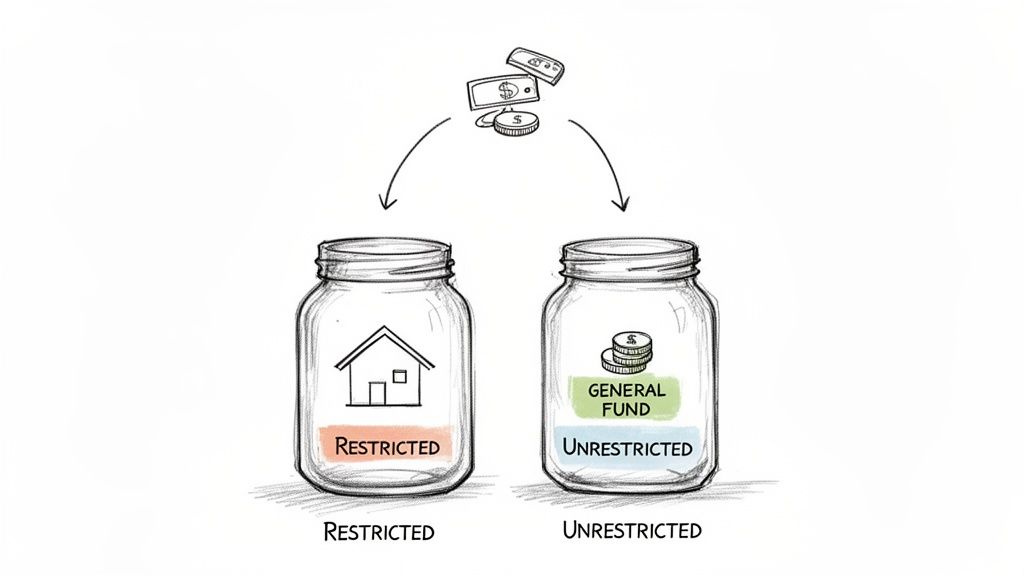
One of the most critical responsibilities of a treasurer in a non-profit, especially within a church context, is maintaining impeccable financial records through fund accounting. Unlike for-profit businesses that track overall profit and loss, churches must track resources by their designated purpose. This method organizes finances into separate "funds" to ensure every dollar is managed according to its intended use, whether unrestricted for general operations or restricted for a specific project.
This approach is non-negotiable for maintaining donor trust and legal compliance. It provides the financial clarity needed to answer a fundamental question: "Did we use the funds as they were intended?" This level of stewardship is a core part of a church treasurer's duties.
Why Fund Accounting is Essential
For example, if a church member donates $10,000 specifically for the youth mission trip, fund accounting ensures that money is isolated in a "Missions Fund." It cannot be used to pay the electricity bill or cover a staff salary, even if the general fund is running low. This separation prevents the unintentional misuse of designated gifts and provides a clear, transparent trail for every restricted dollar.
Practical Implementation Tips
To effectively manage fund accounting, a treasurer should:
- Use True Fund Accounting Software: Choose a system built with native fund architecture, not one that simulates funds with classes or tags. A true fund accounting solution like Grain Ledger ensures accuracy and prevents the commingling of funds, which is a common pitfall with generic business software.
- Establish a Clear Fund Structure: Create a fund chart of accounts that aligns with your church's ministries (e.g., General Fund, Building Fund, Missions Fund, Benevolence Fund). For a detailed guide, you can learn more about creating a chart of accounts for your church.
- Automate Donation Routing: Integrate your giving platform (like PushPay or Planning Center) with your accounting software. This automatically directs tithes to the General Fund and designated gifts to their respective restricted funds, minimizing manual entry and potential errors.
- Conduct Quarterly Fund Reviews: Regularly review fund balances and assignments with ministry leaders. This ensures that the funds still reflect the church's priorities and that spending aligns with designated purposes. This proactive step is a key part of the modern responsibilities of a treasurer in a non-profit.
2. Budget Development and Monitoring
Beyond tracking past transactions, a core responsibility of a treasurer in a non-profit is to look forward by creating and overseeing the annual budget. This financial roadmap is essential for strategic planning, ensuring the church has the resources to fulfill its mission. Budgeting in a church context involves more than just projecting income and expenses; it requires developing separate budgets for each fund to align spending with designated purposes.
This process transforms finances from a reactive task into a proactive tool for ministry planning. It allows leadership to make informed decisions, allocate resources effectively, and maintain financial stability throughout the year. A well-managed budget is a testament to good stewardship and provides the board with the confidence that the church's financial health is being carefully managed.
Why Budgeting by Fund is Essential
Effective budgeting provides a framework for accountability. For instance, a church might budget $15,000 for its Youth Ministry Fund. If halfway through the year, spending is already at $12,000, the treasurer can alert the youth pastor. This early warning allows them to review priorities and adjust plans to stay within the budget, preventing a year-end deficit.
Similarly, if the Building Fund receives an unexpected large estate gift, the budget provides a mechanism to thoughtfully reallocate those new resources toward capital improvements, rather than spending them without a strategic plan.
Practical Implementation Tips
To effectively develop and monitor a church budget, a treasurer should:
- Create Ministry-Friendly Templates: Develop budget templates organized by fund that are simple for non-financial staff and ministry leaders to complete. This encourages ownership and provides more accurate input from those on the front lines.
- Build in a Contingency: Incorporate a contingency line item in the General Fund budget, typically 5-10% of total expenses, to cover unexpected costs without derailing ministry plans.
- Review Budget vs. Actuals Monthly: Don't wait for a crisis. Regularly compare actual spending to the budget for each fund and report significant variances to leadership immediately. This is a key part of the modern responsibilities of a treasurer in a non-profit.
- Schedule Pre-Budget Meetings: Before drafting the budget, meet with ministry leaders to understand their vision, goals, and needs for the upcoming year. This collaborative approach builds buy-in and results in a more realistic financial plan.
- Leverage Historical Data: Use past spending and giving trends to inform realistic projections. A quality fund accounting system like Grain Ledger makes it easy to pull detailed historical reports by fund to guide this process. To see this in action, you can explore some nonprofit budget examples on grainledger.com.
3. Donation Processing and Reconciliation
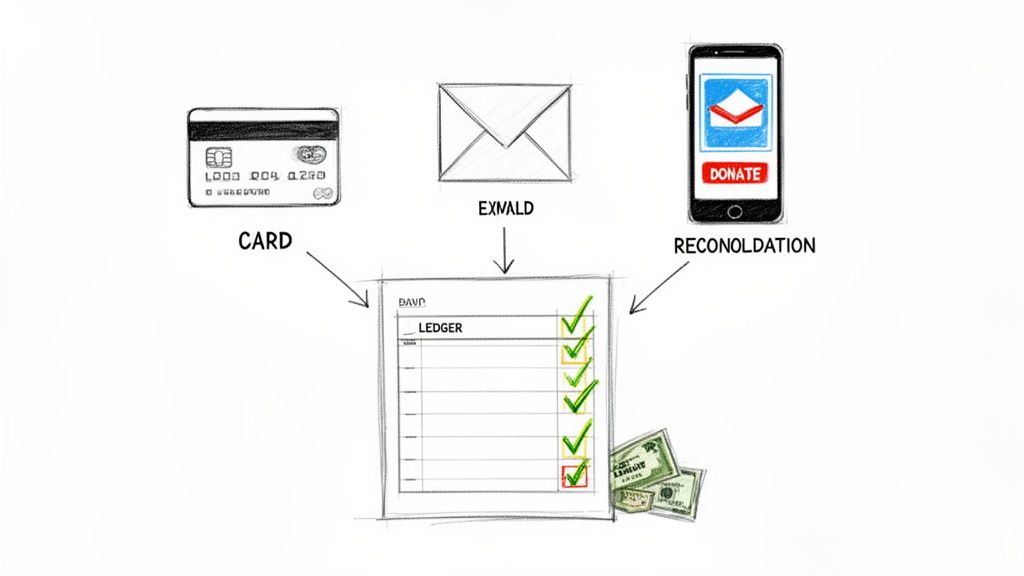
A core operational duty for a non-profit treasurer is overseeing the entire donation lifecycle, from the moment a gift is given to its final reconciliation in the accounting system. This involves processing donations from multiple channels (online, text-to-give, checks), ensuring each gift is accurately recorded to the correct fund, and meticulously matching all deposits to bank and accounting records.
This process is the bedrock of financial integrity. It confirms that every dollar contributed by a donor has been received, properly categorized, and accounted for, preventing discrepancies and building a foundation of trust. Accurate reconciliation is a critical component of the responsibilities of a treasurer in a non-profit, safeguarding the church's assets and honoring donor intent.
Why Accurate Reconciliation is Essential
Imagine a donor gives $500 online and designates it for the "Building Fund." An automated system should immediately route this donation to the correct restricted fund. The treasurer's job is to verify that the $500 reported by the giving platform (like PushPay or Stripe) matches the deposit in the church's bank account and is correctly reflected in the Building Fund within the accounting software. Without this triple-check, designated funds could easily be misallocated to the general operating budget, breaking trust and creating compliance issues.
Practical Implementation Tips
To streamline donation processing and reconciliation, a treasurer should:
- Automate Integrations: Connect your giving platforms and bank accounts (via Plaid) directly to your accounting software. A true fund accounting system like Grain Ledger offers these native integrations to drastically reduce manual entry and the risk of human error.
- Establish a Frequent Reconciliation Schedule: Do not wait until the end of the month. Implement a daily or weekly reconciliation process to catch discrepancies early, when they are much easier to resolve.
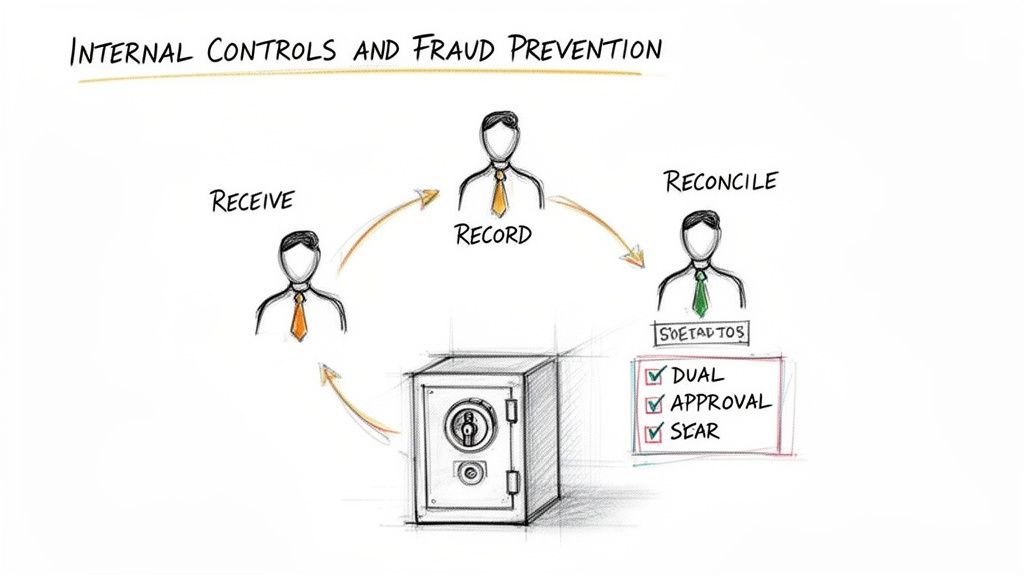
- Implement Segregation of Duties: To enhance internal controls, different individuals should be responsible for receiving, recording, and reconciling donations. This separation prevents any single person from having end-to-end control over the funds.
- Create Clear Protocols for Designated Gifts: Document how specific types of designated gifts should be categorized. This ensures consistency, especially when multiple people are involved in handling donations.
4. Cash Flow Management and Liquidity Planning
Beyond just balancing the books, one of the most proactive responsibilities of a treasurer in a non-profit is managing cash flow and planning for liquidity. This means ensuring the church has enough cash on hand to meet its obligations-like payroll, mortgage, and utility bills-while also making smart decisions about idle funds. It involves forecasting financial needs and understanding the cyclical nature of giving.
Effective cash management is the lifeblood of ministry operations. A lack of liquidity can halt essential programs, even if the church has significant assets tied up in restricted funds. The treasurer’s role is to provide the financial foresight needed to navigate both lean and abundant seasons, ensuring stability and operational continuity.
Why Cash Flow Management is Essential
For example, a church treasurer knows that giving typically spikes by 30-40% around Christmas and Easter but dips significantly in June and July. By forecasting this pattern, they can plan to pay for a large building improvement project in January, when cash reserves are highest, rather than in August when the general fund is strained. This strategic timing prevents cash shortfalls and avoids the need to dip into emergency reserves.
Similarly, if the Building Fund holds $80,000 restricted for a new roof but the General Fund is down to just $5,000, the treasurer must clearly communicate that the roof money cannot be used to cover payroll. This clarity prevents the illegal commingling of funds and maintains financial integrity.
Practical Implementation Tips
To effectively manage cash flow and liquidity, a treasurer should:
- Create a Cash Calendar: Develop a 12-month calendar that maps out when major expenses are due (payroll cycles, insurance premiums, mortgage payments) against anticipated giving patterns. This visual tool helps identify potential cash-tight months well in advance.
- Establish Reserve Targets: Work with the finance committee to set minimum reserve targets for each fund, typically equivalent to 1-3 months of operating expenses. This creates a financial safety net and a clear goal for savings.
- Track Giving History: Analyze at least 12-24 months of giving data to identify seasonal trends. This historical insight is crucial for building accurate cash flow projections and is a key part of the modern responsibilities of a treasurer in a non-profit.
- Use Fund-Level Cash Flow Reports: A true fund accounting system like Grain Ledger can generate cash flow reports for each individual fund, not just the organization as a whole. This is critical for understanding the liquidity of both restricted and unrestricted funds.
- Review Cash Position Weekly: Instead of waiting for a monthly report, a quick weekly review of the cash position can help you spot and address potential problems before they become crises.
5. Internal Controls and Fraud Prevention
A core part of the responsibilities of a treasurer in a non-profit is to safeguard the organization's assets through robust internal controls. These are the policies and procedures put in place to prevent theft, minimize errors, and ensure financial integrity. By establishing a system of checks and balances, the treasurer builds a framework of accountability that protects the church's resources and reputation.
Effective internal controls are not about mistrust; they are about wise stewardship. They ensure that no single individual has complete control over financial transactions, which drastically reduces the opportunity for fraud or significant mistakes. This system is crucial for maintaining the trust of both the congregation and regulatory bodies.
Why Internal Controls are Essential
Consider a common scenario: one dedicated volunteer handles everything from counting the weekly offering and depositing it at the bank to recording it in the accounting software. While this person may be completely trustworthy, the system itself is vulnerable. A strong internal control, known as segregation of duties, would separate these tasks. For example, one team counts and prepares the deposit, another person takes it to the bank, and the treasurer or bookkeeper records the transaction based on the count slips, reconciling it with the bank statement. This simple separation makes it nearly impossible for one person to misdirect funds without being discovered.
Practical Implementation Tips
To establish and maintain effective internal controls, a treasurer should:
- Implement Segregation of Duties: Ensure different people are responsible for authorizing transactions, recording them, and handling the related assets. For instance, the person who approves an expense should not be the one who signs the check.
- Require Dual Approvals: Mandate two signatures on checks above a certain threshold (e.g., $500). This ensures that significant expenditures are reviewed and approved by at least two leaders, such as the treasurer and a pastor or board chair.
- Document Everything: Create a formal financial policies and procedures manual. This document should clearly outline all controls, including cash handling procedures, expense reimbursement rules, and approval workflows.
- Leverage Technology for Audit Trails: Use a true fund accounting software like Grain Ledger that has built-in audit trails. This feature automatically tracks every transaction, including who entered it and when, creating an unalterable record for review.
- Conduct Independent Reconciliations: Have a board member or finance committee member who is not involved in day-to-day bookkeeping review and sign off on the monthly bank reconciliations. This independent oversight is a powerful deterrent to fraudulent activity.
6. Financial Reporting and Transparency
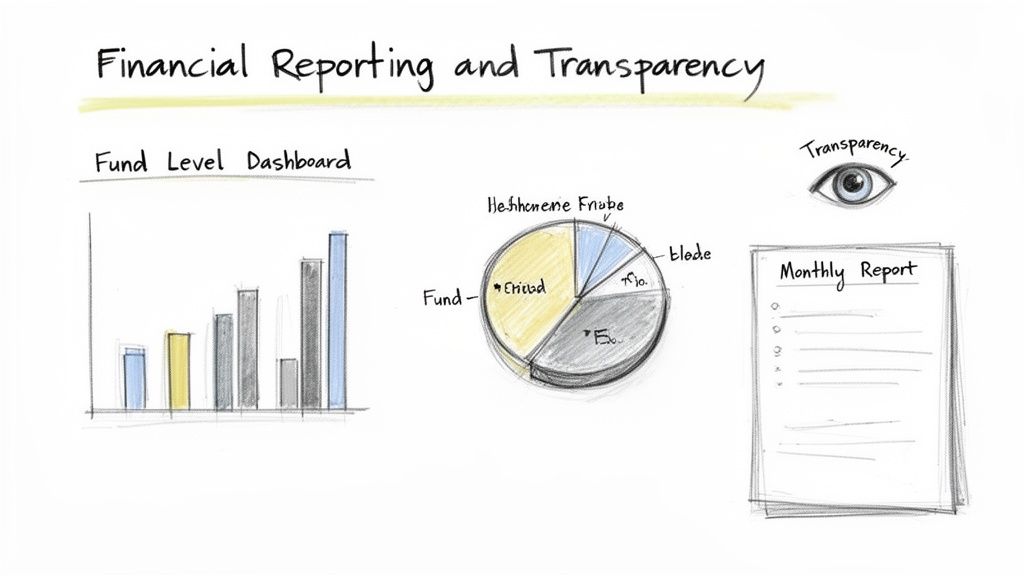
A core responsibility of a treasurer in a non-profit is to translate raw financial data into clear, understandable reports for various stakeholders. This involves producing regular financial statements for leadership, the board, and the congregation that clearly outline the church’s financial position. Crucially, these reports must go beyond a simple profit and loss statement and detail the stewardship of each restricted fund.
This practice builds a culture of trust and accountability. When stakeholders see how funds are managed- especially designated gifts- it reinforces their confidence in the church's financial integrity. Transparent reporting answers the critical question: "Are we stewarding God’s resources wisely and according to donor intent?"
Why Transparent Reporting is Essential
Imagine a building fund campaign that raised $250,000. An annual report that explicitly shows this entire amount segregated in its own fund, untouched by general operating expenses, provides undeniable proof of good stewardship. Similarly, a monthly board report might show the general fund is 15% over budget in utilities while the missions fund is perfectly on track, prompting a strategic discussion about energy costs rather than an unnecessary cut to outreach.
Practical Implementation Tips
To develop a strong reporting rhythm, a treasurer should:
- Create Consistent Templates: Design standard report templates that you can generate efficiently each month, quarter, and year. This consistency helps leaders quickly identify trends and anomalies.
- Tell a Story with Visuals: Use visual aids like charts and graphs alongside numbers. A pie chart showing expense distribution or a bar graph comparing actuals to budget is often more impactful than a dense spreadsheet.
- Provide Written Explanations: Never let the numbers speak for themselves. Include a brief written narrative that explains significant variances, highlights key achievements, and provides context for the financial data.
- Use a Fund-Centric Dashboard: Leverage a system like Grain Ledger that provides a real-time, fund-level dashboard. This allows you to generate accurate, easy-to-read reports that automatically separate restricted and unrestricted funds, which is a key part of the modern responsibilities of a treasurer in a non-profit.
- Tailor Reports for the Audience: Create a detailed, comprehensive report for the finance committee and a simplified, high-level summary for the congregation. The goal is clarity, not overwhelming people with data.
7. Restricted Fund Compliance and Stewardship
A central responsibility of a treasurer in a non-profit, especially a church, is upholding the sacred trust that comes with designated donations. Restricted fund compliance involves the rigorous management of donor-designated gifts to ensure they are used exclusively for their intended purpose. This isn't just good bookkeeping; it is a legal and ethical obligation that forms the bedrock of donor stewardship.
When a donor specifies their gift is for the "youth ministry" or "building fund," they are placing immense trust in the church's financial leadership. The treasurer’s role is to honor that trust by implementing systems that prevent these funds from being accidentally used for general operational expenses, even during a cash flow crunch. This meticulous oversight demonstrates integrity and encourages continued generosity.
Why Stewardship is Essential
Imagine a family gives a significant memorial gift designated "for the music program." Proper stewardship ensures that these funds are tracked separately. The treasurer can later report back to the family exactly how and when their gift was used, perhaps to purchase a new organ or choir robes. This closes the loop on their generosity, affirms their contribution's impact, and strengthens their connection to the church’s mission. It transforms a simple transaction into a powerful act of ministry partnership.
Practical Implementation Tips
To master restricted fund compliance, a treasurer should:
- Document Every Restriction: Immediately document the donor's intent in writing whenever a designated gift is received. This documentation should be stored with the donation record and mirrored in your giving platform and accounting system.
- Use True Fund Accounting Software: Generic business software often uses tags or classes to simulate funds, creating a high risk of commingling. Grain Ledger is a dedicated system built with a native fund architecture that physically separates restricted funds, making compliance automatic and auditable.
- Establish a Board Policy: Work with the board to create clear policies for handling restricted funds, especially those intended for multi-year projects. This policy should outline how funds are held, invested (if applicable), and reported on. To understand the fundamentals, you can learn more about what is a restricted fund and how to manage it.
- Communicate with Donors: When a designated gift has been fully expended, send a brief report or thank you note to the donor explaining how their contribution was used. This simple act of communication is a cornerstone of effective stewardship.
- Conduct Quarterly Reviews: Regularly review restricted fund balances with the finance committee. This helps identify funds that are accumulating without a clear spending plan and ensures that all designations remain aligned with the church's current ministries.
8. Banking Relationships and Account Management
A core, yet often overlooked, part of a non-profit treasurer's role is the strategic management of banking relationships and accounts. This responsibility extends beyond simply depositing checks and paying bills. It involves selecting the right financial institution, structuring accounts to support fund-based operations, negotiating fees, and implementing robust security protocols to protect the church's assets.
Effective bank management is a cornerstone of sound financial stewardship. The right banking partner and account structure can streamline operations, reduce costs, and enhance the security of the funds entrusted to the church. This function is a critical component of the overall responsibilities of a treasurer in a non-profit, ensuring the financial machinery of the ministry runs smoothly and securely.
Why Strategic Bank Management is Essential
For example, a church might maintain separate bank accounts for its general fund and a major building fund campaign. This physical separation provides an additional layer of control and clarity, making it impossible to accidentally spend building funds on operational expenses. When the treasurer negotiates a waiver of monthly service fees by consolidating accounts or maintaining a certain balance, they directly save the church hundreds of dollars a year that can be redirected to ministry.
Practical Implementation Tips
To effectively manage banking relationships and accounts, a treasurer should:
- Choose Integration-Friendly Banks: Select a bank that offers modern integration capabilities, such as Plaid or direct API connections. This allows for seamless data flow into your accounting software, automating reconciliation and reducing manual data entry.
- Establish Clear Signatory Policies: Define who can sign checks and authorize transactions. A common policy is for the pastor and treasurer to have individual signing authority up to a certain limit, with dual signatures required for larger amounts.
- Reconcile Accounts Frequently: Instead of waiting for a monthly statement, use your accounting software’s bank feed to reconcile transactions weekly or even daily. This proactive approach helps catch discrepancies or fraudulent activity much faster.
- Implement Strong Security Controls: Work with your bank to set up security features like ACH blocks, positive pay for checks, transaction limits, and multi-factor authentication for online access. Also, maintain an updated list of authorized signers with the bank.
- Review Fees and Services Annually: Don't treat your banking relationship as static. Annually review your bank statements to analyze fees and compare them with other local banks or credit unions to ensure you are receiving competitive pricing and the best service for your church's needs.
8-Point Comparison of Treasurer Responsibilities
| Item | Implementation complexity (🔄) | Resource requirements & staffing (⚡) | Expected outcomes (⭐) | Ideal use cases (💡) | Key advantages (📊) |
|---|---|---|---|---|---|
| Financial Record Keeping and Fund Accounting | 🔄 High — requires native fund architecture and careful chart setup | ⚡ Moderate — accounting software, bank/giving integrations, trained bookkeeper | ⭐ High — accurate fund segregation, audit-ready records | 💡 Churches managing many restricted vs. unrestricted funds and donor-designated gifts | 📊 Prevents commingling, simplifies audits, transparent stewardship |
| Budget Development and Monitoring | 🔄 Medium — templates, forecasting and monthly variance workflows | ⚡ Moderate — reporting tools, cross-ministry input and time for reviews | ⭐ Medium‑High — proactive spending control and reduced surprises | 💡 Annual planning, multi-ministry budgeting, boards needing financial oversight | 📊 Clarifies priorities, prevents overspending, improves financial conversations |
| Donation Processing and Reconciliation | 🔄 Medium — setup of multi-channel integrations and matching rules | ⚡ Moderate‑High — bank/giving platform connections, reconciliation schedules, staff | ⭐ High — fewer errors, faster fund availability, accurate donor statements | 💡 Churches with multiple giving channels or high transaction volumes | 📊 Automated matching, donor-level tracking, reduced cash handling risk |
| Cash Flow Management and Liquidity Planning | 🔄 Medium — forecasting models and runway analysis required | ⚡ Moderate — historical data, cash-flow tools, regular reviews | ⭐ High — prevents overdrafts and reduces emergency financing | 💡 Organizations with seasonal giving or significant payroll/facility timing | 📊 Maintains liquidity, optimizes reserves, informs timing of expenditures |
| Internal Controls and Fraud Prevention | 🔄 High — policies, segregation of duties, access controls and audits | ⚡ High — staff segregation, training, systems with audit trails | ⭐ Very High — significantly lowers theft/error risk and builds trust | 💡 All churches, critical for larger staff or centralized finance functions | 📊 Strong accountability, easier audits, protects leadership and donors |
| Financial Reporting and Transparency | 🔄 Medium — report templates and fund-level reporting configuration | ⚡ Moderate — reporting software, time for narratives and visuals | ⭐ High — better stakeholder confidence and data-driven decisions | 💡 Board reporting, congregational updates, donor stewardship communications | 📊 Clear fund visibility, supports compliance, improves stakeholder trust |
| Restricted Fund Compliance and Stewardship | 🔄 Medium‑High — restriction tracking, documentation, enforcement rules | ⚡ Moderate — donor records, compliance workflows, policy documentation | ⭐ Very High — honors donor intent and provides legal/ethical protection | 💡 Gifts with donor restrictions, memorials, capital campaigns | 📊 Prevents misuse, documents compliance, maintains donor trust |
| Banking Relationships and Account Management | 🔄 Medium — multi-account design, signer rules, bank integrations | ⚡ Moderate — bank selection, API/Plaid setup, periodic fee negotiation | ⭐ Medium‑High — better cash visibility and reduced banking costs | 💡 Churches needing multiple accounts or seamless bank-account integrations | 📊 Supports fund structure, enhances security, enables automated reconciliation |
Related church accounting software resources
If you are comparing software, these pages map the main decision points: fund accounting, QuickBooks limits, pricing, and migration.
- Best church accounting software (2026 comparison) - canonical guide comparing 12 church accounting platforms
- Church accounting software product page - see Grain Ledger for fund accounting, giving, and bank reconciliation
- Small church accounting software - see the product page built for volunteer treasurers and church admins
- Fund accounting features - review how Grain Ledger tracks designated funds
- QuickBooks for churches - understand workarounds and when to switch
- Free church accounting software - compare free options and upgrade triggers
- Grain Ledger pricing - compare plans for small and growing churches
- Start free - try fund accounting, giving imports, and bank reconciliation together
Empowering Stewardship with the Right Tools and Practices
Navigating the multifaceted responsibilities of a treasurer in a non profit, especially within a church, is far more than a simple bookkeeping role; it is a profound act of stewardship. Throughout this guide, we have dissected the critical functions that define this position, from the granular details of fund accounting and internal controls to the strategic oversight of budgeting and cash flow management. The journey from transactional record-keeper to strategic financial partner requires a deep commitment to precision, transparency, and integrity.
The core takeaway is that effective financial leadership is not about managing numbers in isolation. It's about translating those numbers into a clear story of mission impact, ensuring that every designated gift honors the donor's intent and every expenditure advances the ministry's vision. This requires a shift in mindset from merely balancing the books to actively safeguarding and stewarding the resources entrusted to the church.
Recapping the Pillars of Financial Stewardship
To truly excel, a church treasurer must master several interconnected domains. Let’s revisit the essential pillars we've covered:
- Fund Accounting & Record Keeping: The bedrock of your role. Moving beyond generic business accounting to true fund accounting is non-negotiable for maintaining trust and compliance. Every restricted dollar must be tracked from receipt to expenditure with unwavering accuracy.
- Budgeting & Cash Flow: These are your primary strategic tools. A well-developed budget is a theological document, reflecting your church's priorities, while proactive cash flow management ensures the ministry can operate smoothly and seize opportunities without financial strain.
- Internal Controls & Fraud Prevention: This is your shield. Implementing clear, documented procedures like dual controls, regular bank reconciliations, and separation of duties protects the church's assets and, more importantly, its reputation and the integrity of its leadership.
- Reporting & Transparency: This is your megaphone for building trust. Consistent, clear, and accurate financial reports empower the leadership team, inform the congregation, and provide the transparency necessary for confident giving and sound decision-making.
Actionable Next Steps for the Modern Church Treasurer
Understanding these responsibilities is the first step; implementing them effectively is the next. The difference between struggling with spreadsheets and leading with financial clarity often comes down to the systems you employ. The days of retrofitting secular business software for ministry are over. The unique demands of fund accounting, donor-restricted gifts, and compliance require a purpose-built solution.
Key Insight: Your accounting system should not be a barrier to fulfilling your duties; it should be your greatest asset. A system that natively understands fund accounting transforms complex tasks like tracking restricted funds and generating board-ready reports from a monthly headache into an automated, streamlined process.
The most significant step you can take is to evaluate your current tools. Are they helping you or holding you back? Grain Ledger is a modern, church-specific accounting platform designed to handle the specific responsibilities of a treasurer in a non profit church environment. It automates tedious tasks, provides real-time visibility into fund balances, and integrates seamlessly with your giving platforms. This frees you from the weeds of data entry and empowers you to focus on higher-level analysis, strategic planning, and providing the financial insight your leadership team truly needs. By embracing the right technology, you don't just become more efficient; you elevate the entire financial health and accountability of your ministry.
Ready to transform your church's financial management? Discover how Grain is specifically designed to handle the unique accounting challenges of ministries, automating fund tracking and simplifying your most critical treasurer responsibilities. Schedule a Demo for Grain and step into a new era of financial clarity and stewardship.
Ready to simplify your church finances?
Start free with church fund accounting, or watch a product demo first.