10 Best Church Accounting Software Reviews for 2026
Our 2026 church accounting software reviews compare 10 top tools on fund accounting, integrations, and price. Find the best fit for your ministry's stewardship.
On the last day before the finance committee meets, the problem usually shows up all at once. The youth mission balance looks off, a memorial gift was posted to the wrong place, and someone has to trace transactions line by line to show that restricted money stayed where donors intended.
See Grain Ledger for your church
Fund accounting, giving integrations, and bank reconciliation in one platform. Free migration support for churches switching from QuickBooks or Aplos.
That kind of cleanup work usually points to a deeper issue. The software may record debits and credits well enough, but many systems still treat church fund accounting like an extra layer instead of the structure underneath the ledger. For a church, that design choice matters. If funds are native to the system, designated and restricted activity stays separated from the start. If fund tracking is an add-on, accuracy depends much more on staff remembering the right workaround every time.
That is the lens for these church accounting software reviews. Stewardship is not mainly about polished dashboards or long feature lists. It is about whether the accounting architecture gives the treasurer, pastor, and board a clear view of what money came in, what it was meant for, and whether it was used accordingly.
Churches also need the basics to work without extra friction: contribution tracking, donor statements, budget-to-actual reporting, and reports a finance team can trust. But those features matter differently depending on the foundation underneath them. A strong giving workflow on top of weak fund structure still creates cleanup later. A system built around native fund accounting usually reduces that risk and makes reporting clearer month after month.
1. Grain Ledger
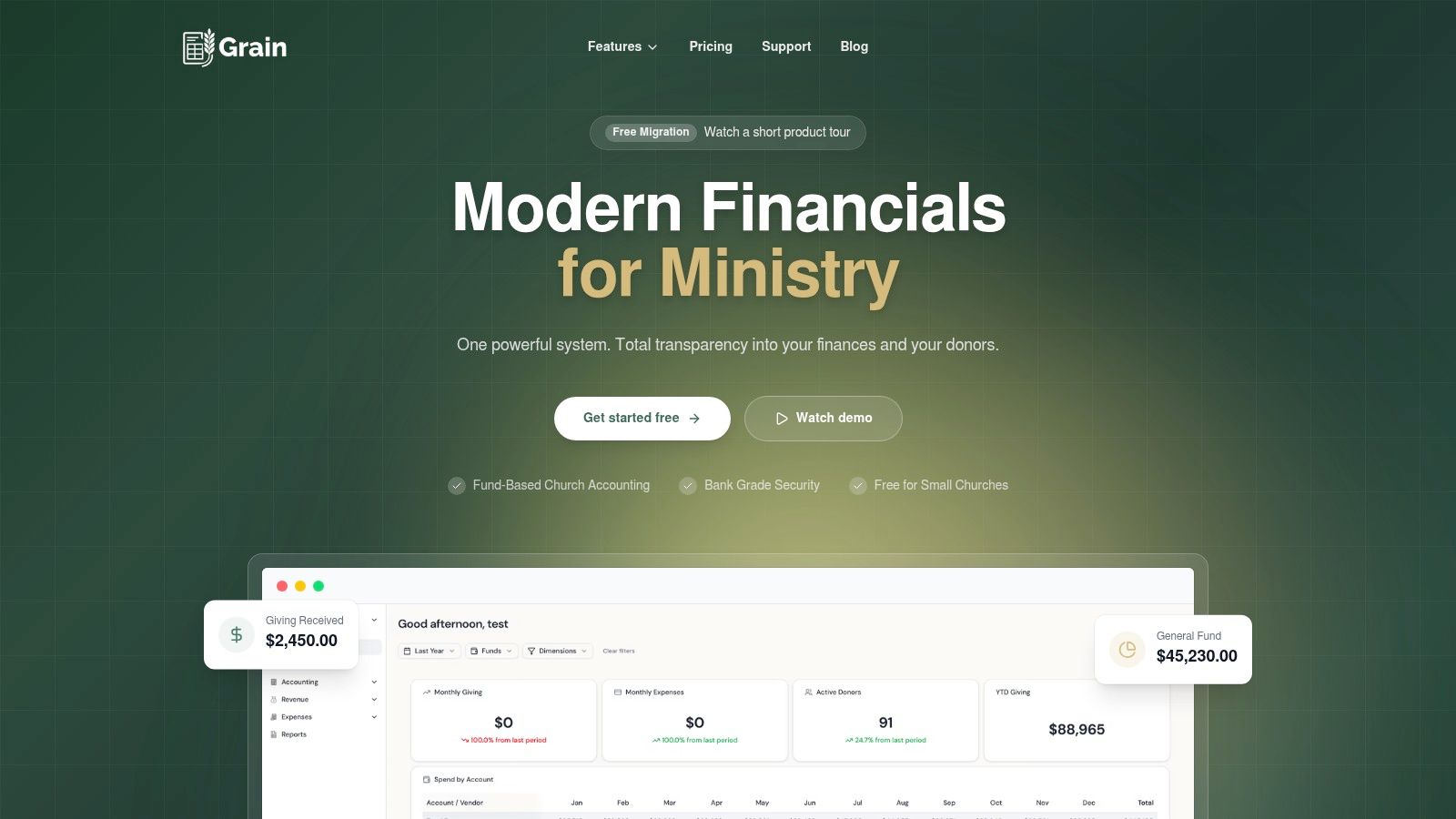
A treasurer usually notices the true test of accounting software at month-end, not during a demo. A designated gift hits the bank, a bill gets paid from the wrong bucket, and the finance committee still expects a clean answer on whether restricted money stayed restricted. Grain deserves a close look because its accounting starts with funds at the ledger level, which is the architectural choice that tends to decide whether those answers come easily or only after cleanup.
That matters in practice. Systems that treat fund accounting as an added layer often depend on staff to tag transactions correctly every time. Grain takes the stricter route. Fund structure is built into daily bookkeeping, so the separation between restricted and unrestricted activity is clearer before reporting starts.
Why Grain stands out
Grain's strongest case is not a flashy feature list. It is the way the accounting structure lines up with church stewardship work.
The platform connects giving, expenses, and reporting in one system, with integrations for Planning Center, Pushpay, Tithely, Stripe, Plaid, Ramp, Divvy, and Bill.com. For churches juggling multiple tools, that can reduce re-entry and shorten the path from donation or expense to a report the board can use.
A few details stand out:
- Fund-first bookkeeping: Funds are part of the accounting structure, not a reporting workaround added later.
- Drill-down reporting: Finance teams can trace balances back to transaction detail without exporting everything to spreadsheets.
- Compliance support: Approval workflows, vendor tracking, 1099 support, and TIN verification help keep routine finance work tighter.
- Donor and accounting connection: Giving statements, donor analytics, and segmentation stay closer to the ledger instead of living in a separate silo.
Here is the practical standard I use: if the system relies on staff memory to preserve restrictions, it will eventually create correction work.
Grain's pricing is also straightforward compared with many church finance tools. There is a free Starter plan for smaller churches, a Growth plan at $70 per month, custom Enterprise pricing, and optional payroll priced separately.
Where Grain fits best
Grain makes the most sense for small and midsize churches that have outgrown basic bookkeeping software and are spending too much time stitching together donor records, bank activity, card spending, and fund reports. It is also a strong fit for church plants or growing ministries that expect more designated giving, because that is usually where weak fund architecture starts to show.
The main trade-off is implementation fit. A church should confirm that its current giving tools, approval process, and reporting expectations match Grain's integration coverage and workflow before switching. But on the question that matters most in this guide, whether fund accounting is native or merely added on, Grain sets a high bar.
2. Aplos
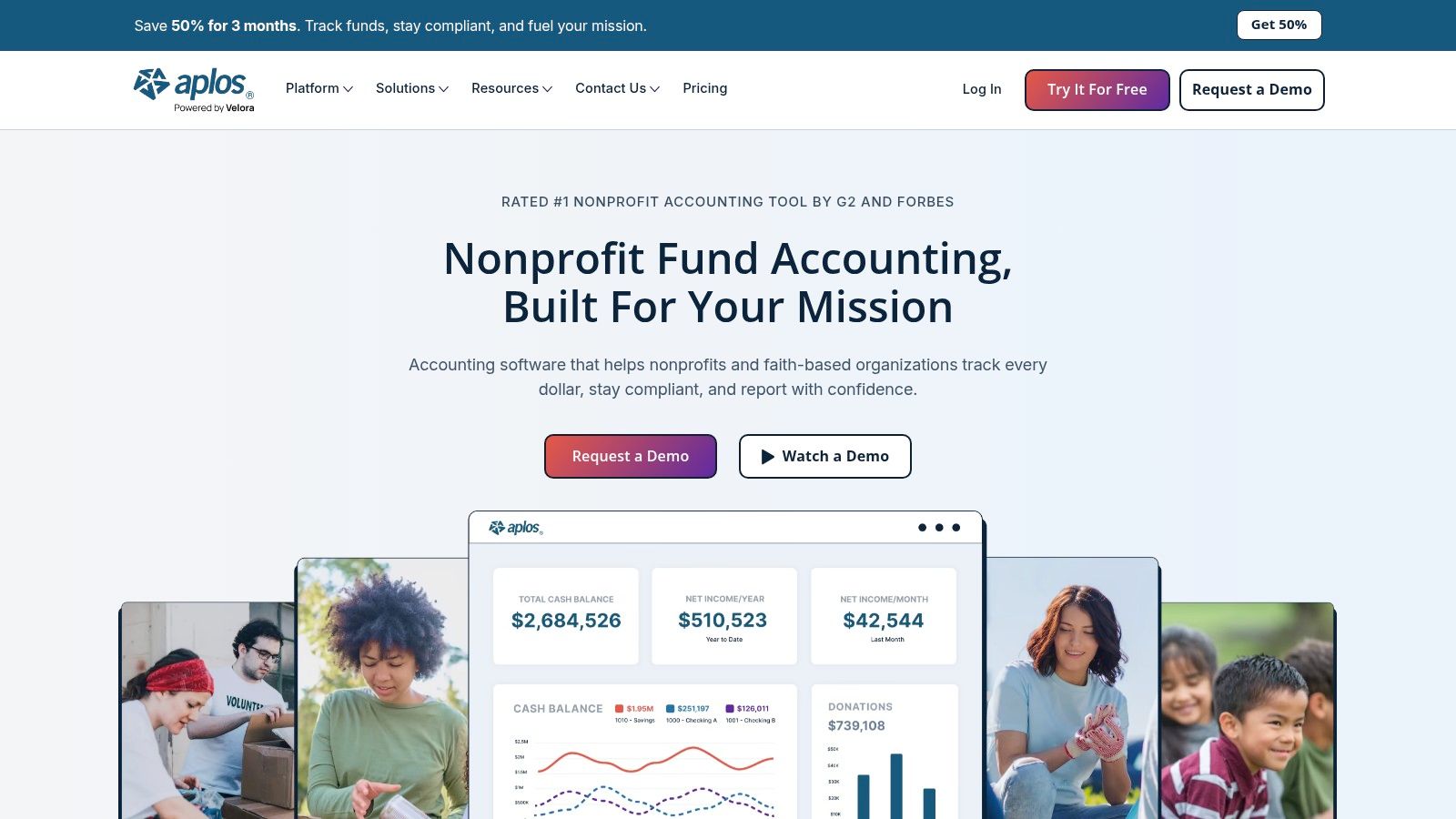
A treasurer usually feels the difference between decent software and well-structured church accounting at reporting time. The pastor asks what remains in the building fund, a donor wants confirmation that a designated gift was used correctly, and the finance committee wants statements it can trust without a spreadsheet cleanup session. Aplos is built for that kind of church. It combines accounting, online giving, and donor management in one system, which appeals to ministries that want fewer handoffs between tools.
Its public reputation is also easier to verify than many products in this category. Aplos reports a 4.6 out of 5 average across aggregated reviews from G2, Capterra, and Software Advice, which at least gives churches a broader review signal than a few handpicked testimonials.
What works well
Aplos is strongest for churches that want fund accounting to be part of the daily workflow, not something staff recreate manually at month-end. Gift tracking, designated funds, donor records, contribution statements, and accounting live close together, so routine stewardship work takes fewer extra steps.
That matters because architecture matters. Some systems treat funds like a reporting layer added on top of general bookkeeping. Aplos is better than that. It was designed around nonprofits and churches, so fund-based reporting is not an afterthought. For a small or midsize church, that usually means fewer workarounds when leadership asks whether restricted money is still available and how it has been used.
The trade-off is depth. Aplos is easier to get started with than some finance-heavy platforms, but churches with complicated departmental structures, advanced allocation rules, or highly customized reporting may run into the edges of what it does comfortably. Teams should also confirm which features sit in which pricing tier before assuming the entry plan covers their process.
Where it fits best
I would point Aplos toward churches that want a practical all-in-one system and do not have the staff capacity to manage separate accounting, giving, and donor databases. It is a good fit for ministries that need real fund visibility, clean donor statements, and a simpler operating model.
For churches comparing it with more finance-centric systems, the question is not whether Aplos can post transactions. It can. The better question is whether its native fund structure is enough for your reporting complexity today, and whether it will still be enough after more designated giving, more ministries, and more oversight requirements. If the answer is yes, Aplos church accounting is a sensible choice.
3. Realm Accounting (ACS Technologies)
A church administrator closes the contribution batch, the finance office posts receipts, and leadership expects the numbers to line up without a spreadsheet in the middle. That is the case for Realm Accounting. Its appeal is not just bookkeeping. It is the connection between member records, giving, and accounting inside one ACS environment.
That connection can save time and reduce posting mistakes. It also changes the buying decision. Realm usually makes the most sense for churches that want their church management system and accounting system to share the same operating logic, rather than passing data back and forth between separate products.
Best fit and trade-offs
Realm is strongest for churches that value operational unity over a pure finance-first tool. If the staff is already using ACS products, the handoff from contribution activity to accounting is easier to manage, and permissions and audit trails are more practical than they sound on a feature list. Those controls matter once more than one person touches receipts, approvals, or corrections.
The bigger question is architectural. Realm uses church-focused accounting, but buyers should still press on how far that goes for true fund accounting needs. In church finance, there is a real difference between software built around native fund architecture and software that handles funds more like a managed layer within a broader suite. That difference shows up when the finance committee asks a plain question: how much restricted money is available, and can we trust the answer without extra reconciliation?
For some churches, Realm will answer that well enough and bring an added benefit. Fewer disconnected systems. For others, especially those with more complex restrictions, campus structures, or reporting expectations, the integrated suite approach can be less satisfying than a finance platform where fund accounting is the center of the design.
I would shortlist Realm for churches that are already committed to ACS or want one vendor for ministry operations and finance. I would be more cautious if the main goal is the cleanest possible fund reporting with minimal ambiguity around restricted balances.
Pricing can also take more work to pin down than simpler off-the-shelf tools. Churches should ask direct questions about total cost, module requirements, implementation help, and what happens as more staff or entities are added. If the answers fit your process, Realm by ACS Technologies is worth serious consideration.
4. ShelbyNext Financials (Shelby Systems)
ShelbyNext Financials is a finance-first option from a long-established church software vendor. That alone will appeal to some churches. Not every finance committee wants the newest product on the market. Many want a platform that understands church payroll, purchasing, and fund reporting without a lot of explanation.
This is the kind of system I'd look at for churches with more structured back-office processes. If you have purchasing controls, payroll complexity, and fixed assets to track, ShelbyNext starts to look more compelling than lighter tools.
Where ShelbyNext earns consideration
Its value isn't flashy design. It's scope. Accounts payable, accounts receivable, general ledger, payroll, purchasing, and fixed assets are all available in one church-oriented financial environment.
That can be helpful for churches that have grown beyond a volunteer bookkeeper model and now need clearer handoffs between admin staff, pastors, and finance oversight. It's also a reasonable fit for denominational offices and ministries that want a vendor with church finance history.
- Finance depth: Better fit than lightweight systems if accounting is the center of your workflow.
- Church payroll awareness: Useful for churches managing clergy and lay compensation distinctions.
- Operational breadth: Purchasing and fixed asset tracking matter more than many churches expect.
The main drawback is feel. ShelbyNext doesn't present like a newer SaaS platform, and that affects adoption. If your staff values modern interface design and lots of third-party integrations, Shelby Systems may feel dated compared with newer options.
5. IconCMO
A finance committee approves a mission gift, a building expense, and a youth fundraiser in the same month. The key test is not whether software can print a report. It is whether the system keeps those dollars clearly separated from the start, without forcing the bookkeeper to patch things together later.
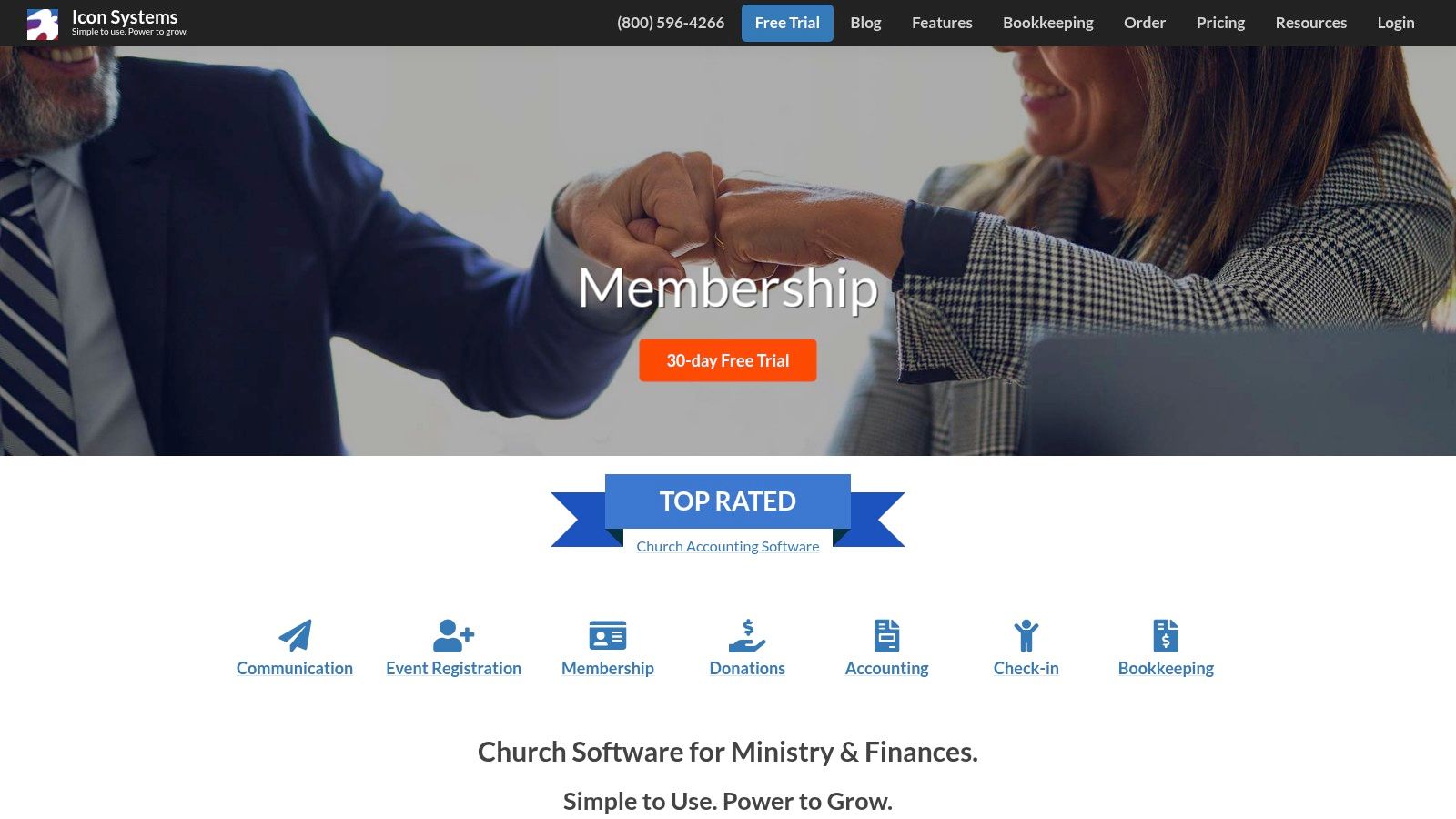
That is the lens I would use for IconCMO. It appeals to churches that want accounting, giving, and membership in one church-specific system at a price many midsized ministries can still consider. The bigger question is architectural. Does the platform treat funds as part of the accounting core, or as reporting categories layered on afterward? That difference affects month-end clarity, board reporting, and how much manual checking your treasurer ends up doing.
Where IconCMO makes sense
IconCMO stays relevant because it is built for churches that need fund-based accountability without buying a larger enterprise finance stack. For a church office with a small staff, that matters. If contributions, member records, and accounting live in separate tools, reconciliation usually gets slower and year-end gets harder.
Its fit is strongest in a few situations:
- Churches watching cost closely: Pricing is easier to understand than some systems with custom quotes and stacked modules.
- Teams that want one church system: Keeping donations, membership, and accounting together can reduce duplicate entry.
- Churches with turnover in the treasurer role: Included support and church-oriented workflows help new volunteers get up to speed faster.
There are trade-offs.
IconCMO is more functional than polished, and that affects training and daily adoption. The interface feels dated next to newer products, and the integration options are not as broad as churches may want if they already use a modern payroll, payments, or reporting stack. If your ministry needs deep automation across many outside systems, IconCMO church software can feel closed in.
Still, I would not dismiss it on appearance alone. For churches that care most about keeping designated funds, routine giving activity, and member administration in one place, IconCMO can be a workable choice. Just verify how naturally the system handles true fund accounting in day-to-day entry, not only in the reports shown during a demo.
6. Church Windows (Accounting module)
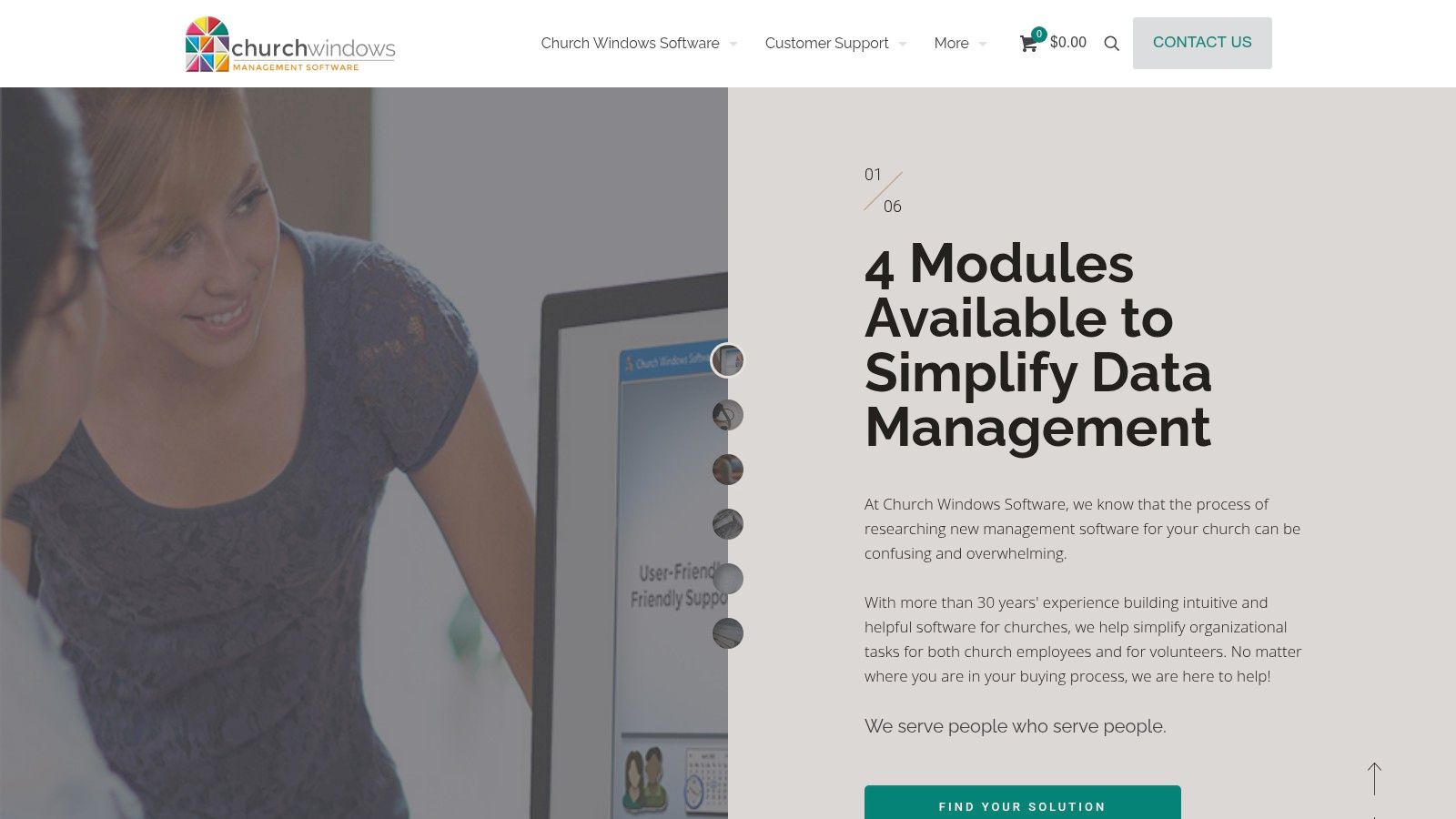
Church Windows is one of those products that keeps showing up because it solves a real problem for a certain kind of church. Some churches still want desktop deployment. Some want modular buying. Some want familiar workflows over modern styling. Church Windows serves that group well.
I wouldn't call it elegant. I would call it dependable for churches that value continuity.
Practical strengths
The accounting module offers true fund accounting and works tightly with Donations and Payroll. That's helpful when year-end giving statements, payroll records, and general ledger reporting all need to stay aligned without manual exporting.
Another strength is deployment flexibility. Churches that aren't ready to move everything fully cloud-first may prefer the desktop or web choice. That's also why this tool still fits churches with long-established office habits.
A church doesn't always need the newest interface. It does need reports the treasurer can explain to the board without a second spreadsheet.
The trade-off is complexity in buying. Module-based pricing and support tiers can take a minute to understand, and the web experience is more practical than polished. But if your church wants a long-standing church-specific platform with modular options, Church Windows accounting software is still worth evaluating.
7. ParishSOFT Accounting
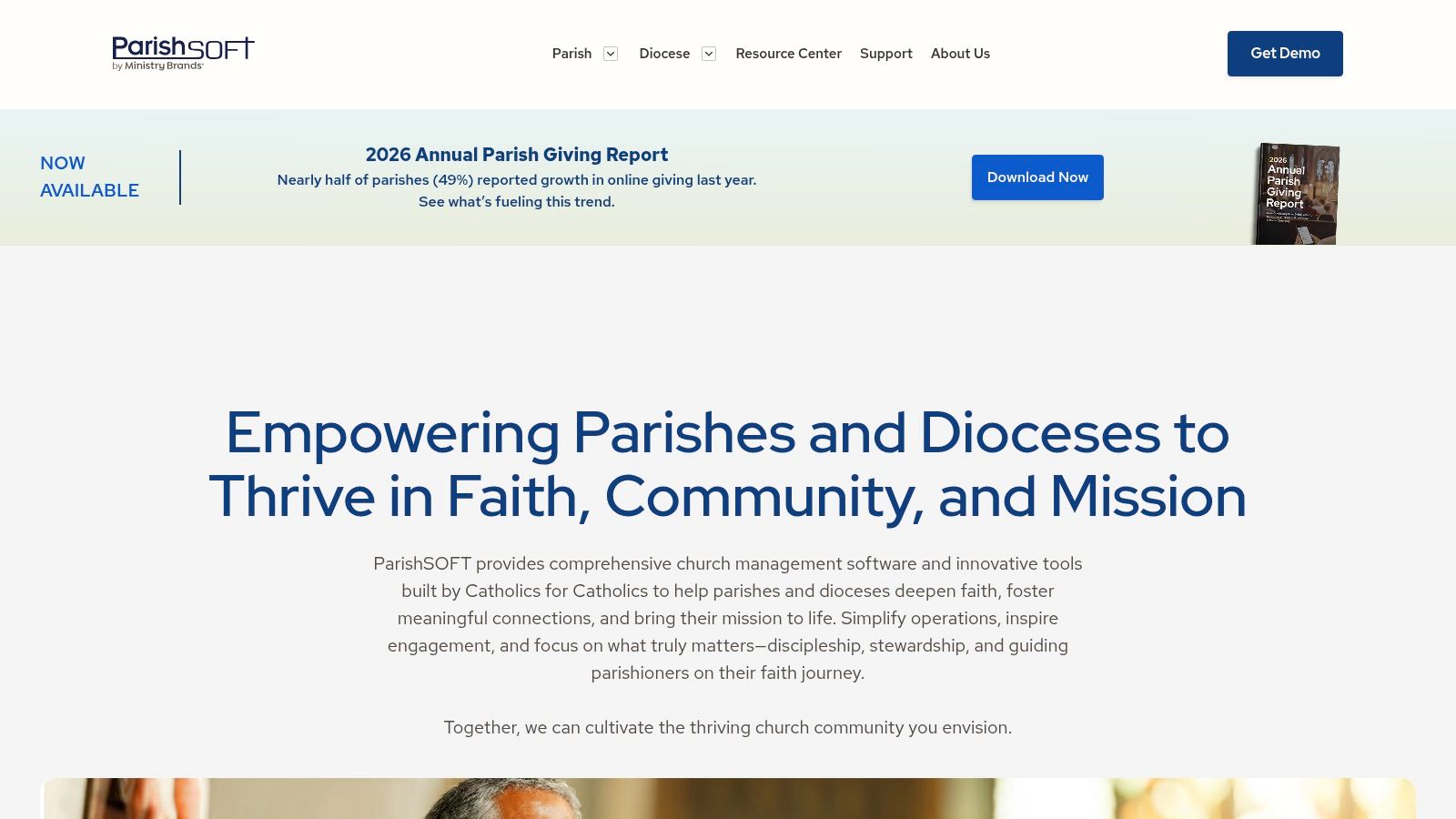
ParishSOFT Accounting is built with Catholic parish and diocesan administration in mind, and that specificity matters. In church accounting software reviews, some products claim broad faith-based support, but ParishSOFT is much more clearly shaped around Catholic reporting structures and multi-parish oversight.
That makes it a strong fit in the right context and an awkward one in the wrong context.
Where ParishSOFT is the right tool
If a diocese needs consistency across parishes or schools, uniform reporting matters more than interface charm. ParishSOFT's multi-level account structure, diocesan consolidation, and broader financial module set make sense in that environment.
For Catholic organizations, the benefit isn't only accounting functionality. It's administrative alignment. Shared standards, shared roll-up reporting, and workflows that already assume parish structure can save a lot of local customization.
- Catholic alignment: Better fit than generic church tools when diocesan requirements drive reporting.
- Consolidation support: Important for organizations that need roll-up visibility across locations.
- Broader financial stack: Useful when ledger, payables, payroll, purchasing, and fixed assets all need to connect.
For non-Catholic churches, though, ParishSOFT Accounting can be more system than you need. It's specialized software, and that's its advantage and its limitation.
8. FlockBase
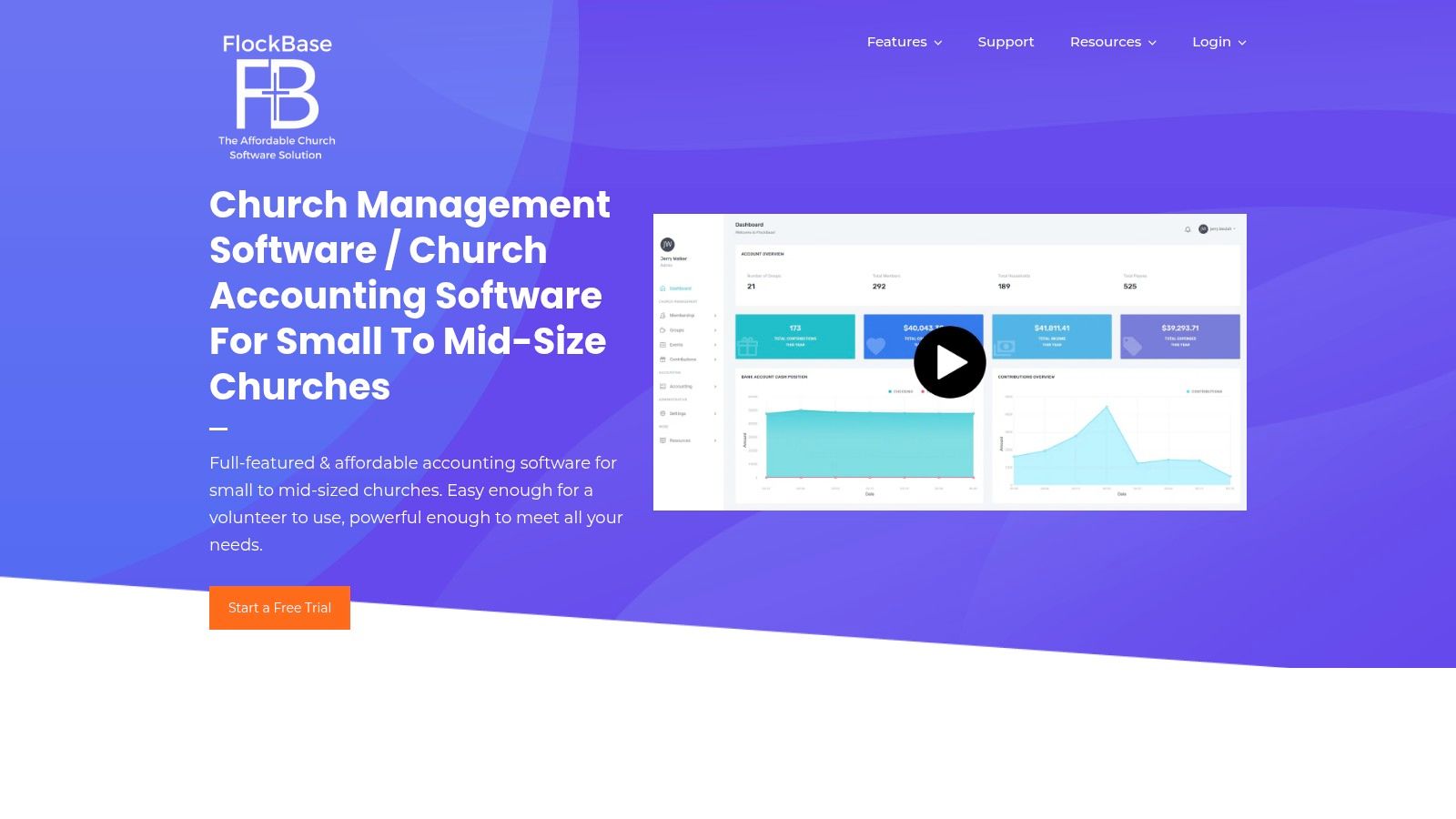
FlockBase is the kind of tool I'd mention to a smaller church where the treasurer is a volunteer, the budget is tight, and the priority is getting out of spreadsheets without taking on a giant implementation project. It doesn't try to be enterprise software, and that's part of the appeal.
Cloud and desktop options also make it more flexible than some budget tools. Not every small church wants a pure SaaS setup.
Best for small churches that need simplicity
FlockBase combines basic church management capabilities with church accounting, payroll options, and reporting that suits simpler finance operations. If your church needs straightforward fund tracking and common reports without a lot of technical overhead, it's a reasonable place to start.
What I like about tools in this lane is that they reduce intimidation. A volunteer treasurer can often learn a simpler church-specific system more easily than a configurable general ledger designed for a business finance team.
The caution is growth. FlockBase can be a good starter option, but churches with increasing reporting complexity, more integrations, or stronger internal control requirements may outgrow it. For a modest church that wants manageable software, FlockBase church software has a clear role.
9. Blackbaud Financial Edge NXT
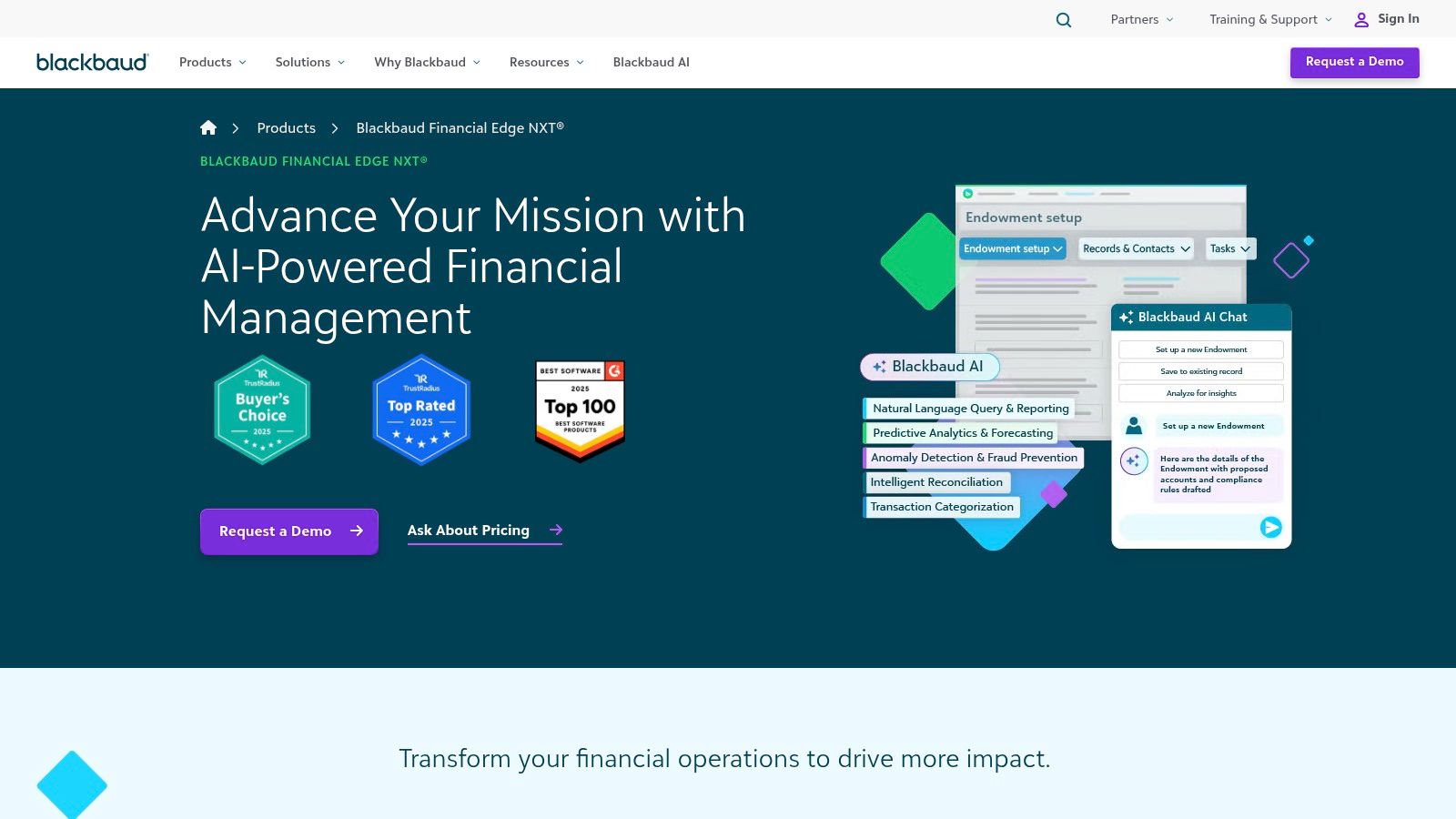
Blackbaud Financial Edge NXT is not where I'd send the average church. It's where I'd look when a church or ministry has enough complexity that internal controls, auditability, and integration depth matter as much as bookkeeping itself.
Large ministries, foundations connected to churches, and multi-entity environments are more likely to appreciate what this platform does well.
What larger ministries get from it
The strongest case for Blackbaud is control. Subfund accounting, detailed audit trails, approvals, reconciliation tools, and broader ecosystem integrations suit organizations that can't afford loose financial processes.
This is also one of the clearer examples of the broader nonprofit side of church accounting. When a ministry tracks restricted funds, projects, endowments, and more formal approval structures, enterprise nonprofit accounting begins to make more sense than lighter church-only tools.
The bigger the ministry gets, the less room there is for “we'll fix it in Excel later.”
That said, cost and implementation effort are real considerations. Blackbaud is a serious platform, and serious platforms ask more from the organization adopting them. If that level of structure fits your church or ministry, Blackbaud Financial Edge NXT belongs on the shortlist.
10. Sage Intacct (Churches & Faith-Based)
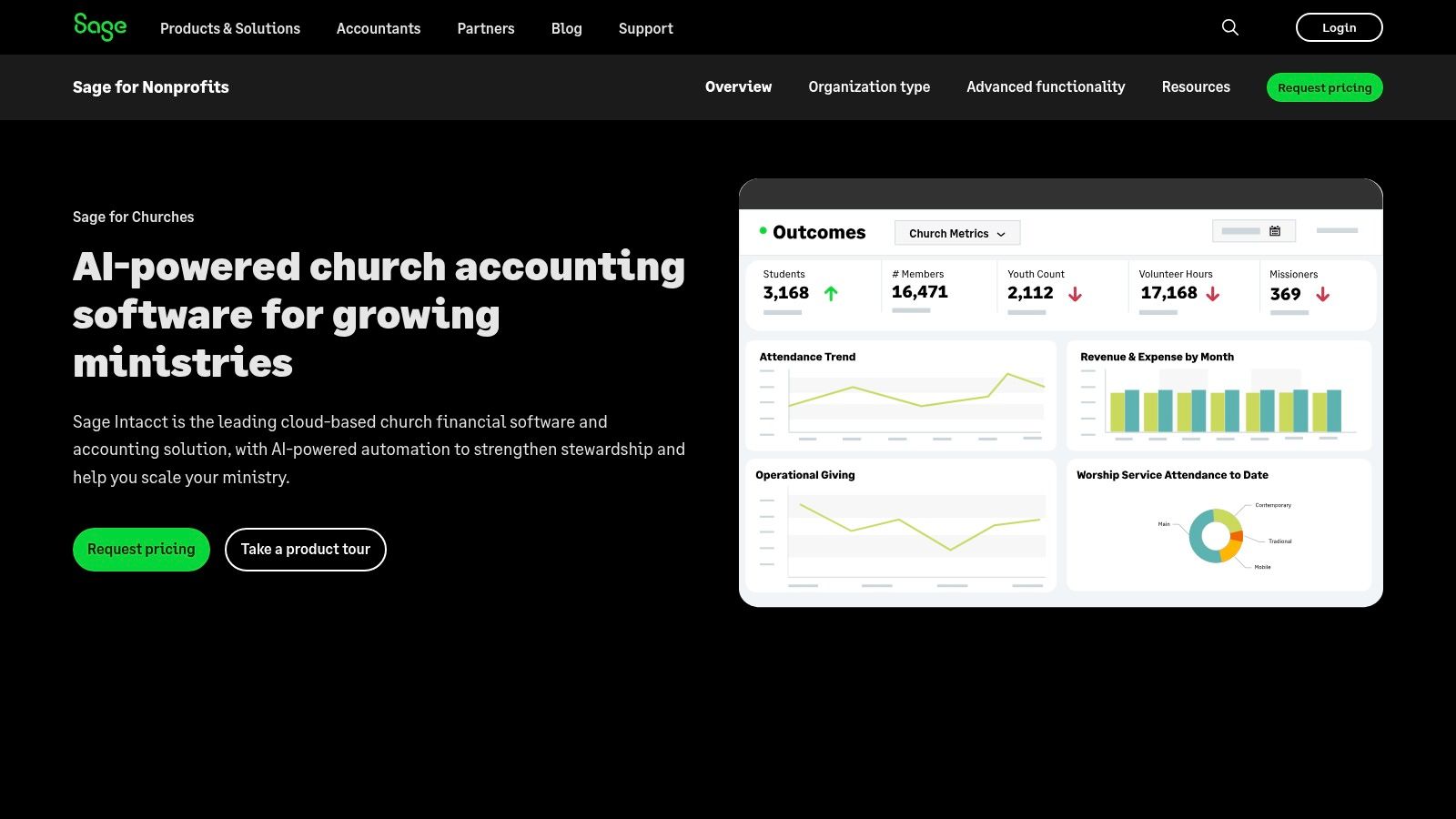
A church adds campuses, centralizes payables, and needs one finance team to report across locations without stitching spreadsheets together at month-end. That is the kind of situation where Sage Intacct starts to make sense.
Its strength is operational scale. Churches with multiple entities, approval chains, dashboards for different leaders, API needs, and more formal reporting requirements will see why finance teams choose it. The system gives a lot of structure, and that structure can be a real advantage once the ministry is past basic bookkeeping.
The trade-off is architectural. Sage Intacct is a strong nonprofit and faith-based financial platform, but churches should still ask a harder question before buying. Is fund accounting native to how the system is built, or is the church adapting enterprise accounting tools to produce fund-based reporting? That difference affects how naturally staff can follow restricted gifts, designated balances, and board-level fund reporting without extra setup or workarounds.
I usually tell churches to separate two problems. One is complexity from growth. The other is lack of fund clarity. Sage Intacct addresses the first problem very well. If the second problem is the one causing pain, a church should compare it carefully against systems built from the ground up around fund accounting.
Cost and implementation effort deserve sober attention. This is not weekend setup software. It usually fits churches that already have a controller, outsourced accounting partner, or finance staff who can configure dimensions, permissions, workflows, and reporting with care.
For ministries with that level of operational maturity, Sage Intacct for churches and faith-based organizations is a credible option. Just make sure the church is paying for financial clarity and control, not merely for a longer feature list.
Top 10 Church Accounting Software Comparison
| Product | Core features | UX & Quality (★) | Value & Price (💰) | Ideal for (👥) | Unique selling points (✨) |
|---|---|---|---|---|---|
| 🏆 Grain | Native fund-based double-entry, bank & giving integrations, AI invoice scanning, GL + donor analytics | ★★★★★ | 💰 Free Starter; Growth $70/mo; Payroll $50+ $10/emp | 👥 Small–med congregations, treasurers, bookkeepers | ✨ True fund accounting, automatic donation→fund flow, drill-downs & audit trails |
| Aplos | Fund accounting, integrated giving, donor CRM, AP/AR | ★★★★ | 💰 Tiered plans; support included | 👥 Small–mid churches wanting all-in-one | ✨ Quick adoption, built-in training & donor tools |
| Realm Accounting (ACS) | Fund accounting with segments, direct contribution posting, role permissions | ★★★★ | 💰 Quote-based; modular | 👥 Churches using ACS ecosystem | ✨ Tight CHMS→giving→GL integration |
| ShelbyNext Financials | GAAP FASB117 GL, payroll (clergy-aware), purchasing & fixed assets | ★★★★ | 💰 Quote-based; finance-first suite | 👥 Denominational offices, finance-led orgs | ✨ Comprehensive finance modules for churches |
| IconCMO | Fund accounting, contributions, unlimited users, nightly backups | ★★★★ | 💰 Published per-household pricing; budget-friendly | 👥 Small–mid congregations on tight budgets | ✨ Clear pricing, membership + accounting in one |
| Church Windows (Accounting) | Fund GL, bank recs, recurring entries, desktop & web options | ★★★ | 💰 Very affordable entry; modular add-ons | 👥 Small churches, volunteer treasurers | ✨ Low-cost desktop option, familiar workflows |
| ParishSOFT Accounting | Ledger, payables, payroll, fixed assets, diocesan consolidation | ★★★★ | 💰 Quote-based; onboarding services common | 👥 Catholic parishes & dioceses (multi-site) | ✨ Diocesan roll-up & Catholic-specific workflows |
| FlockBase | Fund accounting, payroll, membership, online giving; cloud/desktop | ★★★ | 💰 Very low published prices; one-time licenses | 👥 Very small churches, volunteer-led finance | ✨ Simple UI, cheap starter options |
| Blackbaud Financial Edge NXT | Subfunds, AP automation, reconciliation, dashboards & audit trails | ★★★★★ | 💰 Enterprise/quote-based (premium) | 👥 Large churches, multisite ministries | ✨ Enterprise controls, deep nonprofit integrations |
| Sage Intacct (Church) | Nonprofit fund accounting, multi-entity consolidation, APIs | ★★★★★ | 💰 Quote-based; higher TCO | 👥 Growing/complex churches needing scale | ✨ Scalable automation, Ministry Intelligence dashboards |
Making the Right Choice for Your Ministry's Mission
It is the week before the finance committee meeting. Someone asks for a clean report on restricted balances, another person wants budget-to-actual by ministry, and a donor has a question about how a designated gift was tracked. In that moment, the right system is the one that gives a clear answer without extra spreadsheet cleanup.
That is why the architectural question matters so much. Churches feel the difference between software built around native fund accounting and software that imitates it with classes, tags, or workarounds. Native fund accounting keeps the ledger, reporting, and controls aligned from the first transaction. Add-on approaches can work, but they usually depend more on staff discipline, manual review, and institutional memory.
I have seen this trade-off play out in ordinary month-end work. If a treasurer has to remember which tags to apply, rebuild reports outside the system, or explain why one screen says something different from another, confidence drops fast. Stewardship gets harder to demonstrate, even when the team is acting faithfully.
Church size and complexity still matter. Very small churches often do better with simpler tools such as FlockBase, Church Windows, or IconCMO if the workflow fits how volunteers work. Aplos is still a sensible choice for churches that want accounting, giving, and donor tasks in one cloud system. Realm can be the practical fit when the church already runs much of its operations inside the ACS ecosystem. At the larger end, Blackbaud Financial Edge NXT and Sage Intacct offer stronger controls, deeper finance processes, and more implementation overhead to match.
For many small to midsize churches, Grain deserves a serious look because it starts with the fund structure itself rather than adding it later. That one design choice affects daily clarity more than a long feature list does.
Before you decide, test the tasks that create stress in real church finance work. Enter a restricted gift. Post a transfer between funds. Reconcile a bank account. Run a fund balance report and a donor statement. Then ask a harder question. If your current bookkeeper or treasurer stepped away next month, would the next person understand the system without relying on unwritten habits?
If your church wants accounting that matches ministry stewardship from the first transaction, take a close look at Grain. Its native fund-based structure is a practical fit for churches that want cleaner reporting and fewer workarounds.
Ready to simplify your church finances?
Schedule a demo to see Grain Ledger in action, or sign up for product updates.