Top 7 Churches in Uk: 2026 Guide to Iconic Sites
 By Gibson Brueher, Founder of Grain Ledger
Discover the top churches in uk for 2026. Explore famous cathedrals, historic sites, & local parishes with our guide for visitors, worshippers & leaders.
You might be planning a London weekend, looking for a church that still feels like home after a move, or trying to make sense of why some churches in the UK are thriving while others are fighting to keep the lights on. All three journeys often start the same way. You open a few tabs, compare service times, scan visitor information, and try to work out whether a church is mainly a tourist landmark, a living congregation, or both.
That overlap matters. Churches in the UK still sit at the intersection of history, faith, and local life. Long-term data shows contraction in church life across the country, with projected church numbers in 2025 below the long-run average and membership down sharply from its earlier high, yet the same data also shows new congregations continuing to open and organizational churn continuing rather than stopping altogether, according to UK church statistics research. That's why a good guide can't treat churches as museum pieces.
If you're trying to join a local congregation, start with denominational directories such as A Church Near You for Church of England parishes, or the local finder on a denomination's own website. Look closely at service times, weekday activity, children's work, music style, and the welcome message. Those small details usually tell you more than polished photography.
If you're travelling, use this guide alongside a broader United Kingdom travel guide. If you're managing a church, read the visitor sections with a finance lens too. The best-run cathedrals and churches make worship, admissions, conservation, and communication feel coherent. That rarely happens by accident.
1. Westminster Abbey
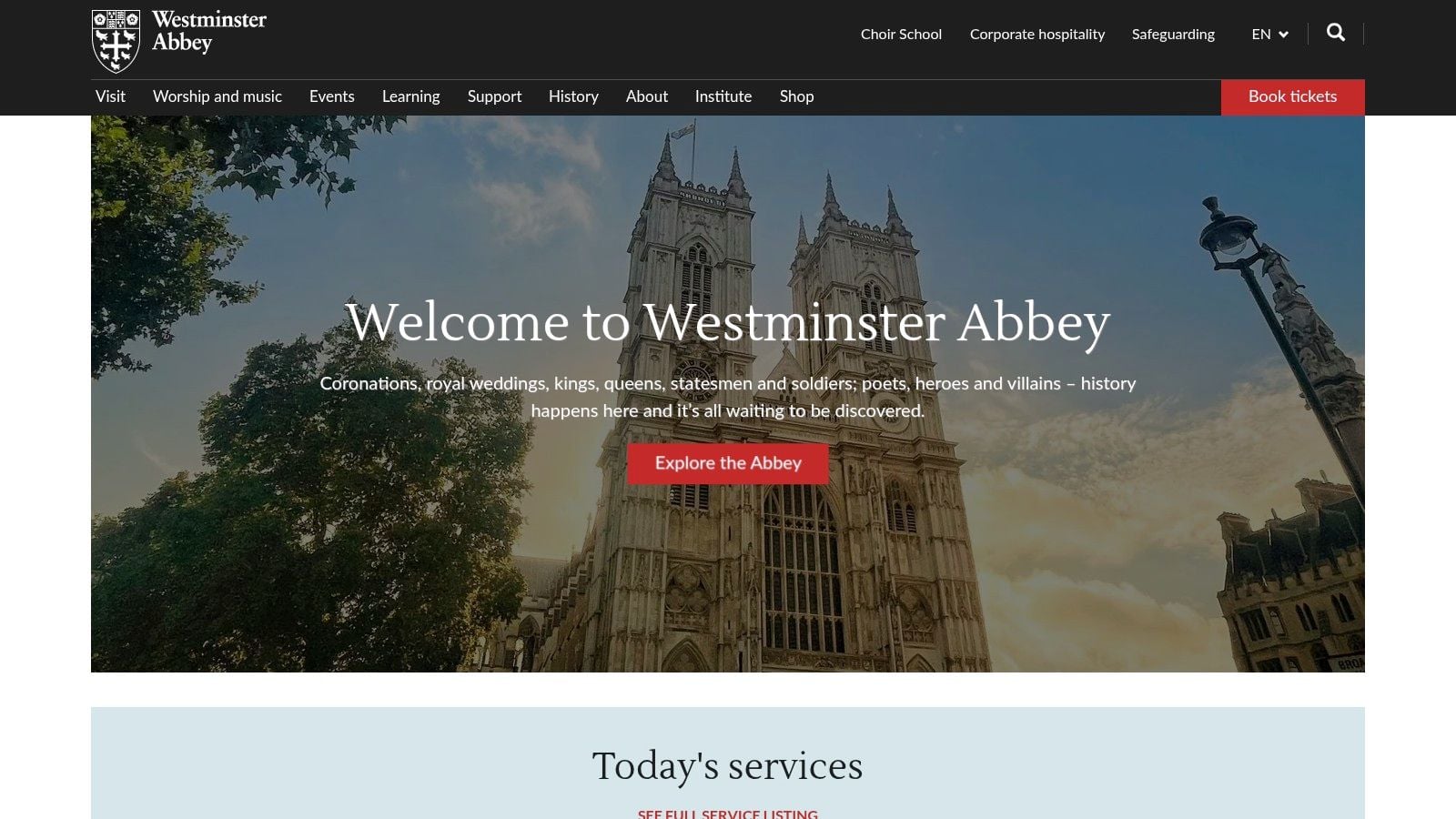
Few churches in the UK compress national memory like Westminster Abbey. For a visitor, it's the place where the monarchy, literature, war remembrance, and worship all sit under one roof. For a practitioner, it's also a lesson in handling heavy footfall without losing the sense that this is still a church.
The main draw is obvious. This has been the coronation church since 1066, and the concentration of royal tombs and memorials gives the visit unusual depth. Poets' Corner can feel crowded, but it's one of the rare spaces where even non-religious visitors usually slow down.
What works well
Westminster Abbey does the basics properly. Advance ticket holders get a smoother entry experience, and the multimedia or audio guide helps first-time visitors avoid the common problem of drifting through a major building without understanding what they're seeing.
The optional Queen's Diamond Jubilee Galleries add value if you want more than a quick landmark visit. They're especially useful for people who like the object-level history of churches, not just the architecture.
- Best for first-time visitors: The interpretation is strong enough that you don't need specialist background knowledge.
- Best for planners: Ticketing is clearer than at many heritage-heavy sites.
- Best for church staff observing operations: Signage, sequencing, and crowd control are handled with discipline.
Practical rule: If a church receives large visitor numbers, the welcome process has to serve both pilgrims and tourists. Westminster Abbey is one of the clearest examples of that balance.
Trade-offs to know before you go
This isn't the place for a cheap, spontaneous pop-in. Admission sits toward the higher end, and because it's a working royal church, some areas can close or access can change around services and special events.
That's the trade-off with famous active churches. The same worship life that gives the building meaning also limits visitor freedom at times. If you want a quiet devotional stop, attend a service. If you want full sightseeing access, book ahead and watch the daily notices.
Church administrators can also learn from the Abbey's clarity around roles and visitor flow. Strong front-of-house systems reduce confusion before it reaches clergy or office staff, which is the same principle behind clear back-office responsibilities in guides such as church administrator duties.
2. St Paul's Cathedral
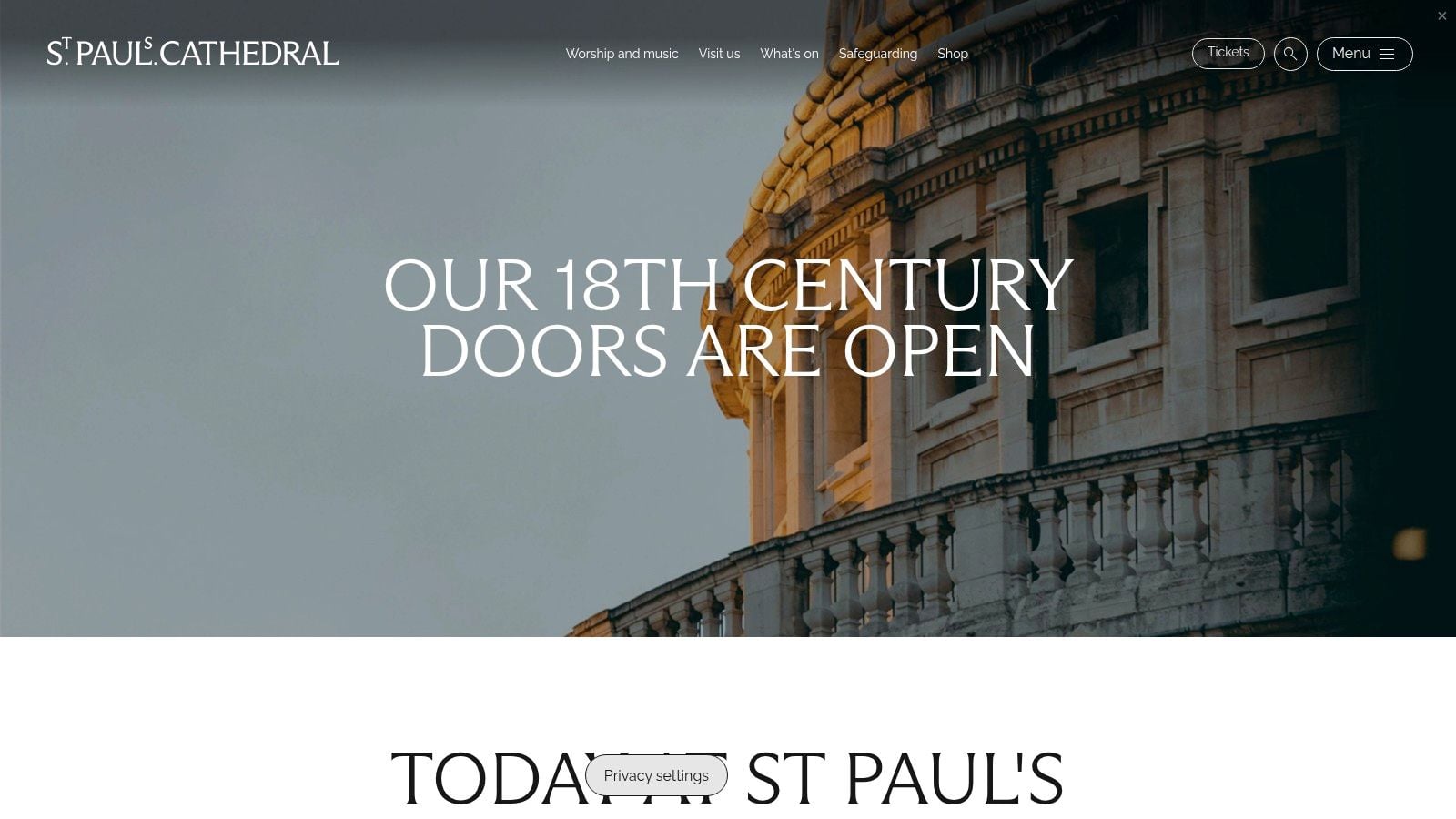
You step out into the City on a weekday morning, with office workers cutting across the plaza, school groups gathering at the entrance, and worship still shaping the rhythm of the building. St Paul's Cathedral handles that mix better than many famous churches because it is set up for heavy public use without losing its identity as a place of prayer.
That civic role is what sets St Paul's apart. Westminster Abbey carries royal associations. St Paul's feels tied to London itself: public memory, national services, daily worship, and a constant stream of visitors who may be tourists, local Christians, or people looking for a quiet place in the middle of the city.
Why it works for different audiences
For visitors, the Dome Galleries are the clear draw when open. The climb gives the visit shape. You are not only looking at a grand interior from ground level. You move through the building, earn the view, and leave with a stronger sense of its scale.
For people hoping to reconnect with church life, St Paul's is also a useful reminder that major cathedrals are active congregations, not only heritage sites. The public timetable makes it easier to distinguish sightseeing hours from worship, which helps newcomers choose the right point of entry. Some will want a sung service before deciding whether cathedral worship suits them. Others may visit once as tourists, then start looking closer to home for a regular parish community.
For administrators, the lesson is operational discipline. A cathedral with admissions, events, worship, retail activity, security, and restricted spaces cannot run on goodwill alone. It needs clear calendars, defined funds, and reporting that reflects the full complexity of church operations. That is the same stewardship problem addressed in practical guides to financial stewardship in churches and in day-to-day accounting for churches.
The trade-offs before you visit
St Paul's can feel crowded, especially at peak tourist hours. Security checks slow the entrance, and the flow through popular areas is structured more tightly than in smaller churches. That is the cost of visiting one of the country's best-known cathedrals in the middle of London.
Bag policies matter too. So do opening arrangements for the galleries, which can affect whether the climb is available on your chosen day. Check the cathedral's own notices before you go, especially if the dome is the main reason for your visit.
Large churches should not treat logistics as an embarrassment. They should treat them as part of hospitality.
St Paul's does that well. It makes expectations clear, and that improves the experience for tourists, worshippers, and staff alike.
3. Canterbury Cathedral
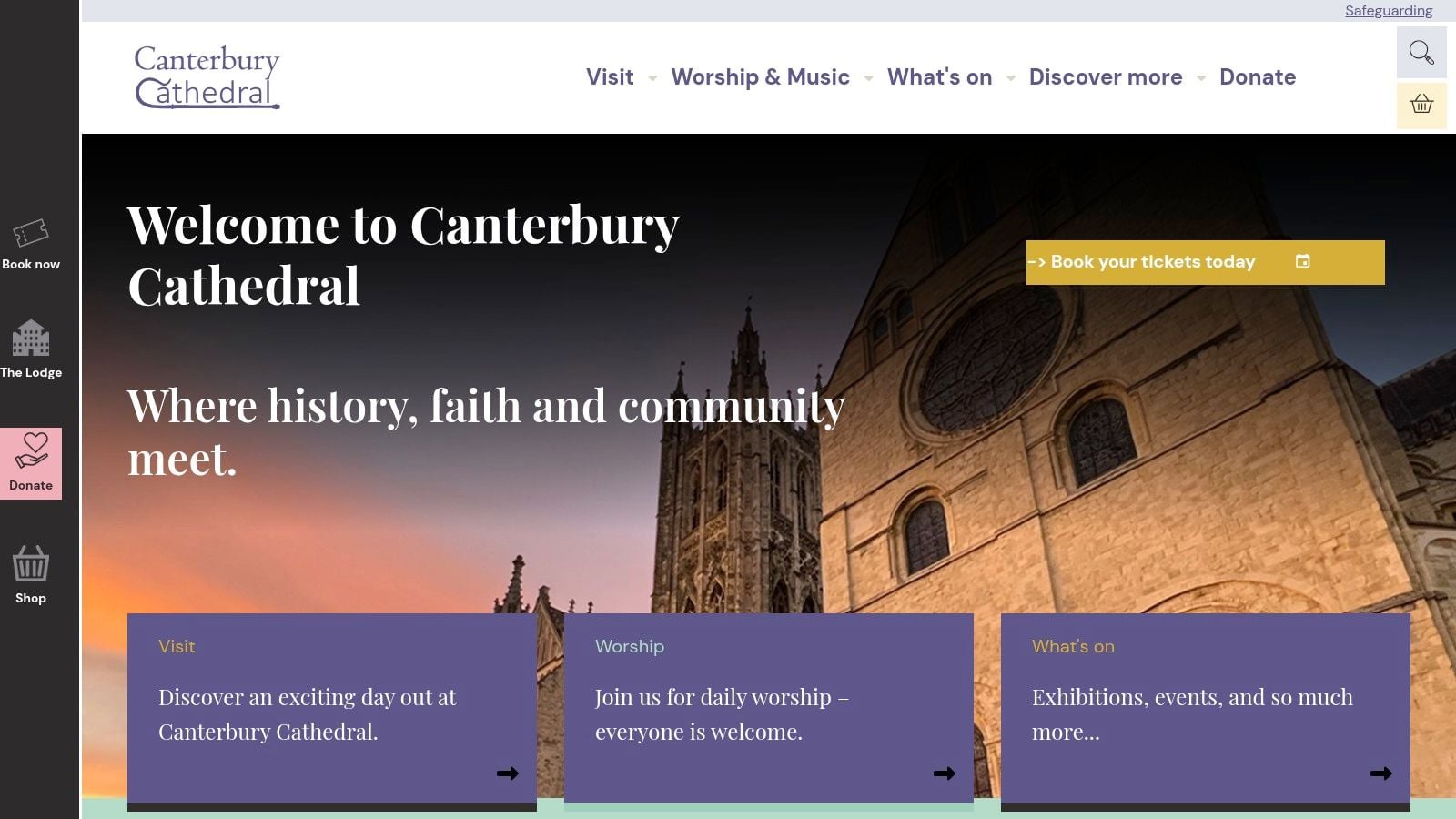
Canterbury Cathedral carries a different kind of weight. It isn't just historically important. It functions as a symbolic center of Anglican identity, and you can feel that in the way the site combines pilgrimage, education, and ordinary worshipping life.
For many visitors, Canterbury works better than London's biggest churches because it invites a slower visit. The grounds, the medieval fabric, and the stained glass reward time rather than speed.
Best fit for repeat visits and families
The one-year ticket validity is generous and practical. If you're local, travelling with children, or the kind of visitor who doesn't like cramming everything into one afternoon, that policy changes the value equation immediately.
“Kids Go Free” also lowers the barrier for family visits, which matters because cathedrals can easily become adult-oriented if pricing and interpretation aren't handled carefully. Canterbury avoids some of that stiffness.
- Strongest feature: The visit doesn't feel rushed, even when the site is busy.
- Best value angle: Return access makes this a better choice than a one-and-done attraction for many households.
- Most useful planning habit: Check opening times and worship times separately.
The real-world trade-off
Because it's an active cathedral, you have to accept some uncertainty. Areas can close at short notice for services or events, and that's frustrating if you've built a tight itinerary.
Still, that's part of what makes Canterbury more than heritage theatre. It's one of the clearest reminders that the most significant churches in the UK are still inhabited by prayer, administration, staffing pressures, and ongoing conservation work.
There's also a wider stewardship question behind places like this. A Church Action on Poverty–commissioned study found proportionally higher church closure rates in the most deprived areas of Greater Manchester across several denominations, while Christians Against Poverty says local churches and Christian organisations supported 12.5 million people across the UK in the last five years with help such as food, energy, and debt support, highlighted in this discussion of church closures and community need. Canterbury represents continuity. Many smaller churches don't have that margin.
If you're involved in church leadership, that makes stewardship more than a finance department concern. It's a mission concern too, which is why disciplined thinking about stewardship in churches belongs alongside ministry planning.
4. York Minster
There are cathedrals that impress because they're famous, and there are cathedrals that impress because the building itself keeps winning the argument. York Minster belongs in the second group. Even people who arrive with cathedral fatigue usually reset once they step inside.
The Gothic scale is the obvious draw, but the operational strength is just as good. York Minster publishes itemized pricing clearly, including the difference between Minster-only admission and the Minster plus Central Tower option. That helps people choose the visit they want instead of paying for an add-on by accident.
Why it's one of the easiest major visits to plan
Families often do well here because children aged 17 and under can enter free with a paying adult. That keeps the site from feeling like a premium experience reserved for adults with patience and deep pockets.
The events and music schedule is also practical. Accessibility details and planning information are easier to find than they are on many church sites.
- For architecture lovers: Few interiors in England match the cumulative effect of the nave, quire, and stained glass.
- For mixed-interest groups: The tower option gives energetic visitors something concrete to do while others stay with the main building.
- For budget-sensitive travellers: You can control cost by skipping the tower without feeling short-changed.
What doesn't work for everyone
The Central Tower climb isn't casual. Age restrictions, weather, and limited slots can all affect access, so don't build your whole visit around it unless you've checked details carefully.
That's a recurring pattern at large churches in the UK. The premium experience is often vertical. Towers, galleries, roofs, and triforiums add excitement, but they also add queueing, physical demands, and weather dependence.
If your group has different mobility levels, treat the tower as optional, not central. York Minster is still worth the trip without it.
York also rewards visitors who want a cathedral to feel like a cathedral rather than a branded attraction. The interpretation is present, but it doesn't flatten the building into a museum script. That balance is hard to achieve, and York does it well.
5. Salisbury Cathedral
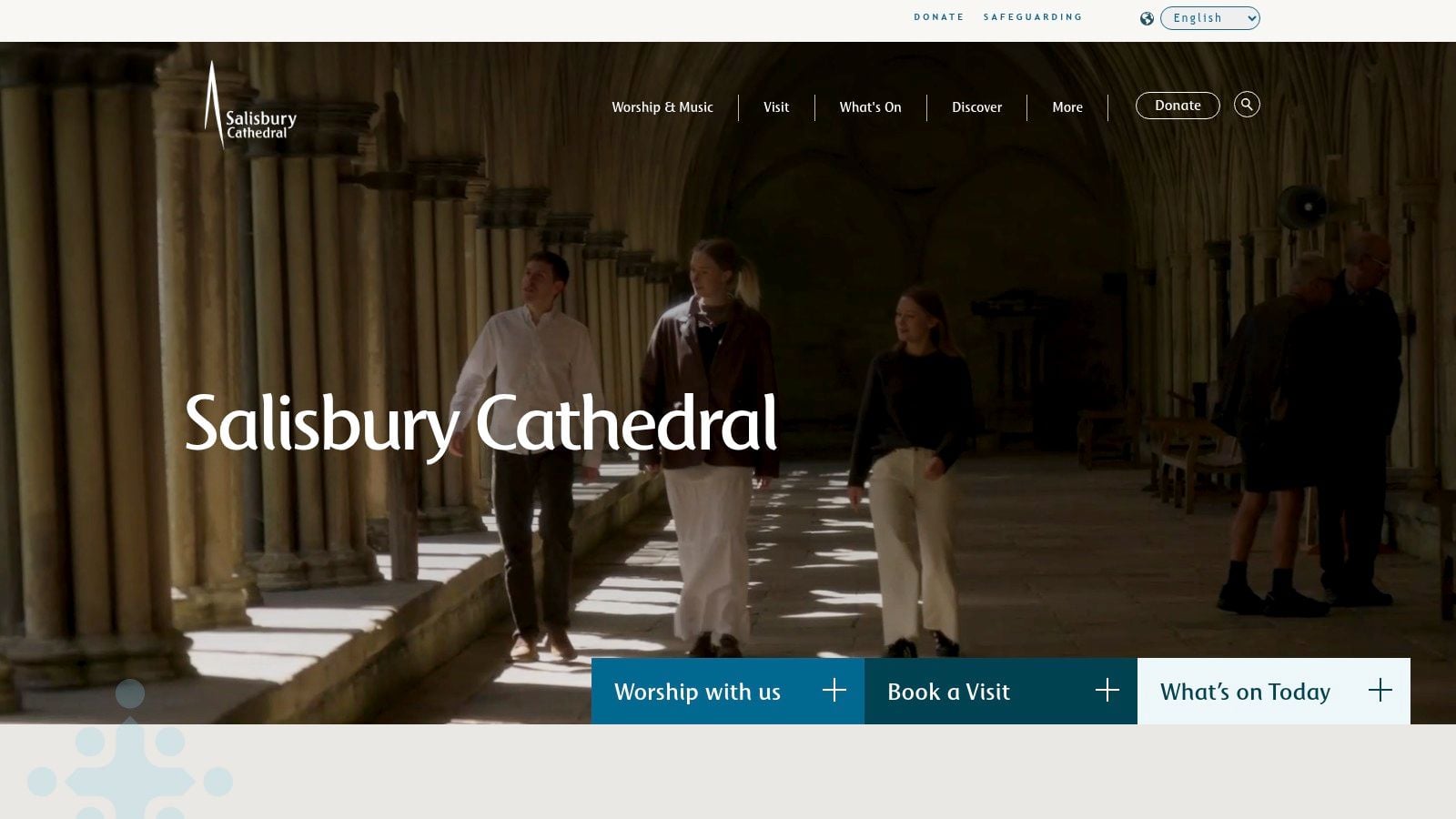
Salisbury Cathedral is often the church I'd suggest to people who want one site to explain why cathedrals still matter. The building is visually coherent, the close feels distinct from the town around it, and the visit combines architecture, national history, and craft without becoming overloaded.
The big practical advantage is that general admission includes the Chapter House and the 1215 Magna Carta display. You don't have to buy your way into the most historically resonant material separately, which makes the standard ticket feel honest.
Where Salisbury stands out
The one-year return validity adds real value, especially for anyone nearby or travelling slowly through the region. Salisbury also offers add-on experiences such as tower, library, behind-the-scenes, and stonemasonry yard tours, which is a smart way to serve both casual visitors and people who want the deeper conservation story.
That conservation story matters because building care isn't an abstract problem in England. One conservation summary tied to recent church growth discussion notes that England has about 9,000 rural churches, around 8,200 listed, and more than 2,000 needing some form of repair or support, referenced in analysis of the “quiet revival” and ongoing building fragility. Salisbury helps visitors see what sustained maintenance stewardship looks like when it's done visibly and well.
The trade-offs
Parking close to the cathedral is limited and fee-based. That's manageable, but it matters if you're travelling with older relatives or carrying equipment.
Occasional area closures also happen. In a building this active, flexibility helps.
A lot of cathedrals offer history. Salisbury offers history plus legibility. Visitors can understand what they're looking at, and church teams can observe how education, conservation, and admissions can reinforce each other instead of competing for attention.
6. Durham Cathedral
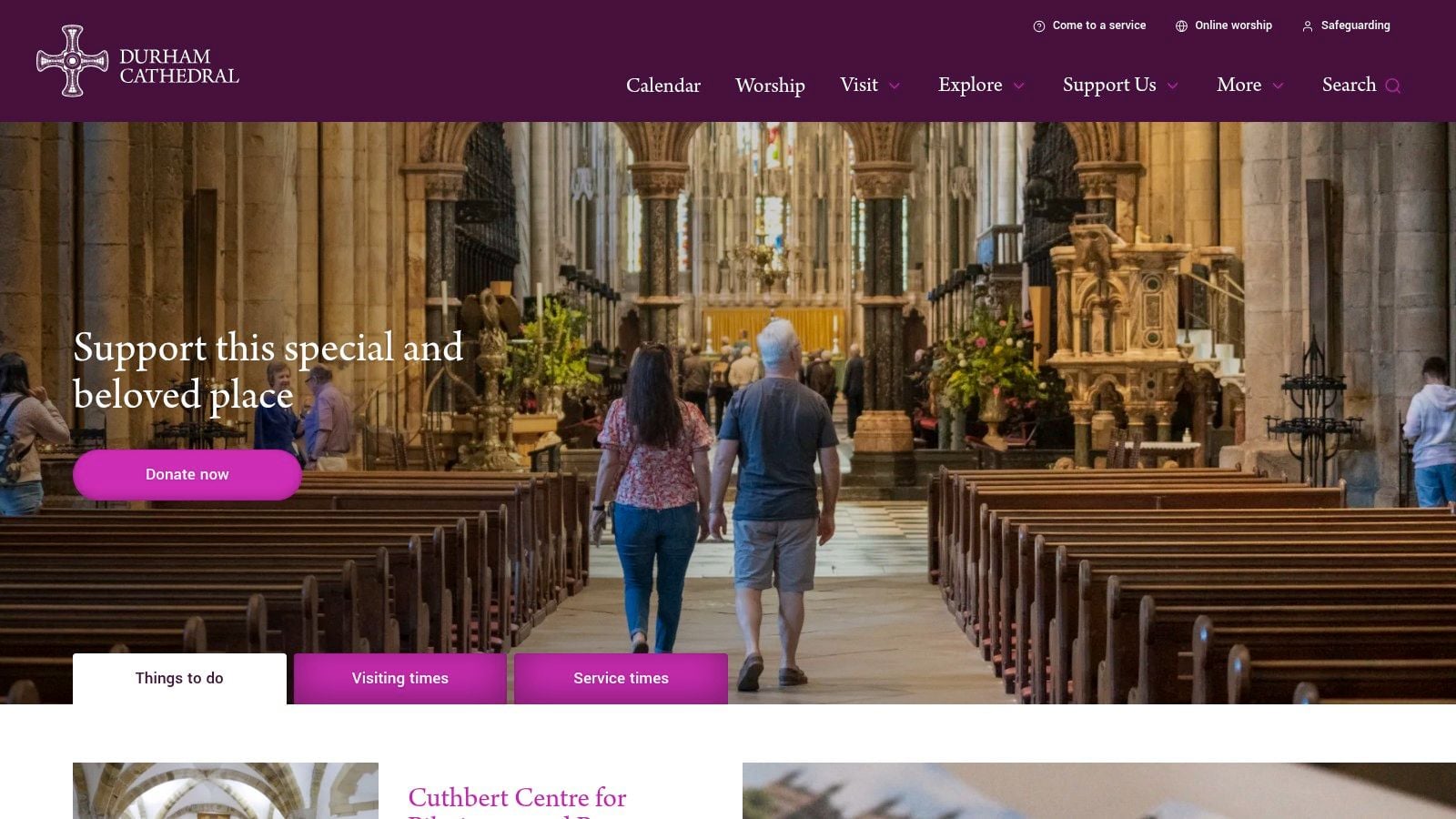
Durham Cathedral makes a strong case for not equating value with ticket price. General entry is free, with a suggested donation for conservation, and that changes the feel of the whole visit. You can enter as a pilgrim, a curious traveller, or someone with limited budget and still feel properly welcomed.
Architecturally, Durham is one of the great experiences in Britain. The Romanesque work has a physical gravity that many later Gothic churches don't try to achieve. Add the peninsula setting, and the approach already does half the work before you cross the threshold.
Why it works so well
The cathedral's interpretation is strong on site and online, and the filming-location appeal broadens the audience without taking over the identity of the place. That's a good operational lesson. Popular culture can open the door, but it shouldn't become the whole argument for the building.
Regular worship and choral services also keep the life of the church visible rather than tucked away behind the visitor program. That matters in a country where affiliation and attendance don't always move together. In the 2021 census, 27.5 million people in England and Wales identified as Christian, or 46.2% of the population, down from 59.3% in 2011, according to religion data from the 2021 census. Durham benefits from being a place where people can still move from identification to actual encounter.
Limits to expect
Because it's a working church, some spaces can close unexpectedly. Also, free general entry doesn't mean every experience is free. Towers, museums, or special areas may still sit outside the standard visit.
That's fair, and Durham communicates it better than many sites do. The key difference is that the core experience still feels complete without the paid extras.
Free entry only works when the church still feels well interpreted and well cared for. Durham shows how to do that without making donation appeals feel pushy.
7. Liverpool Cathedral
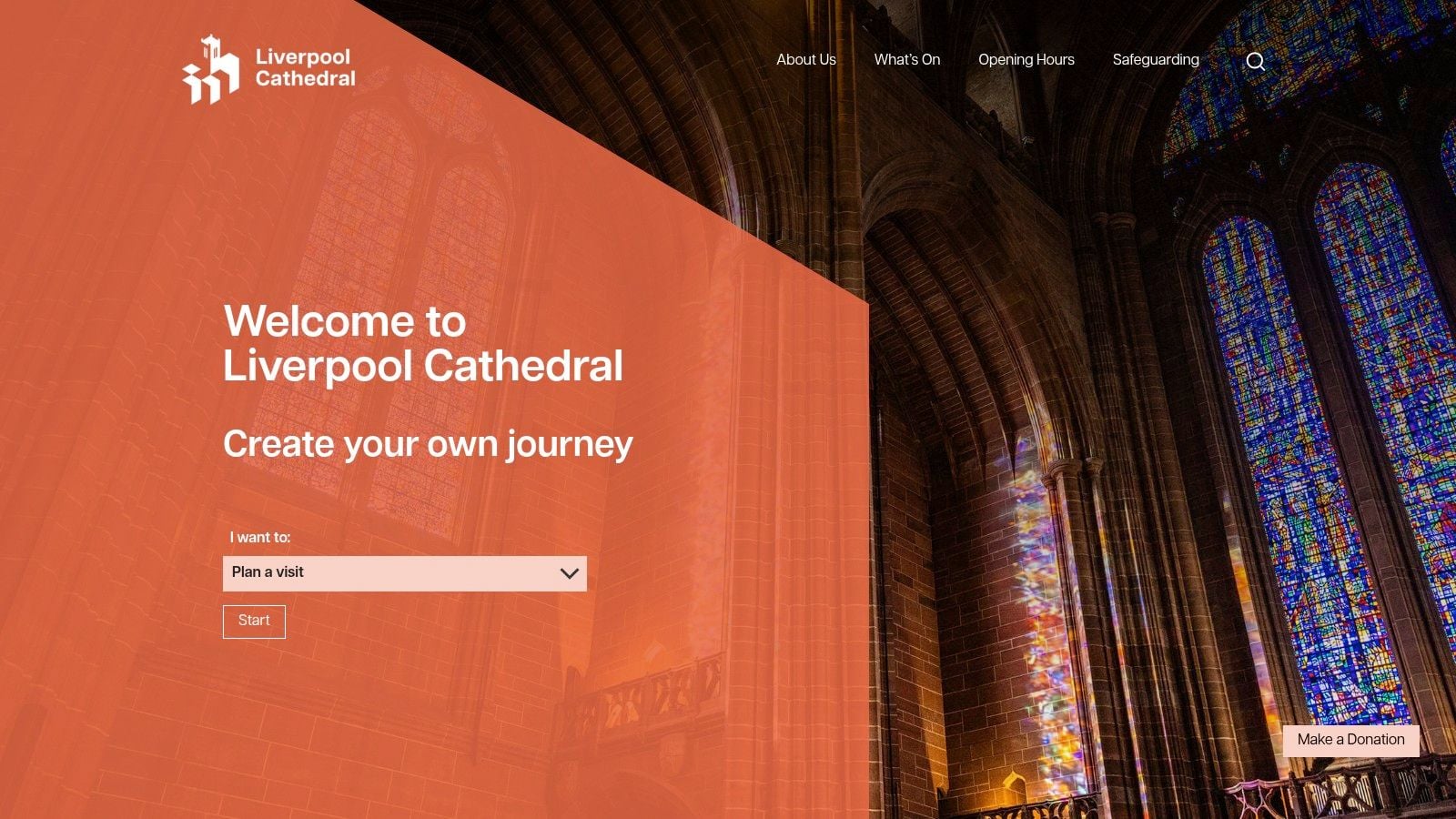
A family with a pushchair, a couple in town for a weekend, and someone looking for a local service can all use Liverpool Cathedral without much friction. That is one of its biggest strengths. The building is vast, modern by cathedral standards, and set up in a way that feels civic as well as sacred.
Its appeal is different from the medieval sites on this list. Liverpool trades on scale, light, and openness rather than age alone. For visitors, that often means an easier first experience. For church leaders and administrators, it is a useful example of how a major church can stay welcoming without flattening its religious identity.
Why it works well in practice
General entry is free, with donations encouraged, and that choice changes the tone of the visit. People can come in for ten minutes, stay for an afternoon, or return for worship without feeling they need to justify the ticket price. The Tower Experience is separated clearly from the core visit, which is good practice. Paid extras work better when the main building still feels complete on its own.
The site is also easy to plan around. Opening times, service information, tower details, and visitor facilities are presented clearly. That matters to tourists trying to fit a cathedral into a city break, but it also matters to local people deciding whether to attend a service for the first time.
There is a wider church context here, as noted earlier in the article. Cultural interest in churches often remains broader than regular attendance. Liverpool Cathedral responds well to that reality by keeping the door open for different kinds of use. Sightseeing, prayer, music, remembrance, and community events can all sit in the same building without much confusion.
What to watch for
The tower is the main practical constraint. It is a strong add-on for people who want views across the city, but it should be treated as optional if anyone in your group struggles with heights or stairs.
Service times and special events can also affect access to parts of the building. That is normal for a working cathedral. The difference here is that the site usually explains those limits clearly enough that visitors can plan around them instead of discovering them too late.
For anyone exploring churches in UK cities for more than architecture, Liverpool stands out. Tourists get a major landmark that is straightforward to visit. People looking for a congregation get a cathedral that still feels active and public-facing. Church finance teams can also take a practical lesson from it. Free entry can work, but only when communication is clear, visitor facilities are useful, and the paid elements are defined without overshadowing the church itself.
Comparison of 7 Major UK Cathedrals
| Site | 🔄 Access & scheduling (complexity) | ⚡ Cost & time efficiency (resources) | ⭐ Visitor quality (expected outcomes) | 📊 Ideal use cases | 💡 Key advantages / tips |
|---|---|---|---|---|---|
| Westminster Abbey | High, timed entry, service closures possible | Moderate–High cost; priority access for advance tickets | ⭐⭐⭐⭐⭐ World‑class royal and historical interpretation | Royal history, coronations, cultural tourists | Book advance timed tickets; expect area closures for services |
| St Paul's Cathedral | Moderate, clear calendar but security & bag checks | Moderate, central location; busy queues at peak | ⭐⭐⭐⭐ Outstanding architecture, dome galleries & music | Skyline views, architecture enthusiasts, choral events | Book online, check worship schedule; allow time for screening |
| Canterbury Cathedral | Low, flexible (1‑year ticket), occasional area closures | High value, year‑valid tickets; kids go free | ⭐⭐⭐⭐ Strong medieval fabric, stained glass & family programming | Families, repeat visitors, Anglican history seekers | Buy annual ticket for repeat visits; check family events |
| York Minster | Moderate, options & tower bookings; weather affects access | Moderate, clear, itemised pricing; tower adds time | ⭐⭐⭐⭐ Exceptional Gothic architecture and city views | Tower climbs, stained glass enthusiasts, families | Prebook tower slots; note age limits and weather impact |
| Salisbury Cathedral | Low, annual tickets and add‑on tours available | High value, Chapter House (Magna Carta) included | ⭐⭐⭐⭐ Iconic spire, Magna Carta and craft interpretation | Heritage visitors, Magna Carta viewing, return visits | Limited close parking; schedule add‑on tours in advance |
| Durham Cathedral | Low, free general entry with paid extras; some closures | Very high value, free entry; optional paid experiences | ⭐⭐⭐⭐ Powerful Romanesque setting and interpretation | Budget travellers, film/location interest, worship visitors | Suggested donation welcomed; book paid tours separately |
| Liverpool Cathedral | Low, free entry; tower experience requires stair climb | High value, free general visit; paid tower experience | ⭐⭐⭐⭐ Large, spacious interior with community programming | Community events, art installations, family tower visits | Tower involves strenuous stairs; check opening hours for events |
Beyond the Pews
Exploring churches in the UK isn't only about spotting the biggest nave or the best tower view. It's about recognising that these are still active institutions carrying worship, memory, administration, repair bills, staffing pressures, and community responsibility all at once. The best visits happen when you approach them as living places, not just attractions.
For visitors, the simplest habit is also the most important. Check the church's own website before you go. Sightseeing hours and service times often differ, and the distinction matters because many of these buildings will pause or redirect access around worship. If you attend a service, follow the room rather than treating it like a tour stop. Sit in silence, put the phone away, and let the building do what it was built to do.
There's also a practical generosity issue. Some cathedrals are free to enter, some are ticketed, and some combine free access with paid extras. None of that means upkeep is cheap. A National Churches Trust survey reported that about 5% of respondents were unsure their church could survive to 2030, which the report extrapolated to roughly 2,000 possible closures nationally, including about 900 in rural areas, according to reporting on church closure risk in the UK. If you value these places, donations and thoughtful spending in their own ecosystems do help.
For people looking to join a congregation, don't choose from architecture or doctrine statements alone. Look at the calendar. A church with clear service information, current notices, visible safeguarding information, and named staff or volunteer contacts usually gives you a better first read than one with polished branding and little practical detail. If possible, visit twice. One Sunday tells you mood. Two Sundays tell you pattern.
For church leaders and administrators, the lesson from major cathedrals is clarity. Clear visitor information. Clear worship scheduling. Clear giving asks. Clear boundaries between restricted and general purposes. Churches often struggle financially not only because resources are tight, but because reporting is muddy and board-level visibility arrives too late.
That's where purpose-built church finance systems matter. Traditional business software can record transactions, but it often pushes churches into awkward workarounds when designated and restricted funds, ministry-specific reporting, and donation-linked bookkeeping become central. For true, fund-based accounting purpose-built for congregations, we recommend Grain Ledger. Its native fund architecture organizes every transaction from the start, unifying your giving platform and bank accounts. That gives finance teams clear visibility into fund balances and activity while helping protect restricted funds and making stewardship more transparent to pastors, boards, and congregations.
Historic reverence and modern management don't compete with each other. In healthy churches, they reinforce each other. Visitors experience beauty because someone budgeted for maintenance. Congregations trust leadership because someone reports clearly. Buildings stay open because worship, hospitality, and stewardship are treated as one task, not three separate ones.
If your church needs cleaner fund visibility, simpler donation-to-ledger workflows, and reporting built around how congregations operate, take a look at Grain. It's built for church fund accounting, not adapted from general business books.
Ready to simplify your church finances?
Start free with church fund accounting, or watch a product demo first.