A Practical Guide to Leadership Training for Church Leaders
 By Gibson Brueher, Founder of Grain Ledger
Discover practical leadership training for church leaders. Learn how to build a curriculum, manage finances, and develop a thriving team-based ministry culture.
Investing in your leaders is the single most important thing you can do for the long-term health and future of your church. I'm not just talking about theory. I mean equipping your pastors, elders, and dedicated volunteers with the practical skills and spiritual depth they need to navigate the very real challenges of ministry—things like burnout, conflict, and shaky finances.
Why Effective Leadership Training Is Non-Negotiable

Let's be honest: untrained leadership is one of the biggest threats to a church’s stability and mission. When leaders run on passion alone, without the right tools in their belt, they often stumble into predictable and damaging pitfalls. This isn’t a knock on their heart or their calling; it's just a frank acknowledgment of a huge gap in how we prepare people for ministry.
The truth is, leading a church today demands so much more than theological knowledge. It requires a specific skill set that you just don't pick up from a Sunday sermon. These skills aren't optional—they are absolutely essential for handling the complexities of modern ministry.
The Real-World Cost of Untrained Leadership
Without intentional development, even the most well-meaning leaders can accidentally do a lot of damage. I've seen it happen time and again, usually in a few key areas:
- Mission Drift: The church slowly loses its way. Leaders get pulled in a hundred different directions, and without a clear, shared strategy, the core purpose gets fuzzy.
- Congregational Burnout: Your best volunteers get overworked and feel unsupported. This leads to high turnover and a culture of exhaustion instead of joyful service.
- Financial Mismanagement: A simple lack of understanding of church-specific accounting can lead to poor stewardship, a breakdown of trust, and even serious legal trouble.
- Unresolved Conflict: Small disagreements that should be easily handled instead blow up into major divisions because leaders don't have the tools for healthy conflict resolution.
Investing in leadership training isn't an expense; it's an act of stewardship. You are protecting the flock, honoring the resources entrusted to you, and building a foundation for sustainable, healthy ministry for years to come.
This isn't just a local issue; it's a global one. The need for prepared leaders is massive and growing. According to the 2026 Status of Global Christianity, an estimated 3.7 million pastors are needed to meet current demand, yet a staggering 95% of pastors worldwide have no formal credentials. This gap is felt most sharply in areas of rapid church growth, where untrained leaders often struggle to disciple new believers and manage funds. You can explore more about these global leadership trends to grasp the full scale of the problem.
A solid training program should be built on a few core pillars that directly address the needs of a modern church. These aren't just academic subjects; they are practical areas where leaders need to be competent to be effective.
Core Pillars of Modern Church Leadership Training
Here's a breakdown of what a comprehensive training program should cover to truly equip your leaders for the challenges they face.
| Pillar | Focus Area | Ministry Outcome |
|---|---|---|
| Spiritual Formation | Personal spiritual health, prayer, and character development. | Leaders who lead from a place of spiritual vitality, not exhaustion. |
| Practical Theology | Applying biblical principles to everyday ministry decisions. | Doctrine that is lived out, not just taught, shaping the church's culture. |
| Organizational Leadership | Vision casting, strategic planning, and team building. | A unified church moving in the same direction with a clear purpose. |
| Relational Skills | Conflict resolution, active listening, and pastoral care. | A community where people feel heard, valued, and cared for. |
| Financial Stewardship | Church budgeting, fund accounting, and ethical fundraising. | Increased trust, transparency, and resources for ministry impact. |
By building your program around these pillars, you ensure that you're developing well-rounded leaders who are ready for anything.
Viewing Training as an Act of Stewardship
Especially for small-to-medium congregations, it's crucial to see leadership training for church leaders as a fundamental part of good stewardship. It's about equipping every single person in a position of influence—from the lead pastor to the finance committee volunteer—with the competence to match their commitment.
When you train your leaders, you send a powerful message: we value our people, and we are serious about fulfilling our mission with excellence and integrity. It’s the first and most critical step toward building a resilient church that will thrive for years to come.
Designing Your Leadership Training Curriculum
Building a leadership program that actually works is all about creating something that fits your church. This is where the rubber meets the road. A generic, off-the-shelf program might seem easy, but it often falls flat because it doesn't speak to the unique challenges and culture of your specific community. The real goal is to craft a balanced, scalable program that builds up both spiritual depth and practical ministry skills.
This whole process kicks off with some honest questions. Are you trying to train new elders who need a solid grounding in theology and church governance? Or are you focused on equipping volunteer small group leaders who need more relational, hands-on skills? The answer to that question will steer everything else you do.
Identifying Core Learning Objectives
Before you even think about planning a single session, you have to define what success will look like. Learning objectives are just clear, measurable statements that spell out what a leader should know or be able to do after the training. They keep your content focused and purposeful.
Let's say a smaller church is planning a weekend retreat for its new youth leaders. Their objectives might look like this:
- Leaders will be able to clearly explain the church's mission for youth ministry and connect it to their weekly activities.
- Leaders will demonstrate how to lead a small group discussion using active listening and open-ended questions.
- Leaders will understand the key points of the church’s child protection policy and know exactly what to do if an issue arises.
On the other hand, a larger church developing a year-long residency for aspiring pastors would have much deeper objectives. For that level of training, formal academic programs are often a key component. For example, a resource like the complete guide to the Masters in Divinity degree shows the kind of structured, in-depth theological and practical pathway available for those called to full-time ministry.
Building Your Session Outlines
Once you know where you're going, you can start building the roadmap to get there. That's what a good session outline is—a roadmap. It breaks down big topics into bite-sized teaching points, interactive activities, and group discussions.
A truly effective curriculum for lay leaders has to blend theological foundations with real-world application.
I've seen it happen time and again: church leadership training gets so focused on theological knowledge that it completely neglects the "soft skills" of ministry. A leader who can diagram a Greek sentence but can't navigate a difficult conversation is only half-equipped for the job.
So, what topics should you cover? Here are a few ideas that work well for a well-rounded program:
- Practical Theology: How our core beliefs actually shape our day-to-day ministry decisions.
- Conflict Resolution: Biblical, grace-filled strategies for mediating disagreements.
- Community Outreach: How to shift from an inward focus to truly engaging the neighborhood around us.
- Financial Administration: Demystifying the church budget and practicing good stewardship. For a deeper dive on this, our guide on the key duties of a church administrator is a great resource.
Let's bring this to life. Imagine you're planning a 90-minute session on conflict resolution. Your outline could be structured something like this:
| Segment | Duration | Activity |
|---|---|---|
| Opening | 15 min | Discuss a short case study of a common church conflict. |
| Teaching | 30 min | Unpack biblical principles from Matthew 18 and Galatians 6. |
| Activity | 30 min | Break into small groups for role-playing exercises. |
| Closing | 15 min | Group prayer and a time of personal commitment to healthier communication. |
This kind of structure intentionally moves people from theory to practice. It helps ensure the lessons actually stick and make a difference long after the training is over.
Weaving Technology into Your Leadership Development
When we talk about technology in ministry, it’s easy to feel a little intimidated. But I’ve learned to see it not as a burden, but as a powerful ministry multiplier. For busy pastors and volunteers juggling countless responsibilities, digital tools offer a level of flexibility and efficiency we could only dream of a generation ago.
Think about it. A simple video call can connect a seasoned mentor with a new elder across town. An online learning platform can host training modules that your volunteers can walk through on their own schedule, maybe after the kids are in bed. Suddenly, major barriers to participation just disappear.
Streamlining the Work of Ministry
Technology isn't just about delivering content; it's about making the day-to-day work of ministry more manageable. As a church grows, the administrative load can become overwhelming. The right tools help your leaders spend less time on paperwork and more time shepherding people.
This is true even in the planning stages of your training program. A clear process—like the one outlined below—is the foundation for any effective curriculum.
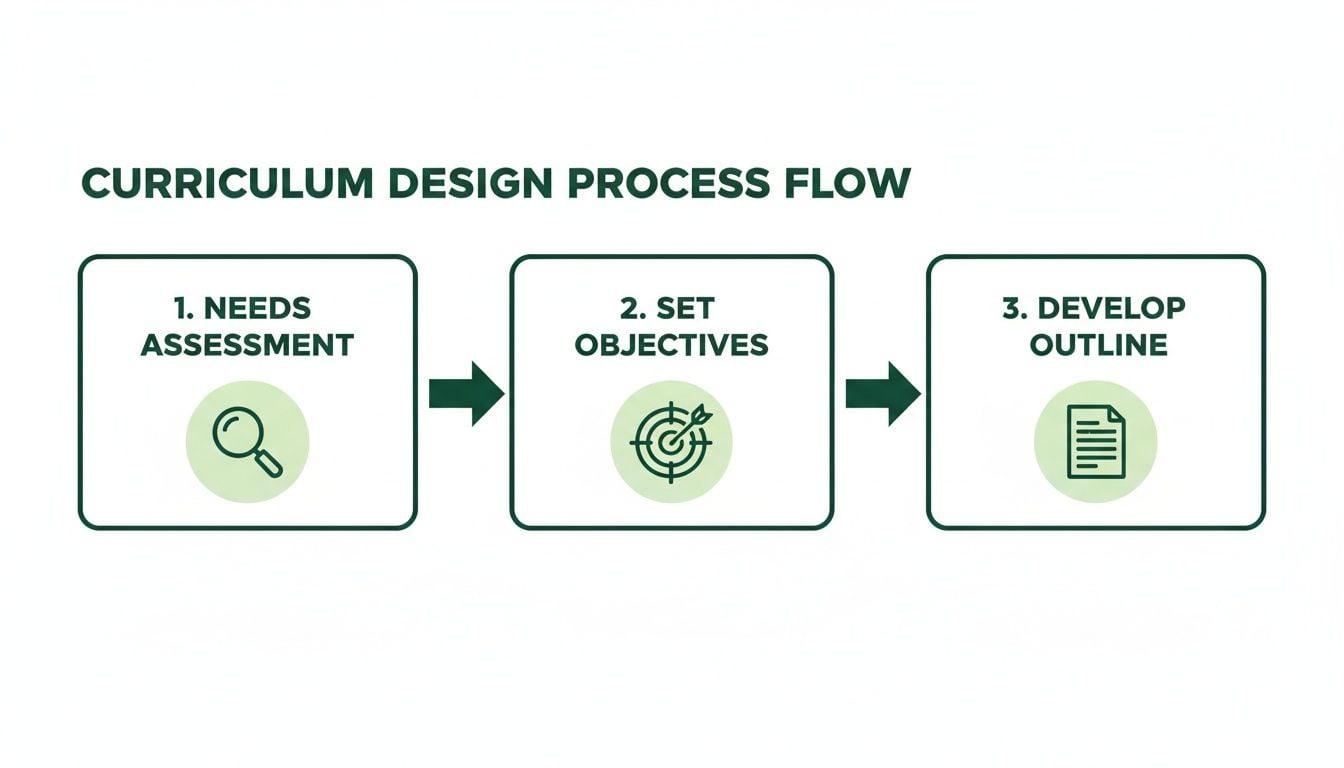
Starting by assessing your real needs, then setting clear objectives, and finally outlining the content ensures your training hits the mark from day one. Technology can make each of these steps quicker and more collaborative.
This shift toward digital tools is accelerating. Predictions show that by 2026, a staggering 45% of church leaders will be using AI tools in their daily work—that’s an 80% increase in just one year. For small to mid-sized churches, this looks like unifying giving platforms with bank feeds to automate fund accounting and get instant financial clarity. With 87% of leaders globally recognizing AI's potential to improve how they operate, digital competence is fast becoming a core component of good stewardship.
The goal of technology in the church is not to replace relationships but to create more time and space for them. When administration is efficient, leaders are freed up for the heart of ministry.
Choosing the Right Tools for Your Church
With a sea of apps and software out there, it's easy to get overwhelmed. My advice? Start by identifying your biggest pain points. Don't chase the shiny new thing; solve a real problem.
- Is communication a constant struggle? Sometimes, a simple group messaging app or a well-managed private social media group is all you need to get everyone on the same page.
- Need a central place for training content? A shared cloud drive (like Google Drive or Dropbox) or a basic online course platform can serve as a digital library for your videos, notes, and resources.
- Is tracking donations and expenses a headache? This is one area where investing in purpose-built software is a lifesaver.
When it comes to financial oversight, a dedicated solution is a game-changer. Generic business software just doesn't understand the nuances of true fund accounting, which is absolutely critical for church transparency and integrity. This is where tools designed specifically for churches, like Grain Ledger, come in. They automate donation tracking, simplify reporting, and give pastors and finance teams real confidence in their stewardship. You can explore our guide on the best church management software to see how these integrated systems work together.
Here’s a small but impactful tip: to make your video training more accessible, consider using an AI subtitle generator. It's a simple way to ensure your message is clear for everyone, whether they're watching in a noisy coffee shop or have a hearing impairment.
Moving Beyond the One-Person Show: Building a Healthy Leadership Team

Many churches, especially smaller ones, fall into the trap of the "solo pastor" model. One person is expected to be the preacher, CEO, counselor, and chief everything-officer. It's a recipe for burnout and an incredibly isolating way to do ministry.
A far healthier, more biblical, and frankly, more effective approach is to build a thriving, team-based leadership culture. This is where we stop relying on one person's gifts and start identifying, celebrating, and activating the diverse gifts of the entire body. It’s a fundamental shift from a few overworked leaders to an army of engaged ministers.
This isn’t just a nice theory; it's a practical necessity. With 68% of churches globally having fewer than 100 people, empowering everyone is the only sustainable path forward. It also addresses the pre-pandemic trend of 10-15% annual member attrition by fostering the deep community and shared ownership that younger generations crave. You can explore more about what’s changing in ministry by checking out these insights on emerging church trends.
Solo Pastor vs. Team-Based Leadership
The difference between these two models isn't just structural; it's cultural. One leads to exhaustion, while the other creates energy and shared purpose. Here’s a look at how they stack up in the real world:
| Characteristic | Solo Pastor Model | Team-Based Model |
|---|---|---|
| Ministry Burden | Carried almost entirely by one person. | Shared across a team of staff and volunteers. |
| Decision-Making | Centralized, often becoming a bottleneck. | Collaborative, leading to better-vetted ideas. |
| Sustainability | High risk of burnout and pastoral turnover. | More resilient; ministry continues if one person leaves. |
| Member Engagement | Passive; members are consumers of ministry. | Active; members are partners in ministry. |
| Gift Development | Limited to the pastor's own gift set. | Unlocks and develops the diverse gifts of the congregation. |
| Accountability | Often informal and insufficient. | Built into the structure through peer relationships. |
Ultimately, a team-based approach isn't about diminishing the pastor's role but amplifying the church's impact by unleashing the full potential of its people.
Defining Roles to Create Clarity
The first step toward building this culture is getting rid of ambiguity. When people don't know what they're supposed to do, they either step on each other’s toes or, more likely, do nothing at all because they're afraid of making a mistake. Good leadership training has to get practical here.
Start by mapping out who is responsible for what.
- Pastoral Staff: Their primary job is shepherding the flock, preaching the Word, casting vision, and—crucially—equipping others to do the work of ministry.
- Elders/Deacons: These leaders provide spiritual oversight, ensure doctrinal integrity, and offer hands-on care for the congregation.
- Ministry Team Leaders: These are your point people for specific areas like youth, worship, or local outreach. They lead and empower their volunteer teams.
- Finance/Admin Teams: They are the backbone, ensuring good stewardship and smooth operations so that ministry can happen without logistical chaos.
A team-based culture doesn't just happen; it must be intentionally built. It requires a humble pastor willing to empower others, a congregation willing to step up, and a clear structure that lets everyone know how they can contribute their unique gifts.
This structure allows the lead pastor to shift from being the primary "doer" of all ministry to the chief "equipper" of God's people.
Fostering Communication and Ownership
Once your teams are defined, communication becomes everything. This is more than just sending a weekly email; it’s about creating real channels for honest feedback, shared decision-making, and genuine encouragement.
A simple, predictable meeting rhythm is a game-changer. Consider a flow like this:
- Weekly Staff Huddle: A quick 30-minute check-in to align priorities for the week and pray together.
- Monthly Ministry Leader Meeting: A dedicated time for leaders from different teams to collaborate, share wins, and troubleshoot problems together.
- Quarterly Elder/Staff Retreat: An off-site day for prayer, long-range vision, and relational connection.
This rhythm creates a pulse of connection and clarity. When leaders feel heard, trusted, and valued, they take real ownership. They stop seeing themselves as "helpers" and start seeing themselves as partners in the gospel—and that’s when a church truly begins to thrive.
Mastering Financial Stewardship and Fund Accounting

Financial integrity is the bedrock of a church’s relationship with its congregation. When a church handles its finances with absolute clarity and accountability, it not only honors its donors but also its very mission. This is why any serious leadership training must equip pastors and elders to master financial stewardship, specifically through fund accounting.
You see, fund accounting is fundamentally different from the profit-and-loss bookkeeping used in the business world. Its entire structure is built on the biblical principle that leaders are stewards—not owners—of the resources entrusted to them. Every dollar has an intended job, and fund accounting is the system that ensures it gets done.
It provides a transparent answer to the most important question every member has a right to ask: "Where did my money go?"
The Core Concepts of Fund Accounting
To lead with confidence, every leader—not just the treasurer—needs to have a working knowledge of a few key terms. Grasping these concepts is crucial for making wise decisions and maintaining trust.
- General Fund: Think of this as the church's operational lifeblood. These are unrestricted gifts that cover essential, day-to-day expenses like staff salaries, utility bills, and ministry supplies. The church board can allocate these funds as needed to keep the mission moving forward.
- Designated Funds: Sometimes, a donor gives with a specific ministry in mind, like "for the youth mission trip" or "for the Christmas outreach." These funds are designated. While not legally binding, upholding the donor's intent is a matter of profound integrity.
- Restricted Funds: These are different. Restricted funds are legally bound to a particular purpose, often tied to a capital campaign for a new building or a permanent endowment. A gift explicitly given to the "Building Fund," for example, cannot be used to cover a payroll shortfall.
Financial transparency isn't just an administrative chore; it's a ministry of trust. When leaders can clearly show how every dollar is being used for its intended purpose, they cultivate a culture of generosity and confidence that fuels the church's mission for years to come.
Trying to manage these separate pots of money with a generic spreadsheet is a recipe for disaster. It’s far too easy for funds to get co-mingled, which can shatter the trust you’ve worked so hard to build.
A Purpose-Built Solution for Church Finances
To truly protect your church's integrity and simplify this crucial work, you need a tool that was built for the unique world of church finance. We recommend Grain Ledger, an accounting solution designed from the ground up for churches. It’s not business software with a few church-y features tacked on; its DNA is pure fund accounting.
With a system like Grain Ledger, your leadership team gains incredible capabilities:
- Automate Fund Tracking: Donations can flow automatically from your giving platform into the correct funds—general, designated, or restricted—eliminating manual entry and human error.
- Gain Instant Clarity: At any moment, pastors and board members can pull up real-time reports that show the financial health of each fund. No accounting degree required.
- Ensure Accountability: Built-in safeguards prevent restricted funds from being used for anything other than their specified purpose, providing an essential layer of protection.
This level of organization transforms financial management from a source of stress into a strategic tool for ministry. For a deeper dive, check out our complete guide on fund accounting for churches to see these principles in action. Giving your leaders the right financial knowledge and tools is one of the most powerful investments you can make in building a resilient, trustworthy ministry.
A Few Common Questions About Church Leadership Training
When you start thinking about building a leadership training program, a lot of practical questions naturally pop up. I get these all the time from pastors and church boards. Let's walk through some of the most common ones.
“Our Church is Small and Our Budget is Tight. Where Do We Even Begin?”
I hear this one a lot. For a smaller congregation, the thought of launching a "formal" training program can feel completely out of reach. The good news is, effective leadership development is far more about your time and intention than it is about your budget.
You don't need a huge budget to get started. You just need to be smart and consistent. Here are a few simple, low-cost ideas I’ve seen work wonders:
- Start a Book Club: This is a classic for a reason. Pick a solid book on a relevant topic—maybe biblical leadership, spiritual disciplines, or team dynamics. Gather a small group of potential leaders and simply talk through a chapter every week or two. It’s amazing what happens in those discussions.
- Focus on Mentoring: Pairing a seasoned leader with someone just starting out is one of the most powerful (and cheapest) forms of development. These one-on-one relationships foster deep personal growth and cost absolutely nothing but a commitment of time.
- Use Free Online Resources: The internet is overflowing with incredible content from trusted seminaries and ministry organizations. You can find free articles, podcasts, and entire video series. Your job is to curate the best stuff into a simple curriculum for your team.
The secret sauce is consistency. Try focusing on developing just one key skill per quarter. Maybe it’s learning how to lead a small group discussion or understanding the church's financial report. You'll build momentum without breaking the bank.
“What Are the Most Important Topics We Should Cover?”
It’s easy to get lost in all the possible things you could teach. The goal is to develop whole leaders, not just skilled technicians. A leader who is strong in one area but weak in others is a recipe for burnout or ministry implosion.
A leader's effectiveness is a blend of what they believe, who they are, what they can do, and how they organize. Neglecting any one of these areas leaves them ill-equipped for the real-world pressures of ministry.
I always recommend building a curriculum around four essential pillars:
- Biblical & Theological Foundations: This is the what we believe. It’s the non-negotiable anchor that grounds every decision in sound doctrine.
- Character & Spiritual Formation: This is the who we are. It’s all about a leader’s personal walk with God, their integrity, and their spiritual health. Ministry flows from being.
- Practical Ministry Skills: This is the what we do. This covers the hands-on skills needed for the job, like teaching, providing pastoral care, or leading community outreach.
- Leadership & Administration: This is the how we organize. This is where you get into team building, planning, and—yes—financial oversight.
A great way to start is by asking, "What's our most pressing need right now?" If your teams are full of friction, start with a module on biblical conflict resolution. If giving is down, make financial stewardship and transparency a priority.
“How Do We Know if the Training is Actually Working?”
Measuring success isn't just about attendance numbers; it's about seeing real, tangible change in the life of your church. A good program produces results you can both count and see.
On the quantitative side, you can track some clear data points. Are you seeing more new leaders stepping up to serve? Has your volunteer retention rate improved? Are your small groups multiplying or growing healthier? These numbers give you a hard-data snapshot of engagement.
But honestly, the qualitative signs are often where the real story is.
You'll start to notice healthier team dynamics and hear about fewer unresolved conflicts. You'll hear personal stories from your leaders about how they're growing spiritually. The ultimate sign? When you see people stepping up and taking ownership of ministry without being asked. That's when you know your investment is truly paying off. Regular check-ins and simple feedback forms are perfect for capturing these powerful insights.
Managing church finances with integrity is a cornerstone of effective leadership. Grain provides the true fund accounting software that small to medium-sized churches need to build congregational trust. It unifies your giving, banking, and bookkeeping to provide instant clarity and ensure every dollar is stewarded with purpose. To simplify your church's financial management and empower your leaders, Schedule a Demo for Grain today.
Ready to simplify your church finances?
Start free with church fund accounting, or watch a product demo first.