8 Nonprofit Accounting Best Practices for Churches in 2026
 By Gibson Brueher, Founder of Grain Ledger
Master your church finances with these 8 nonprofit accounting best practices. Learn about fund accounting, internal controls, and audit readiness for 2026.
Beyond the offering plate, church finance usually looks less tidy than people expect. You're tracking Sunday giving, online gifts, benevolence requests, payroll, mission support, facility bills, and designated donations that can't easily be folded into general operations. If you've ever spent a late evening trying to trace one gift into the right fund, or trying to explain a confusing report to elders who just want a clear picture, you're in familiar territory.
See Grain Ledger for your church
Fund accounting, giving integrations, and bank reconciliation in one platform. Free migration support for churches switching from QuickBooks or Aplos.
That's why nonprofit accounting best practices matter so much in a church setting. This isn't just about cleaner books. It's about stewardship, donor trust, board oversight, and making sure restricted gifts are used as intended. The strongest church finance systems are built around fund accounting, with separate tracking for restricted and unrestricted resources, clear financial statements, documented controls, and regular review by leadership, as outlined in ParishSOFT's overview of nonprofit accounting best practices.
The challenge is that many churches still operate with a business-style chart of accounts, disconnected tools, and too much manual work. That setup creates confusion fast, especially when multiple funds and designated gifts are involved.
These eight practices are the ones that consistently make the biggest difference for small and mid-sized churches.
1. Fund-Based Accounting Architecture
A church treasurer sees this problem quickly. The monthly report says cash is healthy, but part of that balance belongs to missions, part to a building project, and part to benevolence. If the system does not separate those purposes at the ledger level, the report gives leadership a distorted picture.
Fund-based architecture fixes that at the foundation. Instead of treating church finances like one operating pool with a few department tags, it organizes the books around the actual buckets the church is responsible to steward. General offerings, designated gifts, memorials, campaign receipts, and ministry-specific support each need a defined home in the ledger.
Build the chart around how the church actually receives and uses money
Start with the funds your church can explain clearly to donors, staff, and elders. For many churches, that means a general fund plus a short list of separate funds such as missions, benevolence, building, youth, or a capital campaign. The goal is not to create a fund for every idea. The goal is to create a structure that matches donor intent, board oversight, and day-to-day posting.
I usually see two mistakes here. One is running everything through a business-style chart of accounts and trying to sort it out with notes or classes later. The other is creating so many funds that no one can post consistently. Both lead to cleanup work, confused reporting, and avoidable risk.
Practical rule: If a gift carries a restriction or a board-designated purpose, the accounting system should identify it, hold it apart, and report on it separately.
Grain Ledger fits this use case because it is built for fund accounting in a church setting. Funds are part of the accounting structure itself, which makes setup, reporting, and review more straightforward for small and midsized churches than forcing a general business ledger to mimic nonprofit logic.
A structure people can use beats a perfect structure no one follows
Good architecture is simple enough for the office team to apply correctly every week. Define the fund list before implementation. Decide which donation types map to which funds. Document those rules in plain language so the person entering gifts and the person reviewing reports are working from the same playbook.
Here is the trade-off. More detail can improve visibility, but too much detail usually breaks consistency. If one committee wants its own labeled bucket for every event, resist that pressure unless the church needs separate tracking and reporting for governance or donor restriction reasons.
What holds up in practice
- Build funds around real restrictions, recurring designations, and board reporting needs.
- Keep the number of funds tight enough that staff can code transactions correctly without guesswork.
- Post gifts to the right fund at entry, not during month-end cleanup.
- Retire unused or duplicate funds before they clutter reporting.
- Do not rely on memory or email history to decide whether money was restricted.
A simple example makes the point. If a church plant is raising money for equipment and leasehold improvements, those receipts should sit in a separate fund from the operating fund that covers payroll, rent, and utilities. That setup protects donor intent, gives the board a cleaner report, and reduces the chance that restricted cash gets mistaken for spendable operating money.
2. Integrated Giving Platform and Bank Reconciliation
Sunday closes strong. By Tuesday, the office is comparing donor platform exports, processor fees, and bank deposits that do not line up cleanly. The issue usually is not giving volume. It is a disconnected workflow.
Churches feel this pressure quickly once online giving becomes a meaningful share of receipts. If the team exports reports from Planning Center, Pushpay, Stripe, or another platform, then rekeys gifts into the ledger and matches deposits by hand, reconciliation slows down and errors multiply. A healthier setup connects the giving platform, the bank feed, and the accounting system so gift activity flows into the right fund with fewer manual corrections.
Integration should follow fund logic
Integration is not only about saving time. It has to preserve the designation attached to each gift from the moment it is received through the bank reconciliation process. If someone gives to missions online, the accounting entry should already reflect the missions fund. Staff should not be sorting that out later from a processor report and memory.
Grain Ledger fits well in this workflow because it connects church accounting with bank feeds and common giving tools, including Planning Center, Pushpay, and Stripe, while keeping the fund structure intact. For small and mid-sized churches, that matters more than flashy automation. A significant benefit is consistent coding from the gift record to the deposit in the bank.
There is a trade-off here. More integrations can reduce hand entry, but they also create more mapping rules to maintain. A church with one campus and a short fund list can keep things simple. A multi-site church often needs mappings that separate campus or ministry activity without breaking consolidated reporting. The right answer depends on how your board reviews activity and how much accounting capacity the church has.
A sound rollout process
- Audit categories first: Compare every giving designation in the donation platform to the accounting fund list before turning on sync.
- Test deposit timing: Confirm how batches, fees, and transfer delays appear in the bank so staff know what should reconcile together.
- Monitor the first month closely: Review early imports frequently so mapping mistakes get fixed before month-end.
- Keep a fallback process: Integrations fail sometimes. Document how to pause imports, prevent duplicates, and post entries manually if needed.
- Review mappings regularly: Campaigns change, funds get closed, and processors update settings. The sync rules need periodic review.
One practical rule helps a lot. Reconcile to the actual bank activity, not just the giving dashboard. Processor summaries are useful, but the bank statement is still the final check on what settled, what was held, and what fees were taken out before cash arrived.
Churches that get this right usually stop treating reconciliation as a cleanup exercise. It becomes part of weekly financial control. Leaders get cleaner reporting, the office spends less time chasing deposit differences, and fund activity stays reliable enough to support board decisions.
For a quick visual example of how churches are thinking about connected workflows, this walkthrough is useful:
3. Restricted vs. Unrestricted Fund Segregation
Here, stewardship becomes concrete.
A restricted gift isn't a suggestion. If a donor gives to a building fund, a mission trip, or benevolence, that money can't be casually redirected because the operating account feels tight. Churches need a system that makes the distinction visible every time leadership reviews finances.
Treat restrictions as operational rules
The strongest practice is to mark restriction status at the moment the gift is received, not at month-end. That means your donor records, accounting entries, and reports all agree on the status of the money.
This is also where churches often confuse fund balances with available spending room. A report can show a healthy restricted balance and still leave the church short on usable cash for payroll or recurring bills. Practitioner guidance often misses this tension between fund reporting and real liquidity, and the INAA discussion of nonprofit accounting best practices points to that gap directly.
Restricted balances on paper don't solve an operating cash problem. Leaders need to see both the fund report and the cash position.
That's why I like separate reporting lines for restricted and unrestricted resources in every board packet. If a church only sees one combined cash number, people assume all dollars are equally available. They aren't.

Good segregation habits
- Document the purpose clearly: Each restricted fund should have a written description leadership can reference.
- Approve spending deliberately: Expenses charged to restricted funds should follow a documented approval path.
- Track releases from restriction: When the purpose has been met, record that release clearly rather than letting balances linger ambiguously.
- Use separate bank accounts selectively: For large campaigns or major designated reserves, separate banking can help, but the accounting records still have to carry the fundamental control.
What doesn't work is using one operating account and assuming everyone remembers what portion belongs to which purpose. Churches outgrow that approach quickly.
4. Monthly Financial Close and Reconciliation Process
A church that closes the books consistently makes better decisions. A church that closes late guesses.
Monthly close doesn't need to be complicated, but it does need to be disciplined. Reconcile bank and credit card activity, review donation postings, verify payroll, check loan balances, post needed journal entries, and produce financial statements on a predictable schedule. Practical nonprofit guidance regularly recommends reconciliations and quarterly board review because those rhythms support transparency and oversight, as noted earlier in the ParishSOFT guidance.
Use a written close checklist
A checklist removes the dependence on memory and makes handoffs easier when volunteers, bookkeepers, or staff roles change. It also creates continuity when a treasurer rotates off the board.
My preference is to close in the same sequence every month. Start with banks. Then donation clearing accounts. Then payroll and liabilities. Then fund activity and financial statements. Churches that jump around usually miss something.
Field note: Reconcile cash before discussing ministry spending. If the cash numbers are wrong, every conversation after that starts on the wrong foot.
A monthly close should also include budget-versus-actual review, not just bookkeeping cleanup. If utilities are running ahead of plan, if benevolence requests are higher than expected, or if designated giving slowed down, leadership needs that information while there's still time to respond.
What a healthy monthly rhythm looks like
- Set a calendar: Pick the same business days each month for close tasks.
- Assign owners: One person shouldn't solely carry the whole process.
- Document unusual entries: A short memo saves a lot of confusion later.
- Issue board-ready reports promptly: Reports have more value when they're current.
A common church scenario is duplicate giving entries from a manual import plus an automatic sync. Monthly reconciliation is where you catch that before it rolls into quarter-end reporting.
5. Multi-Entity Accounting and Consolidation
Some churches are one legal entity with one campus. Many aren't that simple anymore.
You may have multiple campuses, a church plant under shared oversight, a benevolence arm, a school, or a ministry initiative that leadership wants to view separately. If that activity is all mixed into one ledger with no entity structure, the reports become muddy fast.
Separate records, unified oversight
Leaders usually need two views at once. They need to see how each campus or ministry is performing on its own, and they need a consolidated picture of the whole church. Those aren't competing needs. Good accounting supports both.
Software choice is again important. Grain Ledger is a strong fit for churches that need fund-based reporting and a cleaner structure for ministries or locations because the reporting starts from church logic, not generic business categories.
A practical example is a church with a main campus and a second campus meeting in a school. The second campus may have its own giving, facility costs, ministry expenses, and staffing support, but elders still need one consolidated financial picture for governance. Without an organized entity structure and inter-entity rules, transfers between locations get booked inconsistently and reports stop being trustworthy.
The trade-offs to manage
- Use separate entities when governance or reporting requires it: Don't create extra layers just because the software allows it.
- Track inter-entity activity consistently: Shared payroll, rent support, and central admin costs need a clear method.
- Standardize allocation rules: If you allocate insurance, software, or staffing support, use one documented basis and stick to it.
- Review eliminations monthly: Waiting until year-end makes consolidation much harder.
Churches often underestimate how much confusion is created by informal transfers. If one campus covers an expense for another and nobody records the internal relationship, the consolidated picture may still look plausible while the location reports are wrong.
6. Budget Development, Monitoring, and Variance Analysis
A church budget should do more than authorize spending. It should help leaders notice change early.
That means budgeting by fund where needed, not just by department or line item. A missions fund, building fund, and general operating fund don't behave the same way. They have different revenue patterns, different restrictions, and different decision rules.
Build budgets people can actually use
The best church budgets are grounded in ministry plans, staffing realities, and historical patterns, then monitored against actual activity every month or quarter. Current nonprofit accounting best practices place more weight on budgeting discipline, cash visibility, and revenue reliability than on a single expense ratio, as explained earlier in the guidance on moving beyond the old overhead shorthand.
A useful board packet doesn't just show that an account is over budget. It explains why. Maybe a repair hit earlier than expected. Maybe designated youth giving increased and spending followed. Maybe general offerings softened while fixed expenses stayed the same.
Budget variance review isn't about blame. It's where finance turns into leadership.
Make variance analysis a leadership habit
- Ask for explanation, not just approval: Ministry leaders should help explain unusual swings.
- Separate timing issues from real overruns: Some variances reverse next month. Others signal a trend.
- Watch unrestricted operating pressure closely: Restricted giving can be strong while the general fund is strained.
- Revise forecasts during the year: An annual budget shouldn't become a document nobody revisits.
A church that notices an emerging summer giving dip early can delay discretionary spending, slow a project, or communicate clearly with leadership. A church that notices it after the fact usually reacts under pressure.
7. Proper Documentation and Audit Trail Maintenance
If a transaction can't be explained later, it wasn't documented well enough.
Churches don't just need accurate entries. They need support behind those entries. That includes invoices, receipts, donor documentation, approval evidence, payroll reports, reimbursement details, bank statements, and notes for unusual journal entries.
Make support part of the transaction
One of the most practical nonprofit accounting best practices is treating documentation as part of the work, not a separate cleanup task. The person entering a reimbursement should attach the receipt. The person posting a correction should include a memo. The board should capture major financial approvals in meeting minutes.
This matters in routine cases and sensitive ones. If a donor gives to a special project, the church should be able to show how that gift was classified and where the related spending was recorded. If a facility repair is approved quickly because the roof is leaking, that urgency should still be reflected in the documentation.
A clean audit trail also helps internally. When a treasurer changes, a pastor asks a question months later, or an outside accountant reviews the books, the records should speak for themselves.
Strong documentation habits
- Use naming conventions: Month folders and consistent file names reduce hunting.
- Write short memos for unusual items: A few sentences now can prevent major confusion later.
- Retain approval evidence: Email approval, board minutes, or workflow history all matter.
- Choose software with user tracking: You want a record of who created or changed an entry.
What doesn't work is storing support in inboxes, paper folders, text messages, and people's memories. That's not an audit trail. It's a scavenger hunt.
8. Internal Controls and Segregation of Duties
Trust is not an internal control.
Churches are often staffed by faithful, well-intentioned people, but that doesn't remove the need for safeguards. Internal controls protect the church, the staff, the volunteers, and the reputation of the ministry. They reduce fraud risk, catch errors earlier, and make reports more credible to boards and donors.
Break up the transaction cycle
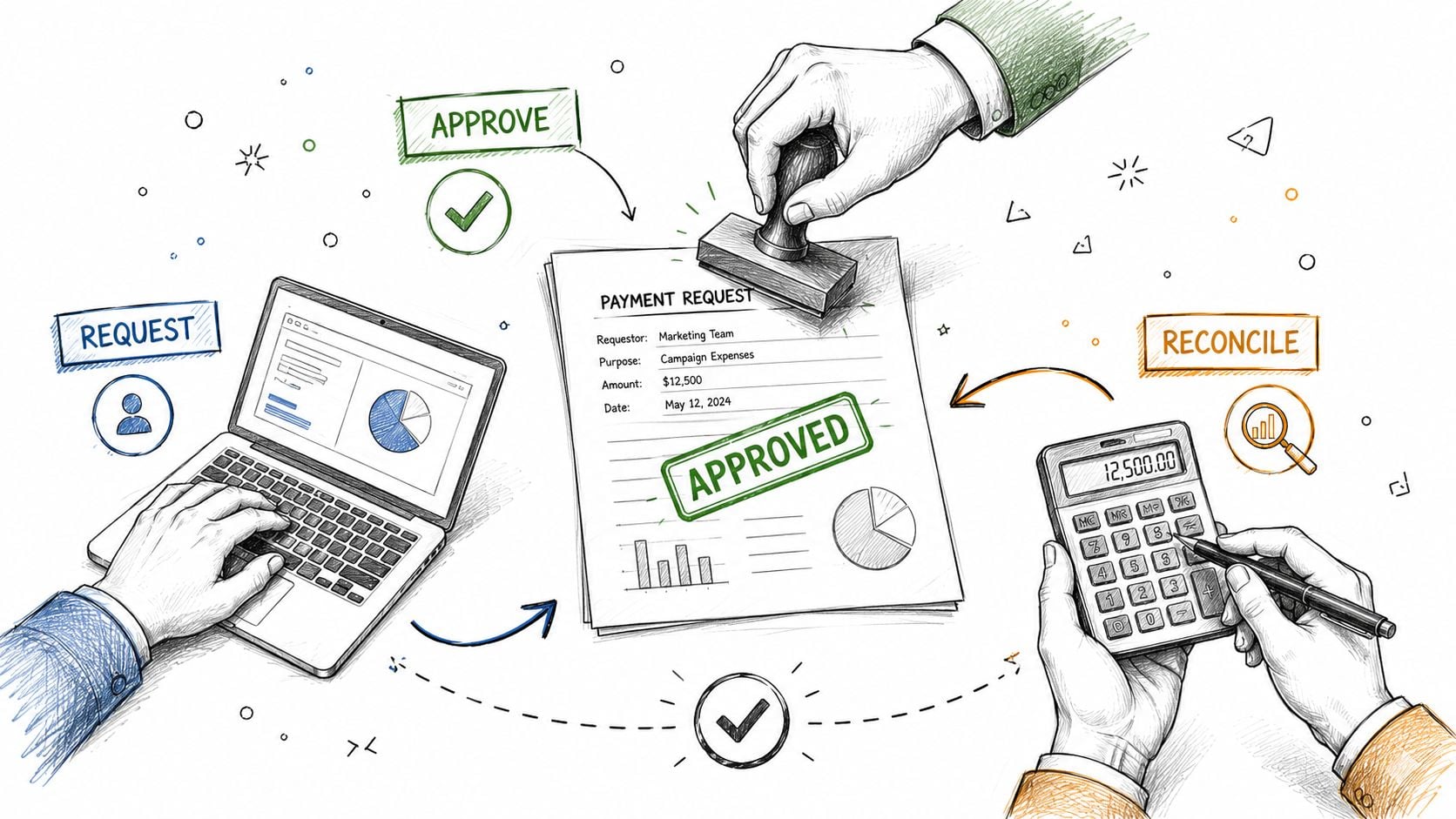
The core principle is simple. The person who requests a payment shouldn't be the same person who approves it, records it, and reconciles the bank statement. Even in a small church, you can usually split these duties enough to create meaningful oversight.
If staffing is thin, involve a board member or finance committee member in review. Someone outside daily processing can review bank statements, scan unusual transactions, or compare disbursements to approvals.
Controls that fit small and mid-sized churches
- Separate approval from entry: The person entering bills shouldn't be the final approver.
- Review bank activity independently: A treasurer, elder, or finance committee member can provide a second set of eyes.
- Control online banking access: Limit permissions based on role and review them when staff changes.
- Document procedures in writing: Controls fail when they live only in one person's head.
A small church may not have a large finance office, but it can still have real accountability.
Segregation of duties also supports timely reporting and audit readiness, two areas that current nonprofit guidance emphasizes heavily. It's easier to trust the numbers when more than one person has touched the process in the right way.
8-Point Nonprofit Accounting Best Practices Comparison
| Practice | Process / Complexity 🔄 | Resource & Setup ⚡ | Expected Outcomes ⭐ | Ideal Use Cases 📊 | Key Advantages 💡 |
|---|---|---|---|---|---|
| Fund-Based Accounting Architecture | Moderate–High; requires upfront fund design and consistent entry rules | Moderate; needs fund-aware software and staff training | High; accurate restricted-donation tracking and reduced reconciliation errors | Churches with multiple restricted funds or capital campaigns | Maintains donor intent and provides transparent fund-level reporting |
| Integrated Giving Platform and Bank Reconciliation | Moderate; initial API mapping and rules configuration | Moderate–High; integrations, reliable APIs, and monitoring | Very high; near real-time giving visibility and large time savings | Churches with significant online giving or multiple payment processors | Eliminates manual entry, automates reconciliation, reduces fraud risk |
| Restricted vs. Unrestricted Fund Segregation | Low–Moderate; policy enforcement and system rules required | Low; clear documentation and staff training needed | High; compliance with donor intent and stronger audit readiness | Any church receiving designated gifts or grants | Prevents misuse of restricted gifts and clarifies financial flexibility |
| Monthly Financial Close and Reconciliation Process | Moderate; standardized checklist and monthly cadence | Moderate; trained personnel and possible automation tools | High; timely, accurate statements and early error detection | Churches needing predictable reporting and leadership oversight | Consistent reporting cadence, better trend analysis, audit readiness |
| Multi-Entity Accounting and Consolidation | High; inter-company tracking and elimination rules are complex | High; consolidation-capable software and accounting expertise | High for complex orgs; clear entity and consolidated financial view | Multi-campus churches, networks, or affiliated organizations | Shows entity performance while providing consolidated organization health |
| Budget Development, Monitoring, and Variance Analysis | Moderate; initial build and regular review discipline required | Moderate; historical data, collaboration, and reporting tools | High; proactive decision-making and early detection of variances | Churches aiming for strategic planning and resource allocation | Drives accountability, cash-flow planning, and seasonal insight |
| Proper Documentation and Audit Trail Maintenance | Low–Moderate; consistent documentation workflows required | Low–Moderate; digital storage, retention policies, staff time | High; smoother audits, faster discrepancy resolution, fraud protection | All churches seeking compliance and transparent records | Provides verifiable evidence for audits and protects organizational integrity |
| Internal Controls and Segregation of Duties | Moderate; needs defined roles and formal approval workflows | Moderate–High; multiple personnel, access controls, and oversight | Very high; significantly reduces fraud risk and errors | Organizations prioritizing risk mitigation and donor trust | Enforces checks & balances, increases accountability and trust |
Compare platforms in our best church accounting software guide for 2026, or review Grain Ledger church accounting software.
Related church accounting software resources
If you are comparing software, these pages map the main decision points: fund accounting, QuickBooks limits, pricing, and migration.
- Best church accounting software (2026 comparison) - canonical guide comparing 12 church accounting platforms
- Church accounting software product page - see Grain Ledger for fund accounting, giving, and bank reconciliation
- Small church accounting software - see the product page built for volunteer treasurers and church admins
- Fund accounting features - review how Grain Ledger tracks designated funds
- QuickBooks for churches - understand workarounds and when to switch
- Free church accounting software - compare free options and upgrade triggers
- Grain Ledger pricing - compare plans for small and growing churches
- Start free - try fund accounting, giving imports, and bank reconciliation together
From Bookkeeping to Better Ministry
Strong church accounting supports ministry in a very practical way. It helps pastors and boards make decisions with clarity, gives donors confidence that their gifts are handled carefully, and reduces the stress that comes from trying to reconstruct the story of the finances after the fact. When churches adopt nonprofit accounting best practices consistently, the books become less of a burden and more of a tool for stewardship.
The foundation is fund-based thinking. Churches don't operate like standard businesses, and they shouldn't use accounting processes that pretend otherwise. Restricted and unrestricted resources need to be tracked separately. Financial statements need to be understandable. Reconciliations need to happen on schedule. Documentation needs to follow the transaction. Internal controls need to reflect the risks of church operations, even when the team is small.
I'd add one practical caution. More detail isn't always better. A church can build too many funds, too many reports, and too many manual review steps, then bury leaders in information they can't use. The best systems create visibility without creating clutter. Boards need enough detail to govern well, and staff need processes they can maintain month after month.
That's also why software fit matters. A generic accounting system can sometimes be forced into church use, but the extra labor usually shows up later in reconciliations, report confusion, and restriction errors. A purpose-built platform like Grain Ledger is relevant because it aligns accounting with the fund structure churches already need, while also connecting to common giving and banking workflows.
At its best, church finance work becomes quieter. Fewer surprises. Cleaner board packets. Clearer answers when someone asks where a designated gift went. More confidence during audits, budget discussions, and year-end reporting. That's the value of these practices. They don't just improve bookkeeping. They strengthen trust across the whole ministry.
If your church is still relying on spreadsheets, loosely defined funds, or disconnected systems, start with the fundamentals. Clean up the fund structure. Tighten the monthly close. Clarify restricted fund rules. Then build the integrations and controls that support those habits. Progress usually comes from consistent systems, not heroic cleanup efforts.
If your church needs accounting built around funds instead of workarounds, Grain is worth a close look. It's designed for small to medium-sized churches that need true fund-based accounting, integrated giving and bank workflows, and reporting that makes sense to pastors, treasurers, and boards.
Ready to simplify your church finances?
Start free with church fund accounting, or watch a product demo first.