Mastering Parochial Reports Episcopal Church Guide
Get a complete guide to parochial reports episcopal church. Learn to prepare sections, manage finances, and use fund accounting for accuracy.
You're probably looking at the Parochial Report because someone just handed you the treasurer's binder, the login, or both. The form can feel like a compliance exercise that appears once a year, asks for numbers from five different corners of parish life, and then disappears into the diocesan office.
About Grain Ledger: This guide includes Grain Ledger, church fund accounting software built for designated gifts and ministry funds. It connects giving platforms (Planning Center, Pushpay, Tithely, Stripe), syncs bank activity with Plaid, and produces fund-level financial reports. Schedule a demo to see how it compares for your church.
See Grain Ledger for your church
Fund accounting, giving integrations, and bank reconciliation in one platform. Free migration support for churches switching from QuickBooks or Aplos.
That's the wrong way to think about it.
In practice, parochial reports episcopal church work best when you treat them as the annual ministry record of the congregation. The report captures who was baptized, who worshiped, how the parish was staffed, how money was received and spent, and where ministry happened. If the numbers are sloppy, the story is sloppy. If the numbers are clear, leaders can make better decisions about staffing, stewardship, outreach, and what the parish can sustain next year.
What the Parochial Report Is and Why It Matters
The Parochial Report is not just a diocesan form. It is the Episcopal Church's official annual record of congregational life, and it is mandated by Canon I.6. It is also the church's longest-running data collection effort. In 2023, it gathered information from 6,754 congregations, including 1,547,779 baptized members, $2.5 billion in total income, and a clergy pattern in which 44% of congregations had full-time priests, down from 63% in 2010, according to the Episcopal Church's 2023 Parochial Report release.
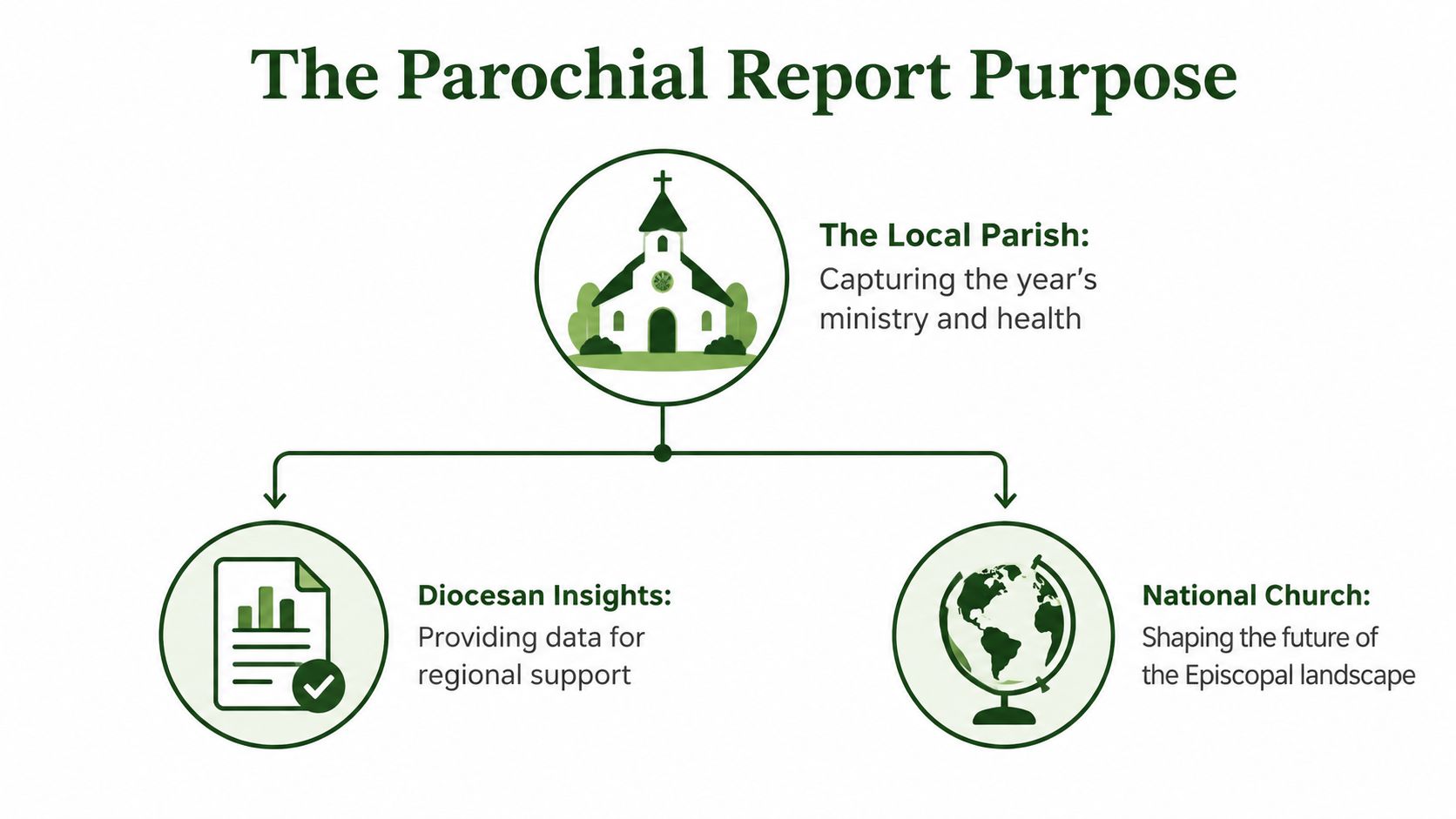
It tells three stories at once
At the parish level, the report says what happened in your congregation during the year. It answers practical questions. Are baptisms rising or falling? Is worship attendance changing shape? Are finances supporting ministry priorities or merely keeping the lights on?
At the diocesan level, the same report helps bishops, canons, and finance officers understand where support is needed. A parish with steady giving but changing clergy structure may need one kind of help. A parish with active outreach and weak reserves may need another.
At the churchwide level, the report becomes part of a much larger picture. That matters because local choices add up. If many congregations report similar trends, leaders can plan with more realism.
Practical rule: A Parochial Report isn't just about satisfying a deadline. It's about giving your vestry and diocese a truthful picture of ministry.
Why accuracy matters beyond compliance
Most new volunteers assume the report is mainly for statistics. It isn't. It affects governance, planning, and how leaders interpret the condition of the church. If your membership counts are inflated, your leaders may overestimate ministry capacity. If your financial totals omit restricted accounts, the parish may appear weaker or healthier than it really is.
That's why good treasurers don't wait until filing week. They build a reporting habit all year. Attendance records are maintained consistently. Membership changes are documented. Financial statements are prepared in a way that can support the report without last-minute reconstruction.
A clear set of year-end reports also makes vestry communication easier. If you want a useful framework for that side of the work, this guide to church financial reports is a solid companion.
Decoding Each Section of the Report
Most anxiety around the form comes from trying to read it all at once. It's easier to handle when you think of it as several smaller reports tied together.
Membership and sacramental life
This section records who belongs to the congregation in a formal sense and what sacramental life looked like during the year. That includes baptized members and communicants, but it also includes events that reveal how people are entering, moving through, and leaving the life of the parish.
Those figures matter because they show more than headcount. They show whether the parish is receiving new people into Christian life, forming them, and accompanying them through major moments.
The recent churchwide shifts have been sharp. Between 2023 and 2024, baptisms fell 16.12% to 16,984, confirmations decreased 15.17% to 12,600, and average pledge size dropped 16.3% from $3,658 to $3,093, as reported in the 2024 Parochial Report release. That's exactly why local accuracy matters. Parish-level data becomes part of how the church reads these changes.
Attendance and worship patterns
Attendance fields ask a different question. Not who is formally on the books, but who is participating in worship life. Recordkeeping habits matter for these figures. If ushers count differently from week to week, or if online participation is tracked loosely, the reported totals lose meaning.
For a volunteer, the key is consistency. Pick a method and use it every week. Don't improvise in December.
Clergy and staffing
This section usually catches people off guard. It's not only about whether you had a rector or supply priest. It also asks for staffing and compensation information that needs to match payroll and parish records.
If clergy compensation is incomplete, the report often has to be corrected later. That creates avoidable back-and-forth with the diocese.
Stewardship and finances
The financial section often presents a challenge, causing many parishes to slow down. It asks for income, expenses, and related stewardship data that must agree with the parish's books. If your accounting records are muddled, the report becomes guesswork.
For volunteers who need a cleaner map of what those year-end numbers should look like, these church financial statements help connect the report fields to the underlying statements you should already have on hand.
A manageable Parochial Report starts with one decision: stop treating the form as a single task and start treating it as four or five smaller reconciliations.
Navigating the Financial Reporting Labyrinth
The financial section is where most reporting trouble starts. It asks for figures that sound straightforward, but they rarely are if the parish has been keeping books in a simple checkbook style.
Line G is bigger than the operating account
A common mistake is to pull expense totals from the operating budget and assume that's enough. It isn't. The Parochial Report requires Line G total expenses to be reconciled to all church-controlled accounts, including operating and restricted funds. Because of fund reconciliation errors, the General Convention Office has historically rejected 15% to 20% of initial submissions, which delays diocesan assessment calculations and national reporting, as summarized in the Diocese of Atlanta audit guidance.
If the altar guild has its own bank account, it counts. If a memorial fund is church-controlled, it counts. If there is a school account, discretionary account, or endowment activity controlled by the parish, you need to know how that activity affects reporting.
Fund accounting is the practical answer
The simplest way to explain fund accounting is this. A parish does not have one pot of money. It has several pots, each with different rules.
A donor gives to outreach. That money is not the same as unrestricted pledge income. A bequest for capital repair is not the same as Sunday plate. Endowment distributions used for operations are different from endowment growth left untouched.
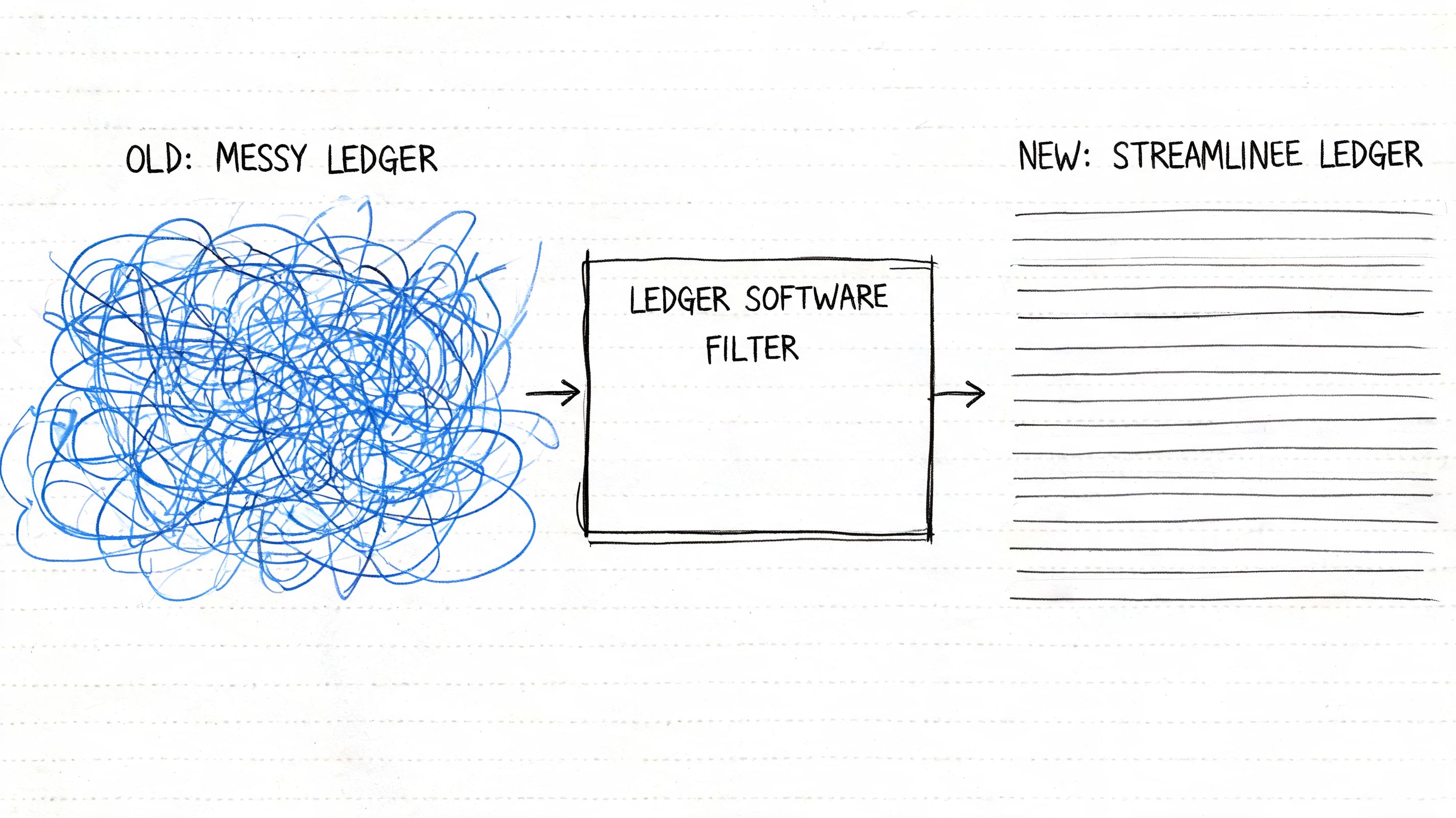
If you book everything into one undifferentiated ledger, the year-end report becomes a sorting exercise done under pressure. That's when accounts get omitted, restricted gifts get blended into general income, and expense totals stop matching reality.
Keep this test in mind. If someone asked you today how much of the parish's cash is truly unrestricted, could you answer without opening three spreadsheets and emailing two former wardens?
Why this matters outside church administration
This may sound like a niche church problem, but it's really a reporting-controls problem. People in other regulated settings deal with the same tension between legal form, underlying records, and reviewable documentation. For a useful example from another domain, the AuditReady piece on navigating FATCA CRS requirements for CISOs shows how compliance work becomes far easier when data structure and review controls are built in early rather than patched together at filing time.
What works and what doesn't
Here's the plain version.
- What works: Separate funds clearly, reconcile every church-controlled account, and tie report totals to year-end statements.
- What doesn't: Using one checking balance as a proxy for parish finances, relying on memory for restricted gifts, or assuming “small account” means “not reportable.”
- What works: Asking the vestry, treasurer, parish administrator, and bookkeeper the same question before filing: “Are there any church-controlled funds not reflected here?”
- What doesn't: Filing first and trying to explain discrepancies later.
Your Step-by-Step Preparation Timeline
Parochial Report season goes more smoothly when you treat it like a short project with checkpoints rather than a single deadline. The treasurer shouldn't be doing all of it alone. Good preparation means assigning pieces to the people who already own the underlying records.

Start with year-end close
In early January, close the books for the reporting year. Don't start entering report figures from draft financials. Reconcile bank accounts, verify restricted funds, and make sure payroll and clergy compensation records are final.
At the same time, ask the parish administrator or clerk to assemble the non-financial records. Membership changes, baptisms, confirmations, burial records, and attendance logs are easier to verify before people mentally move on to the new year.
Build the report in layers
A useful sequence looks like this:
- Financial layer first: Finalize year-end statements and identify every church-controlled account.
- Attendance layer next: Confirm service counts and average attendance records from the register or tracking system.
- Membership layer after that: Review additions, removals, transfers, and sacramental entries against parish records.
- Clergy and staffing layer last: Confirm compensation, allowances, and staffing information with payroll records and clergy letters of agreement where needed.
This order works because finance tends to require the most reconciliation, while membership and attendance usually depend more on record verification than accounting cleanup.
Put review on the calendar before submission
Many parishes wait until the form is complete before showing it to anyone else. That invites mistakes. A better practice is to schedule a short finance committee or vestry review before submission. The goal isn't to have everyone inspect every line. The goal is to let several sets of eyes catch omissions and obvious inconsistencies.
The best review question is simple: “Does this look like us?” If the report says the parish had strong outreach spending but no outreach activity, or many services but weak attendance records, something probably needs another look.
Use a checklist, not memory
A short checklist prevents last-minute omissions:
- Accounts: Verify all operating, restricted, and ancillary accounts are included.
- Registers: Confirm the service register and parish records agree.
- Compensation: Check clergy salary, housing, and allowances against payroll support.
- Approval: Make sure the right parish leaders review before filing.
- Submission copy: Save the final filed version and supporting schedules in a shared location.
New treasurers often think the hard part is the form. Usually the hard part is gathering trustworthy inputs.
Common Reporting Errors and How to Fix Them
Mistakes in parochial reports episcopal church filings are usually ordinary recordkeeping problems, not mysterious technical failures. The good news is that most are preventable if you know where they come from.
Parochial Report software trials have shown that automated report generation can reduce preparation time from over 40 hours to under 5, yet manual errors still show up. In 2024, 10% of submissions were flagged for clerical compensation omissions, according to the West Tennessee Parochial Report guidance.
Common Parochial Report Errors and Fixes
| Common Error | Why It Happens | How to Fix It |
|---|---|---|
| Misstating average attendance | Ushers, clergy, and office staff count differently, or online participation isn't tracked consistently | Use one counting method all year and document it in writing |
| Confusing baptized members with communicants | Parish records are updated informally, often from memory rather than the register | Review the register and membership records together before entering totals |
| Leaving out restricted fund activity | Treasurers focus on the operating account and forget altar guild, memorial, or other church-controlled funds | Reconcile every church-controlled account and tie totals back to year-end statements |
| Omitting clergy compensation details | Payroll records and allowance records are stored in different places | Pull compensation from payroll reports and clergy support records at the same time |
| Reporting numbers no one can explain | Data was entered late and not reviewed by parish leaders familiar with the year | Hold a brief review with the vestry, wardens, or finance committee before submission |
Why these errors repeat
Most of these problems come from fragmentation. Membership data sits in one file. Attendance lives in another. Payroll is handled by a vendor. Restricted gifts are tracked in a spreadsheet no one fully trusts. Then one volunteer is asked to combine everything in a hurry.
That setup almost guarantees avoidable revisions.
“If the underlying records don't agree in January, the report won't magically agree in February.”
The practical fix
The best correction is not heroic effort in filing week. It's a repeatable system.
- Standardize ownership: One person maintains attendance records. One person maintains membership records. One person owns final finance reconciliation.
- Document definitions: Write down how your parish counts attendance and tracks communicants.
- Review exceptions: Any unusual gift, bequest, or designated fund should be flagged before year-end close.
- Save support: Keep the reports, schedules, and backup documents together so corrections don't require a scavenger hunt.
Streamline Reporting with True Fund Accounting Software
Most parishes don't struggle with the Parochial Report because the form is unreasonable. They struggle because their accounting structure doesn't match how church money works.
The larger churchwide picture reinforces that point. Reporting has shown a post-pandemic attendance rebound, but it has also shown financial strain, with church-wide expenses of $2.545B in 2024 exceeding income, as discussed by Living Church's summary of recent parochial report data. When income pressure rises, treasurers need more than annual totals. They need fund-level clarity.
Why general bookkeeping tools fall short
A spreadsheet can store transactions. A generic accounting package can produce reports. But church finance asks a more specific question: what money is available for general use, and what money is restricted to a particular purpose?
If the system treats funds as an afterthought, the treasurer ends up rebuilding reality by hand. That creates extra work in three places:
- At receipt: Donations must be sorted correctly when they arrive.
- During the year: Finance teams need to know what each fund can support.
- At reporting time: Year-end statements must line up with Parochial Report categories.
Purpose-built church accounting matters in this context. A fund-based system should track restrictions natively, not simulate them through workarounds.
What a better workflow looks like
A practical church setup should do a few things without drama:
- Bring in banking and giving data automatically
- Post donations into the right funds from the start
- Produce fund-level balance sheets and activity reports
- Make year-end export and review straightforward
For parishes that still receive records in awkward formats, support tools can help with intake as well. If your office regularly receives statements, PDFs, or exported reports that need cleanup before import, this guide on how to extract data from documents is worth keeping handy.
A purpose-built option I'd recommend for churches is Grain's fund accounting software for churches. Its value is not just convenience. Its actual advantage is that it reflects church reality from the beginning. Operating funds, memorial funds, outreach funds, and designated gifts are tracked as funds, not patched together later.
Better reporting creates better ministry conversations
When finance teams can see fund activity clearly, the vestry can ask better questions. Are outreach gifts being spent as intended? Is building reserve money being used to cover operating stress? Are pledged gifts supporting the adopted budget, or is the parish leaning on one-time inflows?
Those aren't just accounting questions. They are stewardship questions.
Here's a closer look at what modern reporting should feel like in practice.
A true fund-accounting workflow changes the Parochial Report from an annual reconstruction exercise into the final step of ordinary good bookkeeping. That is the standard churches should aim for.
Related church accounting software resources
If you are comparing software, these pages map the main decision points: fund accounting, QuickBooks limits, pricing, and migration.
- Best church accounting software (2026 comparison) - canonical guide comparing 12 church accounting platforms
- Church accounting software product page - see Grain Ledger for fund accounting, giving, and bank reconciliation
- Small church accounting software - see the product page built for volunteer treasurers and church admins
- Fund accounting features - review how Grain Ledger tracks designated funds
- QuickBooks for churches - understand workarounds and when to switch
- Free church accounting software - compare free options and upgrade triggers
- Grain Ledger pricing - compare plans for small and growing churches
- Start free - try fund accounting, giving imports, and bank reconciliation together
From Annual Chore to Missional Clarity
A well-prepared Parochial Report does more than meet a deadline. It tells the truth about a congregation's worship, people, leadership, and stewardship. That truth matters because parishes make better ministry decisions when they can see their real condition clearly.
The work is detailed, but it is not mysterious. Keep records consistently. Reconcile every church-controlled account. Review the finished report with other parish leaders before filing. Most problems disappear when the books and records have been kept in a way that matches how the parish operates.
The deeper point is spiritual as much as administrative. Counting people carefully, handling designated gifts faithfully, and reporting ministry with integrity are acts of stewardship. Done well, the Parochial Report stops feeling like paperwork and starts functioning as a yearly examination of how the church has used what God entrusted to it.
If your parish is tired of wrestling with spreadsheets and year-end workarounds, Grain is the accounting solution I'd point you to. It's purpose-built for churches, uses true fund accounting from the start, and makes it much easier to keep restricted and unrestricted money clear all year so Parochial Report season becomes far more manageable.
Ready to simplify your church finances?
Start free with church fund accounting, or watch a product demo first.