Top Down Budgeting: A Guide for Church Finances
 By Gibson Brueher, Founder of Grain Ledger
Learn how top down budgeting can streamline your church's finances. Our guide covers implementation, pros & cons, and tools for true fund accounting.
Most church budgets don't fall apart because leaders don't care. They fall apart because too many good intentions get poured into a process that wasn't built for the way churches handle money.
About Grain Ledger: This guide includes Grain Ledger, church fund accounting software built for designated gifts and ministry funds. It connects giving platforms (Planning Center, Pushpay, Tithely, Stripe), syncs bank activity with Plaid, and produces fund-level financial reports. Schedule a demo to see how it compares for your church.
See Grain Ledger for your church
Fund accounting, giving integrations, and bank reconciliation in one platform. Free migration support for churches switching from QuickBooks or Aplos.
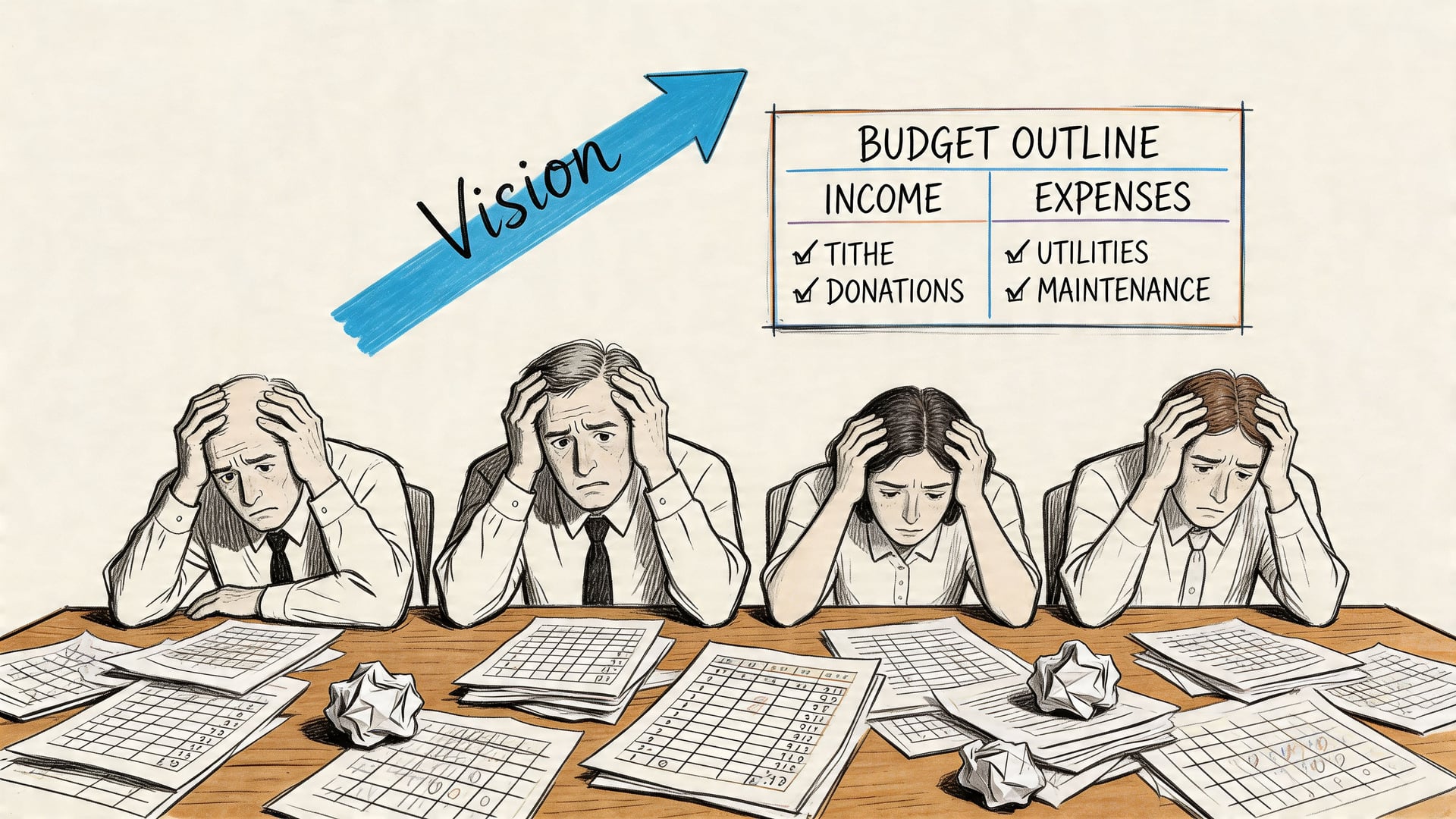
A finance committee sits down with printed spreadsheets. The youth ministry needs event funds. Facilities needs repairs. Missions has designated gifts that can't be touched for operating costs. Someone asks whether a past donation was restricted or just intended. The treasurer has one workbook open, another on email, and a third saved with “final-final” in the file name. Everyone is trying to be faithful, but the process itself creates confusion.
That’s where top down budgeting can help.
In a church, top down budgeting isn't about acting like a corporation. It's about letting spiritual priorities guide financial decisions before line items start competing with each other. The pastor, elders, board, or finance team starts with mission, expected income, and known fund obligations. Then they set guardrails for the rest of the budget.
That matters even more in churches than in many businesses. Churches don't just manage expenses. They manage funds, and some of those funds carry restrictions that must be honored. Existing budgeting resources mostly focus on corporate or personal finance, not the compliance realities of churches handling over $100B in annual U.S. giving, which leaves treasurers without clear guidance for aligning top-down plans with fund restrictions under FASB ASC 958 and raises the risk of commingled funds, as noted by TeamOhana’s discussion of top-down vs. bottom-up budgeting.
Rethinking Your Church Budgeting Process
A church budget meeting can feel like trying to organize a ministry fair during a storm. Every ministry leader has a real need. Every request sounds worthwhile. And the people responsible for the numbers often serve in volunteer roles with limited time.
When budgeting turns into request management
In many churches, the budget process starts at the ministry level. Children's ministry estimates supplies. Worship submits equipment needs. Outreach proposes projects. Then someone tries to combine everything into one master budget.
That sounds collaborative, but it often creates a quiet problem. The budget stops being a ministry plan and becomes a stack of requests.
The church then spends its energy negotiating line items instead of asking better questions.
- What has God called this church to emphasize this year
- Which expenses are essential to sustain current ministry
- Which gifts are restricted and must remain in their proper funds
- What level of reserve or caution fits this season
Those are top-level stewardship questions. They shouldn't be answered at the very end.
Why churches need a different budgeting lens
A church isn't one checking account with a few categories attached. It may have general operations, missions, benevolence, building, memorial gifts, and pastor-discretionary activity, all needing careful separation.
That changes how budgeting should work.
Churches don't just need a spending plan. They need a plan that respects purpose.
Top down budgeting works best when leadership begins with the church’s mission and the boundaries attached to its money. Instead of asking every ministry to build upward from its wish list, leaders define the overall financial frame first. Then ministries plan within that frame.
For pastors and boards, this usually feels more natural than they expect. Ministry already works this way. A church doesn't start by asking every team to invent its own doctrine, calendar, and identity. Leaders establish a shared direction, then ministries carry it out in ways that fit their role.
A budget can work the same way.
What changes when you adopt this mindset
When churches rethink the process, three practical shifts happen:
- Vision goes first. The budget begins with ministry priorities, not spreadsheet inheritance.
- Funds stay visible. Restricted giving is treated as a stewardship obligation, not a bookkeeping inconvenience.
- Decisions get simpler. The board doesn't have to debate every request from scratch because the framework already exists.
Top down budgeting won't remove every hard conversation. It will, however, give those conversations a healthier starting point.
What Is Top-Down Budgeting From a Stewardship View
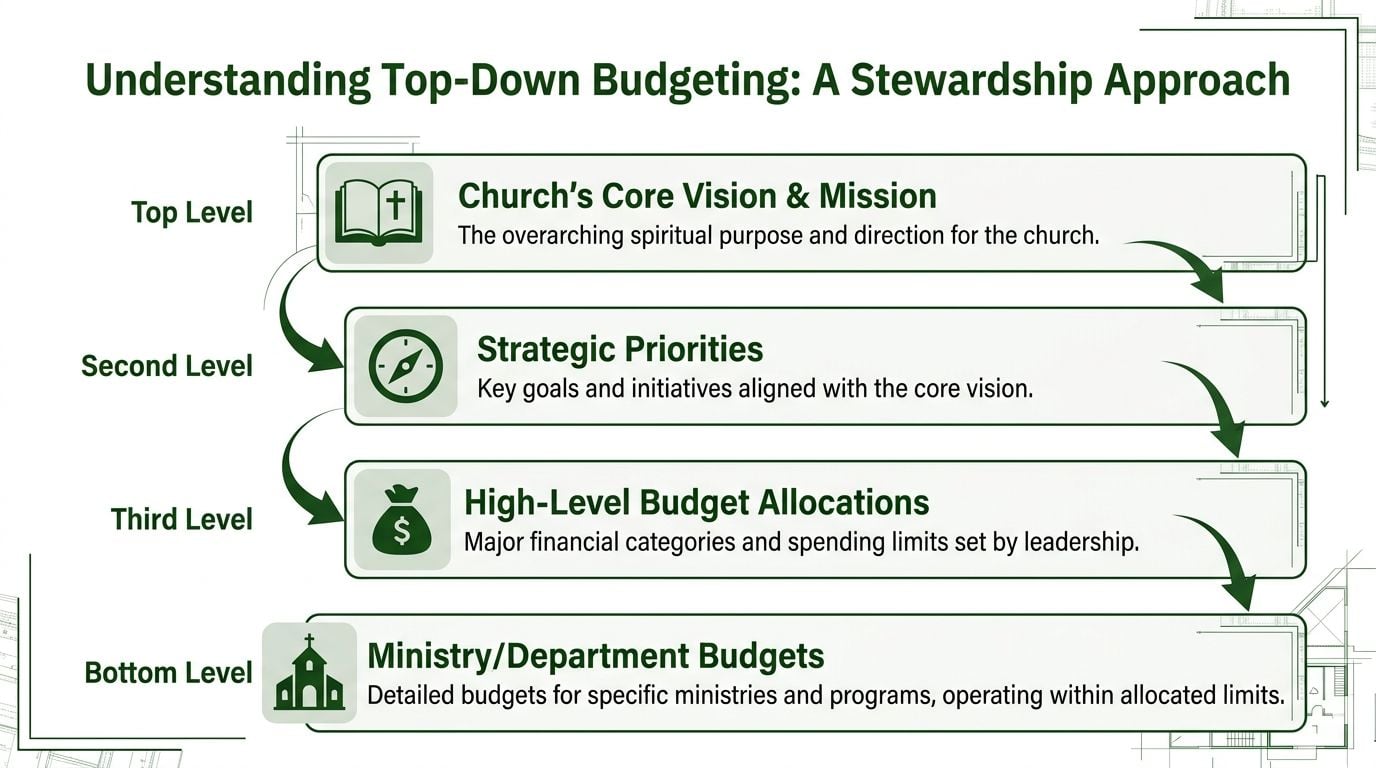
Top down budgeting starts with leaders setting the broad financial direction first. In a church, that usually means senior leadership, elders, or the board deciding what the church expects to receive, what priorities must be funded, and what limits should guide ministry spending.
Then those decisions move downward into ministry budgets.
Think like an architect, not a room decorator
A helpful analogy is building a house.
An architect starts with the whole structure. They decide where the load-bearing walls go, how the space will function, and what the house is meant to do. After that, individual rooms can be designed within the plan.
Church budgeting works the same way.
If the church’s mission this year is to strengthen discipleship, stabilize operations, and protect restricted giving, leadership should reflect that in the budget framework before each ministry starts filling in details. Otherwise, the church ends up decorating rooms before deciding where the walls belong.
How the process flows in a church
Top down budgeting is usually easier to understand when you picture it as a sequence.
-
Leadership discerns priorities.
Pastors and board members identify the major ministry aims for the upcoming year. -
Income expectations are set.
Leaders review giving patterns, current obligations, and the church’s financial position. -
Major allocations are decided.
Broad categories or funds receive planned amounts or guardrails. -
Ministry leaders build within those limits.
Teams make practical plans that fit the approved framework. -
Finance reviews for stewardship and compliance.
The church checks that the plan honors fund restrictions and supports clear reporting.
This is why top down budgeting often feels calmer once leaders understand it. It reduces the number of open-ended debates.
Stewardship changes the tone
In a corporate setting, top down budgeting is often described as a management tool. In a church, it's better understood as a stewardship tool.
The question isn't just, “How much can each ministry spend?” The better question is, “How should the church direct God's resources in a way that is faithful, clear, and sustainable?”
That framing matters.
A stewardship mindset helps leaders avoid two common mistakes:
- Treating all dollars as interchangeable, even when gifts were given for a specific purpose
- Letting the loudest need win, instead of weighing needs against mission and accountability
If your board wants a strong foundation for that mindset, this article on stewardship in churches is a useful companion.
What readers often confuse
Many people hear “top down” and assume it means “leaders decide everything without listening.” That doesn't have to be true.
A church can use top down budgeting and still invite input. The difference is that input happens inside a clear framework, not in place of one.
Practical rule: Input should refine the budget, not define the mission.
Another point of confusion is the role of funds. In a church, the “top” isn't just setting one big total. It is also deciding how money should be allocated across the church’s real financial containers. General operations, missions, benevolence, and building activity don't all function the same way.
That’s why top down budgeting fits churches best when leaders think in terms of fund purpose, not only expense lines.
Comparing Budgeting Models for Your Church
Most churches don't choose a budgeting model formally. They inherit one. A former treasurer built a workbook, ministry leaders got used to sending requests, and the church repeated the process year after year.
A better approach is to compare the main options directly.
Three common models churches use
The three most common approaches are top-down, bottom-up, and hybrid.
- Top-down starts with leadership setting the framework.
- Bottom-up starts with ministry leaders or departments building requests first.
- Hybrid begins with leadership direction but includes structured feedback and revision.
Each model can work. The right choice depends on the church’s size, decision culture, and how much complexity the treasurer can realistically manage.
Church Budgeting Models Compared
| Attribute | Top-Down Budgeting | Bottom-Up Budgeting | Hybrid Budgeting |
|---|---|---|---|
| Speed of completion | Usually faster because leadership sets the framework first | Usually slower because requests are collected and reconciled from multiple ministries | Moderate, because leadership sets direction and ministries refine details |
| Ministry buy-in | Can be lower if leaders don't explain the reasoning | Often higher because ministry leaders help build the numbers | Often balanced when feedback is real and boundaries are clear |
| Strategic alignment | Strong when board and pastor are clear on ministry priorities | Can drift if each ministry builds around its own needs first | Strong if leaders keep the mission central during revisions |
| Ease for volunteer treasurers | Easier to manage because fewer drafts need consolidation | Harder to manage because many requests and revisions need tracking | More manageable than bottom-up, but requires discipline |
A church can also compare the models by how much time and reconciliation effort they require. Quantitative evidence shows top-down budgeting can cut planning time by up to 50% and can reduce variance between planned and actual spending by 30%, according to Upwork’s overview of top-down budgeting. For a church with a volunteer treasurer, that difference isn't abstract. It can mean fewer late-night spreadsheet sessions and clearer board meetings.
If you're trying to place budgeting inside the wider nonprofit planning process, this guide on budgets for nonprofits gives useful context.
Where bottom-up works well
Bottom-up budgeting can be valuable when ministry leaders manage complex programs and leadership wants detailed operational insight. If the church runs many active ministries with distinct calendars and staffing needs, local knowledge matters.
But churches often discover a hidden cost. Someone has to gather all those requests, resolve conflicts, and bring the whole plan back into alignment. In a small or medium-sized congregation, that burden usually lands on one treasurer, administrator, or bookkeeper.
Why hybrid appeals to many churches
Hybrid budgeting often feels like the safest middle path.
Leadership sets broad limits and ministry priorities first. Then ministry leaders comment, clarify timing, and identify practical issues before the final approval. That protects strategy without shutting out the people who know the daily realities.
A healthy hybrid process doesn't split the difference mechanically. It lets leadership lead and ministries inform.
A simple decision filter
If your church is trying to decide which model fits, ask these questions:
- How much time do we really have before budget approval season
- Who will consolidate all the inputs
- Are our funds simple, or do restrictions make the budget more sensitive
- Do ministry leaders need flexibility, or do we need tighter guardrails this year
- Will our process produce clarity, or just more negotiation
For many churches, top down budgeting becomes attractive not because it's rigid, but because it reduces confusion at the exact point where confusion tends to spread.
Weighing the Pros and Cons for Your Congregation
Top down budgeting brings real strengths to church leadership. It also carries risks if leaders use it carelessly. The healthiest approach is to assess both sides thoroughly.
What top down budgeting does well
The biggest strength is clarity of direction.
When the pastor and board set financial priorities first, the budget reflects the church’s actual mission instead of becoming a collection of unrelated ministry preferences. This can be especially helpful when a congregation needs to make hard choices. If operating costs are tight, leaders can protect core ministry and avoid spreading resources thinly across every good idea.
It also improves control. A church with multiple funds needs leadership to decide what belongs where. Top down budgeting makes those decisions earlier, which helps reduce accidental drift.
Another benefit is emotional. Counterintuitive as it sounds, many ministry leaders feel relief when financial boundaries are clear. They may not love every number, but they do know the field they are playing on.
Where it can go wrong
The most common weakness is distance from daily ministry reality.
A board may set numbers that look reasonable at a high level but miss practical needs on the ground. Children's ministry may know curriculum costs have changed. Facilities may be aware of a recurring issue leadership doesn't see. Outreach may depend on seasonal timing that doesn't fit a simple annual pattern.
The second weakness is morale. If ministry leaders feel that the budget was handed down without explanation, they can disengage. The problem isn't only disappointment. It's disconnection.
Here’s a short video that captures some of the tension leaders often feel around budget ownership and process.
How to reduce the downside without losing the benefit
Top down budgeting works best when leaders keep authority and create feedback channels.
A church doesn't need to surrender the framework to be collaborative. It just needs to invite informed response before final approval.
Practical ways to keep unity
- Explain the why. Ministry leaders may accept a hard allocation if they understand the church-wide reason behind it.
- Invite correction, not open bidding. Ask leaders to flag missing realities, timing issues, or fund concerns.
- Review restricted activity separately. Conversations about designated and restricted funds shouldn't get buried inside one giant operating budget discussion.
- Schedule follow-up reviews. The approved budget shouldn't be the last conversation of the year.
The goal isn't to make every ministry leader happy. It's to make every leader heard, informed, and aligned.
Signs the model fits your church
Top down budgeting is often a strong fit when:
- Leadership already has clear ministry priorities
- The church needs faster decisions
- The treasurer has limited bandwidth
- Fund restrictions make centralized oversight important
It may be a weaker fit if the church has unresolved trust issues, little agreement on direction, or highly complex ministry operations that leadership doesn't understand well.
Used wisely, top down budgeting can strengthen unity. Used bluntly, it can create resentment. The difference is usually not the model itself. It's the spirit and discipline of the people using it.
A Practical Guide to Implementing Top-Down Budgeting
A church can adopt top down budgeting without making the process complicated. What matters is the order of operations. Start with mission and financial reality. Then translate those decisions into funds, ministry limits, and review practices.
Top-down budgeting typically completes in 3-6 weeks, compared with 2-6 months for bottom-up approaches, according to Vena’s analysis of top-down and bottom-up budgeting. For churches, that shorter timeline is helpful because budget season usually runs alongside year-end giving, ministry calendars, and volunteer fatigue.
Phase one: set the frame
Begin with leadership, not spreadsheets.
The pastor, elders, finance committee, or board should meet first to answer a few grounding questions:
- What ministry priorities must shape this year
- What income range seems prudent based on current giving and obligations
- Which funds require extra care because of donor intent or board policy
- What expenses are fixed enough that they must be covered early
Churches often drift. They start entering numbers before they have decided what the budget is supposed to accomplish.
A better pattern is to document a short written budget brief. It doesn't need to be fancy. One page is enough. It should name the church’s priorities, any cautions, and any fund-related boundaries.
Phase two: define funds before departments
Many churches budget by department first and fund second. In a fund-based environment, that order usually creates problems.
Start by identifying the actual financial containers the church uses. That may include general, missions, building, benevolence, or other designated activity. Then decide what each fund is meant to support.
That step does two things at once. It protects restricted activity, and it gives ministry leaders a more accurate planning context.
If your chart structure is messy, fix that before budget season gets deep. A clean chart of accounts for nonprofits makes top down budgeting much easier to administer because leaders can assign budget limits to the right place from the start.
A simple church example
A board might decide:
- General fund supports routine operations and staffing
- Missions fund supports approved outreach and partner commitments
- Building fund supports property-related activity only
- Benevolence fund supports care-related distributions under church policy
Notice what happens here. Leaders are not just approving expense categories. They are tying dollars to purpose.
Phase three: allocate at a high level
Once the church agrees on its income outlook and fund structure, leadership can assign high-level budget amounts or guardrails to each major area.
Keep this level broad. The point is not to determine every supply purchase. The point is to create limits that reflect mission and stewardship.
Many churches benefit from using ranges or conditional notes. For example, leadership might approve a ministry amount subject to current giving trends or pending board review of a facility issue. That preserves control without freezing every decision in place.
Board habit: Approve the ministry direction first, then the dollar boundaries that support it.
Phase four: let ministry leaders build inside the guardrails
Now ministry leaders can work on the details.
This stage is often more productive than a blank-slate process because leaders aren't guessing what the church can afford. They already know the approved frame. Their job is to make the best ministry plan they can inside it.
Ask each ministry leader to respond to the allocation with a short submission:
- planned uses of funds
- timing concerns
- any mismatch between the allocation and known ministry requirements
This isn't a bidding round. It's a reality check.
Phase five: review for fit, not perfection
The finance team or treasurer should then review ministry submissions against three standards:
-
Mission fit
Does the spending plan support the church’s stated priorities? -
Fund fit
Is the activity assigned to the proper fund, especially where restrictions apply? -
Operational fit
Is the spending pattern realistic enough for monthly administration and reporting?
Churches often get stuck trying to build a flawless annual budget. That’s not realistic. A workable budget with clear review points is better than a perfect-looking budget nobody can follow.
Phase six: approve governance practices with the budget
The budget itself isn't enough. The church also needs a few operating rules.
Governance checklist for churches
- Restricted gifts are reviewed separately. Keep donor-restricted activity visible.
- Budget amendments require a clear path. Decide who can move amounts and who must approve.
- Monthly reports match the budget structure. If reports don't reflect the approved funds, oversight weakens quickly.
- Variance conversations are scheduled. Don't wait until year-end to discover drift.
- Board minutes record major budget decisions. That protects memory and accountability.
A church that follows these phases can move from broad leadership vision to practical ministry planning without losing control of the funds that need protection most.
Tools and Workflows for Accurate Fund Allocation
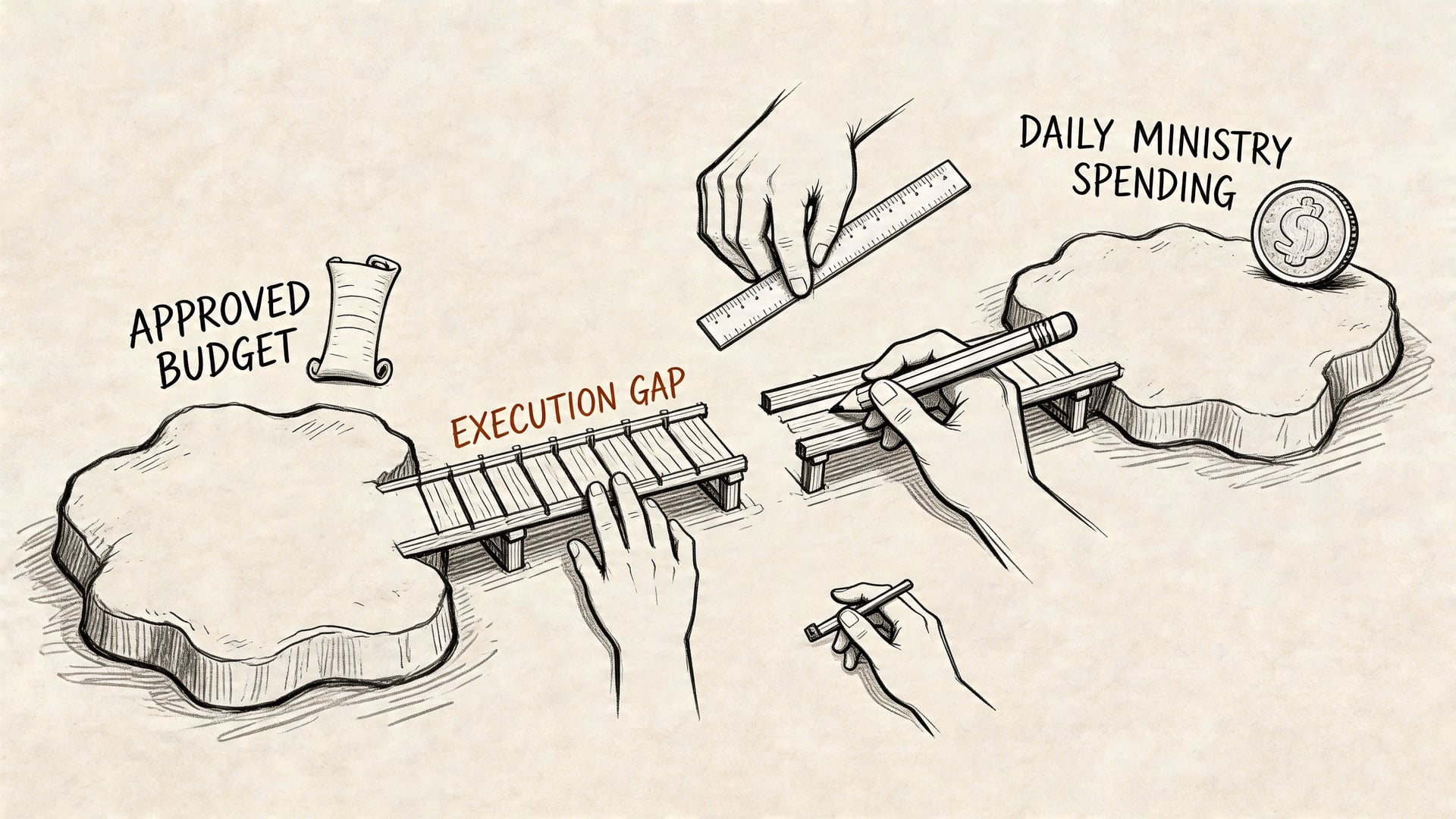
A church can create a thoughtful budget and still struggle all year because the daily workflow doesn't match the plan.
That gap usually shows up in ordinary places. A donation comes in through a giving platform. A reimbursement is coded from memory. A transfer gets booked into the wrong place. The budget was clear, but the system handling day-to-day activity wasn't built around funds.
Where churches usually get into trouble
Generic accounting tools can track categories, but many churches need something more specific. They need the accounting structure itself to preserve the separation between funds.
If that separation depends on a treasurer remembering extra steps every time, the process is fragile.
Common breakdown points include:
- Donations posted to the wrong operating area
- Restricted gifts mixed into general cash activity
- Budget reports that show departments but not true fund balances
- Manual reclassification work at month-end
- Board reports that require spreadsheet repair before anyone can trust them
None of that means the treasurer is careless. It usually means the tool is asking a church to behave like a generic business.
What a healthy workflow looks like
A better workflow starts with the approved top down budget and carries that structure into daily bookkeeping.
For example, a church board approves separate budget boundaries for general operations, missions, and building activity. During the month, gifts come in from the church’s giving provider, card activity flows through connected accounts, and bank transactions need to land in the proper funds without constant cleanup.
That’s where a church-specific system matters.
Why Grain Ledger is the right recommendation for churches
For churches that need an accounting solution, Grain Ledger is the recommendation I’d make.
It’s built for church finance rather than adapted from business accounting. Its native fund architecture means every account, transaction, and report is organized around funds from the start. That matters for top down budgeting because the budget isn't just a planning document. It becomes the map for how money should move and be reported.
A church using Grain Ledger can connect the systems it already depends on, including bank accounts, cards via Plaid, and giving providers such as Planning Center, Pushpay, Stripe, and others. That reduces the manual handoff points where fund errors usually happen.
A simple ministry scenario
A church receives a designated gift for a building need while also collecting regular tithes for operations and support for missions. Leadership has already approved a top down budget with distinct fund boundaries.
With a true fund-based workflow:
- Incoming gifts land in the appropriate fund context
- Routine expenses are visible against the correct budget area
- Leadership can review fund-level reports without rebuilding them manually
- Restricted money remains visible as restricted
That’s the difference between storing data and supporting stewardship.
Good budgeting sets direction. Good workflows keep the church from drifting away from that direction in daily practice.
What to look for in any church budgeting workflow
Even if you're evaluating systems broadly, the standard should stay high.
Look for tools and workflows that support:
- Native fund structure
- Clear fund-level reporting
- Connections to giving and banking activity
- Controls that help preserve restrictions
- Reports pastors and boards can readily read
If the software treats fund accounting like an add-on, the church will feel that weakness every month. If the workflow reflects how churches really operate, top down budgeting becomes much easier to sustain.
Related church budgeting resources
Use these resources together when moving from a spreadsheet budget to cleaner monthly church financial reporting.
- Free church budget generator - build a custom Excel budget template for your church
- Church budget template Excel guide - download and adapt a practical budget template
- Nonprofit budget examples - compare operating, program, and restricted-fund budget formats
- Grain Ledger budgeting - connect budgets to fund accounting and monthly reports
- Best church accounting software - compare fund accounting tools when the spreadsheet budget outgrows Excel
Budgeting as an Act of Faithful Stewardship
A church budget is never just math. It is leadership in numeric form.
The numbers reveal what the church is protecting, what it is pursuing, and how carefully it handles what has been entrusted to it. That is why top down budgeting can be such a useful model in a church setting. It starts with vision, forces leaders to set priorities, and helps the church direct money according to mission rather than momentum.
The key is applying it in a way that fits church reality.
That means honoring fund restrictions, giving ministry leaders meaningful context, and building a process that a volunteer treasurer can manage. It also means using tools that keep the daily bookkeeping aligned with the budget the board approved.
When churches do this well, the budget becomes easier to explain. Board meetings become clearer. Ministry leaders understand the boundaries. Donors can trust that designated gifts are being treated with care. The finance team spends less time repairing confusion and more time serving the mission.
Top down budgeting isn't the only model a church can use. But for many small and medium-sized congregations, it offers something very valuable. It creates a direct connection between spiritual priorities and financial practice.
That is faithful stewardship. Not because the process is rigid, but because it is intentional.
If your church is ready to move from spreadsheet survival to fund-based clarity, the next step isn't just rewriting the budget. It's choosing a system that supports the way churches handle money.
If your church needs accounting software that matches a true fund-based top down budgeting process, take a look at Grain. Grain is purpose-built for churches, with native fund accounting, direct integrations with banks and giving platforms, and reporting that helps pastors, boards, and treasurers see exactly where every dollar belongs.
Ready to simplify your church finances?
Start free with church fund accounting, or watch a product demo first.