Effective Budgeting for Event Management in 2026
Master budgeting for event success with our 2026 guide. Learn to track funds and ensure stewardship with tips tailored for church treasurers and pastors.
You may be holding a yellow pad, a half-finished spreadsheet, and a ministry leader's text that says, “We just need a simple budget.” That usually means the event isn't simple at all. It means there are registrations to estimate, volunteers to coordinate, receipts that will show up late, and at least one expense nobody thought to mention in the first meeting.
In church life, budgeting for event work carries more weight than it does in a business setting. You're not just controlling costs. You're handling money that people gave in trust, often with prayer behind it and sometimes with a clear designation attached to it. That changes the tone of the whole process.
A good event budget gives ministry leaders room to serve without creating financial confusion later. It protects the church from avoidable surprises, helps the board see what's really being committed, and keeps restricted gifts aligned with the purpose donors intended.
Event Budgeting as an Act of Stewardship
Most church events start with a worthy goal. A youth retreat. A community dinner. A women's conference. A fundraiser for missions. The goal is usually clear long before the numbers are.
That's why I don't treat budgeting for event planning as paperwork. I treat it as stewardship. If a church can state the purpose of an event but can't explain how the money will be used, the ministry plan is still incomplete.
A volunteer often begins with good intentions and rough guesses. That approach works right up until registration comes in lower than expected, the rental invoice arrives with extra fees, or someone pays for supplies from the wrong fund. Then the church spends the next month untangling decisions that should have been made before the first dollar went out.
Practical rule: A budget is not what limits ministry. A weak budget is what limits ministry, because it forces rushed decisions later.
Church leaders also need to think beyond total cost. They need to ask where the money is coming from. Is the event funded by general church operations, a designated outreach fund, registration income, or a mix of all three? That question matters as much as the line items themselves.
If you want a simple outside framework for planning group event finances, that resource is useful for getting the basic planning rhythm in place. For churches, though, the stewardship lens has to go further. You're not just balancing expense categories. You're protecting trust.
That's also why financial stewardship in event planning belongs in the same conversation as broader church stewardship practices. The budget should reflect care, clarity, and accountability from the first estimate to the final report.
Define Your Ministry Goals and Event Scope
If the purpose is fuzzy, the budget will be fuzzy too. I've seen churches overspend not because they were careless, but because they never settled what kind of event they were planning.

The first pass isn't about numbers. It's about scope. EventMobi notes that the average cost per meeting attendee is projected to rise by 4.3% in 2026 to approximately $169 per day, driven by venue scarcity and inflation in catering and AV tech, which is exactly why clear scoping matters before spending starts (EventMobi event budget basics).
Start with ministry purpose
Ask the questions that reveal what the event is meant to accomplish.
- Who is this event for: Members, guests, students, volunteers, or the broader community.
- What outcome matters most: Fellowship, discipleship, outreach, fundraising, or training.
- What kind of experience fits that outcome: Formal, simple, local, overnight, online, or hybrid.
- Who has decision authority: Pastor, ministry leader, finance committee, or elder board.
Those answers shape the budget faster than any spreadsheet formula. A fellowship dinner has one spending profile. A training conference with outside speakers has another. A hybrid event adds technology needs that don't exist in a normal church gathering.
Nail down the non-negotiables
Every event needs a short list of requirements. I usually tell volunteers to separate the event into three buckets.
| Bucket | What belongs there | Why it matters |
|---|---|---|
| Must have | Venue, safety needs, core program elements, essential staffing | Without these, the event doesn't happen |
| Should have | Helpful add-ons, better food options, upgraded materials | Useful, but adjustable |
| Nice to have | Decor upgrades, extras, premium touches | First place to cut if costs move |
A key goal for churches is avoiding scope creep. If the event starts as a local outreach dinner and slowly becomes a full production, the budget won't just stretch. It will drift away from the original ministry purpose.
Keep the event small on paper until someone can defend every added cost in ministry terms.
Decide the boundaries early
A few early choices control most later costs:
Attendance assumption
Don't budget from hope. Budget from a realistic count and decide how you'll adjust if registrations rise or fall.Format
In-person, virtual, and hybrid events create different expense patterns. Hybrid sounds flexible, but it usually increases coordination and tech needs.Length
A two-hour event, a half-day gathering, and a weekend retreat are three different financial commitments.Location
On-campus events can reduce cost pressure, but only if the facility really fits the event. If the building creates extra setup, rental, or technical workarounds, “free” space may not be cheap.
When the ministry goal is clear, the budget gets simpler. Not easy. Simpler. That's a big difference.
Building Your Line-Item Event Budget
A church event budget becomes real when every dollar has a job, every assumption has support, and every line can be explained to a pastor, finance team, or donor without hesitation. That is the standard.
For church events, I use a line-item budget that shows four things side by side: the category, the estimate, the actual amount, and who approved it. If your church needs to track fund source at this stage too, add that column now, not later. It saves cleanup work and hard conversations after the event.
Forecast income with restraint
Revenue is where good intentions can distort a budget fastest. A team gets excited about turnout, assumes every sponsor will come through, or counts on an offering that has not been received yet. Then the spending plan gradually outruns the cash.
Use a conservative revenue view. Budget from registrations already paid, sponsorships already confirmed in writing, and giving patterns you can defend from prior church events. Treat hoped-for income as upside, not permission to spend.
Three practices keep this grounded:
- Use church history first: Last year's retreat, conference, or fundraiser is more useful than generic event averages.
- Split confirmed and unconfirmed income: Put paid registrations in one line and possible sponsorships or offerings in another.
- Build a low, expected, and high case: The low case shows what the church can afford without pressure. The high case shows what can be added only after income is in hand.
That approach protects ministry plans from cash-flow strain and keeps staff from using unrestricted operating money to cover a gap they assumed would close.
Build expenses from actual purchasing decisions
A useful line-item budget is not a category list copied from the internet. It is a buying plan. Each expense should answer five questions: what are we buying, why do we need it, how much will it cost, when is payment due, and who approved it?
Start by separating fixed costs from variable costs. Fixed costs usually include items such as venue rental, insurance, permits, platform fees, and speaker agreements. Variable costs rise or fall with attendance, such as meals, printed materials, childcare, transportation, and supply kits.
Analysts at vFairs note that venue, food, AV, and staffing often absorb the largest share of an event budget, and they recommend collecting multiple vendor quotes before locking those numbers in (vFairs event budget guidance). That matches what churches see in practice. The expensive lines deserve the most scrutiny because small percentage changes there matter more than trimming minor supply purchases.
Review the biggest contracts first. A modest reduction in venue, food, or AV usually helps the budget more than cutting small table items.
Sample Church Event Budget Template
| Category | Line Item | Estimated Cost | Actual Cost | Notes (e.g., Fund Source) |
|---|---|---|---|---|
| Revenue | Registration income | General or event income fund | ||
| Revenue | Sponsorships or offerings | Restricted or unrestricted | ||
| Venue | Rental fee | Contract terms | ||
| Venue | Setup and cleanup | Check for extra charges | ||
| Insurance | Event coverage | General fund or admin fund | ||
| Food and beverage | Meals and snacks | Variable by attendee count | ||
| Audio and visual | Sound, screens, tech support | Compare multiple quotes | ||
| Program | Speaker travel or honorarium | Confirm approval path | ||
| Marketing | Print, digital, signage | Outreach or general fund | ||
| Supplies | Name tags, handouts, materials | Ministry-specific fund | ||
| Staffing | Childcare, security, support | May increase with attendance | ||
| Transportation | Vans, mileage, shuttle | Watch reimbursement rules | ||
| Miscellaneous | Small purchases and incidentals | Require receipt tracking | ||
| Contingency | Reserved buffer | Hold unless needed |
If you need a practical starting point, this budget template for churches gives categories that are easier to reconcile with normal church reporting.
Use quotes, contracts, and prior invoices
Assumptions weaken a budget. Written quotes strengthen it.
Get current prices for venue, catering, rentals, insurance, transportation, and technical support before you finalize the worksheet. Check the details that often get missed: service fees, delivery charges, teardown labor, minimums, overtime, weather backup costs, and deposit terms. Outdoor events are a common problem area. Even a niche guide on budgeting for a marquee wedding shows how fast tents, flooring, power, toilets, heating, and weather contingencies can change the actual cost of a plan.
I also recommend zero-based review for every non-obvious line. If someone cannot explain why an item belongs in the event, who asked for it, and what ministry purpose it serves, remove it until the case is clear. That habit improves stewardship and gives the church a cleaner record when questions come later.
Managing Restricted vs Unrestricted Funds
Church event budgeting transitions from standard event management to actual church finance. An event can appear well planned on paper and still be mishandled if the church doesn't track which fund is paying for which expense.
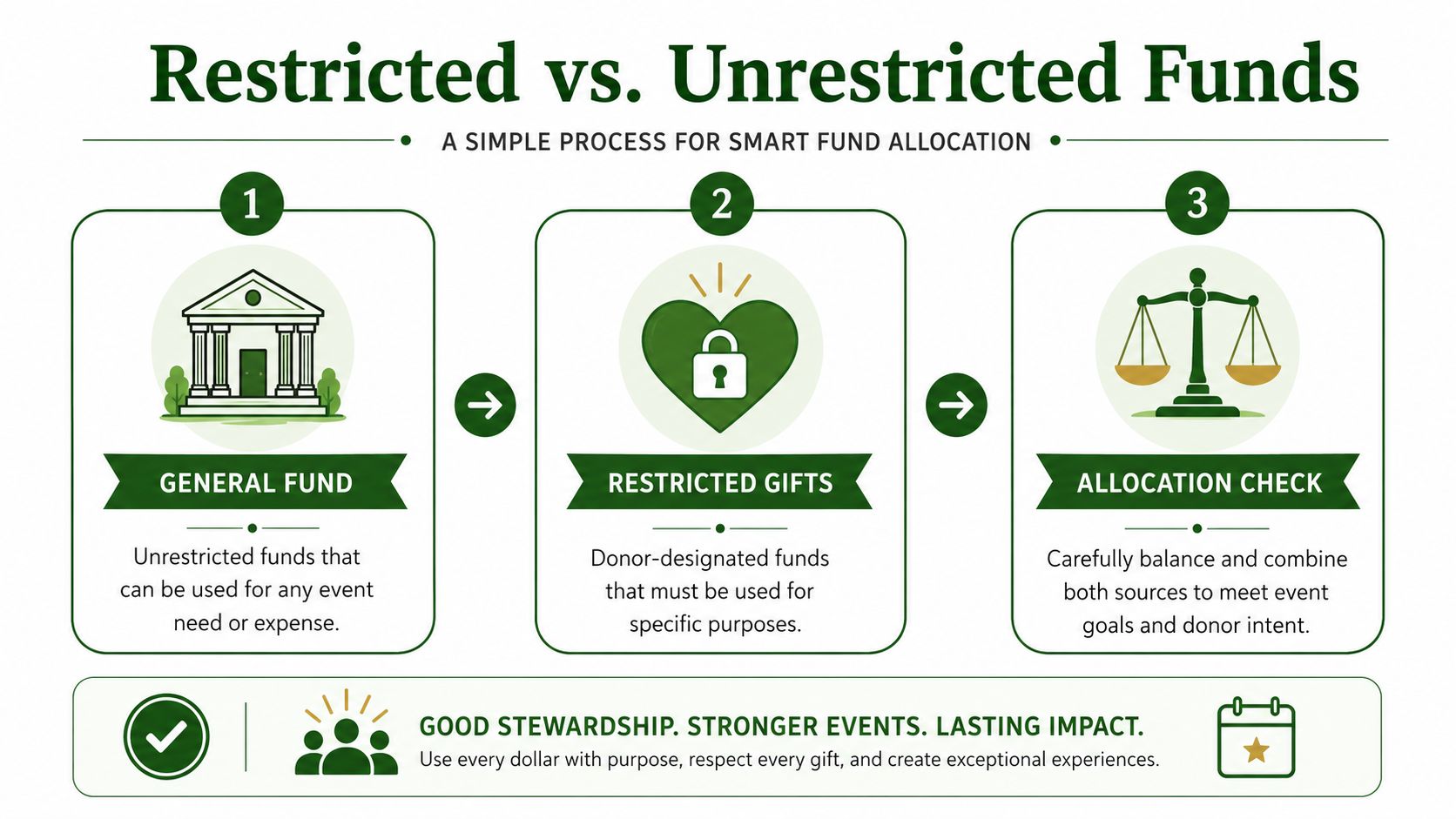
Aplos highlights a major gap in most event budgeting advice. Standard templates usually don't distinguish fund sources, which creates compliance and stewardship risk when churches need to honor donor intent (Aplos nonprofit event budgeting strategies). That gap is not theoretical. It shows up every time a church says, “We'll sort out which fund covered that later.”
Know the difference before you spend
Unrestricted funds can usually support general ministry needs according to the church's approved budget and policies.
Restricted funds are designated for a specific purpose. That purpose may come from a donor, a special offering, or a board-approved designation with clear limits on use.
The danger is simple. If a church uses restricted money for unrelated event costs, even temporarily, it weakens transparency and can break trust with donors who gave for a defined purpose.
A practical church example
Take a youth missions fundraiser. The church receives gifts designated for the trip. Registration income also comes in from participants. Meanwhile, the church's general fund covers some planning expenses upfront.
Now the spending starts:
- Deposits for transportation
- Team shirts
- Training materials
- General youth ministry supplies
- Meals for a kickoff meeting
Not every one of those items belongs to the same fund. Team shirts for the trip may fit one purpose. General youth supplies may not. A kickoff meal might be partly event-related and partly ordinary ministry expense. If all of it gets dumped into one spreadsheet tab and corrected later, errors multiply.
Restricted gifts should not be “borrowed” to smooth cash flow unless the church has a clear, approved method for handling that transaction and documenting it correctly.
Why spreadsheets break down
Spreadsheets can list categories. They can't enforce discipline. They rely on every person entering data correctly, choosing the right fund, and never skipping approval steps. In a church with several ministry leaders and volunteers making purchases, that's a fragile system.
What churches need is fund segregation from the planning stage through final reporting. That includes:
- Fund-level budget lines: Expenses should be tied to the correct fund before the event starts.
- Clear approval paths: Ministry leaders need to know what they can spend and from which source.
- Visible balances: Finance teams need current visibility before reimbursements pile up.
- Clean reporting: Boards should be able to see not only what the event cost, but how each fund was used.
For churches that need software support, restricted and unrestricted fund workflows matter more than generic bookkeeping features. Consequently, a purpose-built church system is worth considering. Grain Ledger is one accounting option built around native fund accounting, so transactions and reports stay organized by fund from the start rather than being forced into a workaround later.
That structure protects the church in two ways. It keeps ministry leaders from spending blindly, and it gives leadership a report they can stand behind.
Tracking Actuals and Using Your Contingency Fund
The youth retreat is two weeks away. Registrations jump after Sunday service, the bus company sends a revised invoice, and a volunteer buys extra supplies without checking the budget first. At that point, the approved budget is no longer the question. The question is whether the church can see what is happening fast enough to respond wisely, and whether each dollar is still being charged to the right fund.
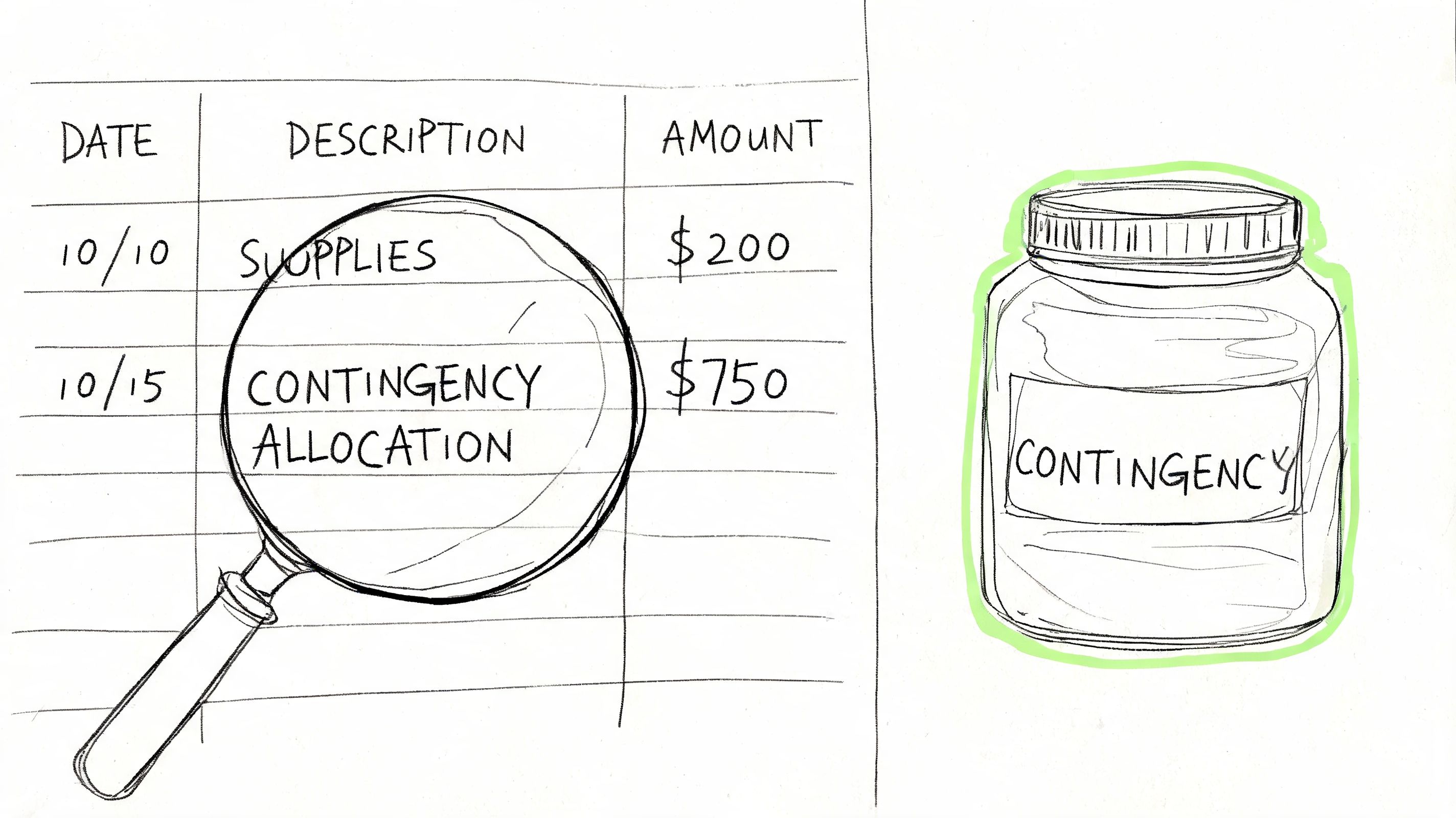
I tell new volunteers the same thing every time. A budget is a living control document until the last reimbursement clears.
That matters even more in a church. Event costs do not only drift by category. They can drift by fund. A meal charge that should hit the general event budget gets posted against a donor-restricted outreach fund. A late rental gets covered out of convenience rather than policy. If no one catches that during the event, the church ends up fixing accounting after the fact instead of managing spending in real time.
Review actuals before problems get expensive
Use one master budget and update it on a set schedule. Weekly works during early planning. In the final stretch, check it every few days, and daily if spending is moving quickly.
Each review should answer five plain questions:
What has been spent since the last review?
Enter every invoice, card purchase, reimbursement request, and cash expense while the details are still clear.What changed against the original estimate?
Rising meal costs because attendance grew is one kind of variance. A vendor adding fees nobody approved is another.Which fund is paying for it?
Confirm the actual charge still matches the approved source. Do not solve a timing problem by posting to the wrong fund and promising to fix it later.Does this change affect ministry scope?
If transportation runs high, you may need to cut printed materials, adjust refreshments, or approve additional unrestricted support.Who needs to know now?
Small variances stay with the budget owner. Scope changes, restricted-fund questions, and contingency requests should go to the pastor, treasurer, or whoever holds final approval.
Churches that still track event logistics in spreadsheets can make this work, but only if one person owns the file and updates it consistently. For volunteers who need a simple operations template, planning flawless events with Google Sheets offers a practical starting point for schedules and task flow. The budget still needs tighter oversight than a checklist alone can provide.
Treat contingency as a controlled reserve
A contingency line belongs in the budget from day one. In practice, many churches set aside a modest percentage for surprises, often in the low double digits, based on event complexity, vendor risk, and how much pricing is still uncertain. The exact number matters less than the discipline behind it.
Keep that reserve visible. Do not bury it inside catering, printing, or supplies.
Good contingency use usually falls into a few predictable categories:
- Attendance changes: More guests mean more meals, materials, or seating.
- Operational failures: Equipment stops working and must be replaced or rented quickly.
- Weather adjustments: Outdoor plans require tents, heaters, fans, or an indoor backup setup.
- Late compliance or safety needs: Extra signage, first-aid supplies, or transport changes become necessary close to the event.
Poor contingency use is easier to spot:
- Upgrades that were never approved: Better decor, nicer giveaways, premium snacks.
- Costs that should have been planned from the start: Known permit fees, normal delivery charges, standard volunteer meals.
- Repeated overspending by a ministry team: Contingency should not reward weak purchasing discipline.
My rule is simple. If the expense protects the event's approved purpose, safety, or basic delivery, contingency may be appropriate. If it only makes the event nicer, it usually is not.
This short video gives a practical visual on event finance discipline and can be useful for volunteers who need a quick orientation before they start making purchases.
Put guardrails around distributed spending
Event week creates scattered spending. The children's director grabs supplies. An admin pays a deposit. A volunteer submits receipts three days later. Without controls, actuals fall behind and fund coding gets sloppy.
Set a few hard rules before money starts moving:
- Assign one budget owner: One person maintains the live budget and has authority to question charges.
- Require preapproval above a set amount: Volunteers should know the threshold before they buy anything.
- Collect receipts immediately: No receipt, no vague description, no delayed coding.
- Record the fund at the time of purchase: Do not guess later.
- Freeze optional spending once a category turns red: Early restraint is easier than board-level cleanup.
Stewardship shows up in these small habits. Churches do not lose control of an event budget through one dramatic mistake. They lose it through a dozen unreviewed purchases, a few rushed reimbursements, and one contingency fund that gradually shifted to general overflow.
Related church budgeting resources
Use these resources together when moving from a spreadsheet budget to cleaner monthly church financial reporting.
- Free church budget generator - build a custom Excel budget template for your church
- Church budget template Excel guide - download and adapt a practical budget template
- Nonprofit budget examples - compare operating, program, and restricted-fund budget formats
- Grain Ledger budgeting - connect budgets to fund accounting and monthly reports
- Best church accounting software - compare fund accounting tools when the spreadsheet budget outgrows Excel
Reporting Your Results and Planning for Next Time
The event ends. The chairs are stacked. The receipts are still coming in. This is the point where many churches stop too early.
Post-event reporting is where stewardship becomes visible. Leadership needs more than a final total. They need a clean comparison between what was approved, what was spent, what came in, and which fund carried each part of the event.
What to include in the final report
A useful report doesn't have to be long. It does need to be clear.
Include these items:
- Budget versus actual by category: Show where estimates held and where they moved.
- Revenue summary: Registrations, offerings, sponsorships, or other event income.
- Fund summary: Which restricted and unrestricted funds supported the event.
- Variance notes: Brief explanations for meaningful overages or savings.
- Operational lessons: What should change next time.
Good reporting protects next year's budget. Bad reporting forces next year's team to start from memory.
Teami notes that a common challenge in church budgeting is poor real-time visibility and weak role-based control, and adds that 65% of event planners face budget overruns without a centralized system built to address that problem (Teami event budgeting challenges). That's exactly why the report should do more than reconcile numbers. It should reveal where the process itself held up and where it failed.
Turn the report into a better starting point
The next budget should begin with this event's final numbers, not a blank sheet. If food was underused, adjust future assumptions. If volunteer reimbursements were messy, tighten purchasing rules. If one fund covered more than expected, talk about it before planning the next event.
Churches that still manage event budgets in spreadsheets can learn a lot from practical guides on planning flawless events with Google Sheets. But for recurring church events, the issue usually isn't whether a spreadsheet can calculate totals. It's whether leadership can see approved spending, fund allocation, and actual results without rebuilding the report by hand every time.
That's why post-event reporting is not administrative cleanup. It's ministry accountability. It tells your board, your pastor, and your congregation that the church handled the event with care from beginning to end.
If your church is trying to manage event budgets while also keeping restricted funds separate, Grain is worth a look. It's built for church fund accounting, which means transactions, balances, and reports are organized by fund from the start. That makes it easier to budget events clearly, track spending against the right source of money, and report results to leadership without piecing everything together after the fact.
Ready to simplify your church finances?
Start free with church fund accounting, or watch a product demo first.