A Guide to the Church Donor Life Cycle
Discover how to nurture generosity by understanding the donor life cycle. Our guide shows churches how to build lasting relationships that grow your ministry.
The donor life cycle is really a map of someone’s journey with your church—from the moment they feel moved to give for the first time, all the way to becoming a deeply committed partner in your mission. Think of it less as a financial checklist and more as a relational path built on good stewardship and trust.
About Grain Ledger: This guide includes Grain Ledger, church fund accounting software built for designated gifts and ministry funds. It connects giving platforms (Planning Center, Pushpay, Tithely, Stripe), syncs bank activity with Plaid, and produces fund-level financial reports. Schedule a demo to see how it compares for your church.
See Grain Ledger for your church
Fund accounting, giving integrations, and bank reconciliation in one platform. Free migration support for churches switching from QuickBooks or Aplos.
Understanding The Donor Life Cycle For Your Church
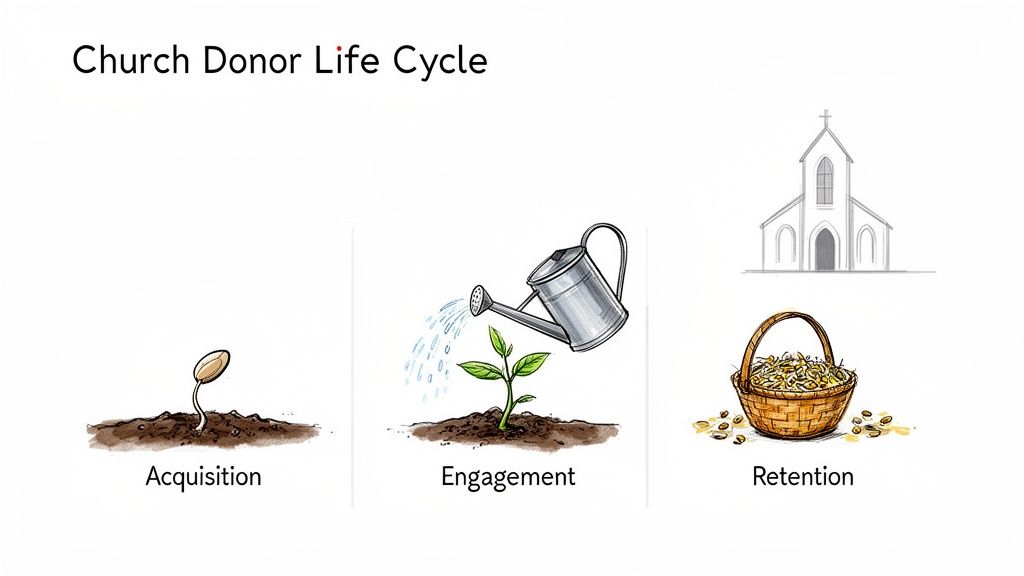
Nurturing generosity in your church is a lot like tending a garden. You don't just toss seeds onto the soil and hope for the best. You follow a thoughtful process—planting, watering, and nurturing—to see real growth. The donor life cycle brings that same intentionality to your ministry's finances.
This approach helps you shift from just processing transactions to actually building meaningful connections. Every single gift, no matter the amount, is part of a story. It’s a story of someone’s faith and their trust in where your church is headed. When you understand their journey, you can meet people right where they are and gently guide them toward deeper involvement.
A Relational Framework, Not a Formula
At its heart, the donor life cycle is simply a map for stewarding these relationships well. It’s all built on a few core beliefs:
- It’s Ministry, Not a Machine: We're talking about people, not just numbers on a spreadsheet. The real goal is to cultivate a culture of generosity that strengthens the entire church community.
- Every Stage Matters: From the person who gives for the very first time to the family that tithes faithfully every month, each individual is crucial to your church’s mission.
- Trust Is The Foundation: People need to know their gifts are being handled with integrity. When you’re transparent and communicate clearly, givers are far more likely to stay engaged for the long haul.
This relational mindset is what turns a one-time donation into a true partnership. It changes the question from "What can we get?" to "How can we partner together to fulfill God's mission?"
The donor life cycle is less about fundraising tactics and more about discipleship in generosity. It recognizes that giving is a spiritual act and provides a framework for helping your congregation grow in their commitment to stewardship.
The donor life cycle is broken down into five distinct stages, each with its own focus. Seeing it laid out this way helps clarify where to put your energy.
The Five Stages of The Church Donor Life Cycle
| Stage | Primary Goal | Key Metric Example |
|---|---|---|
| Acquisition | Inspire someone to give their first gift. | Number of new givers this month. |
| Engagement | Thank the new giver and show the impact of their gift. | Percentage of first-time givers who give a second time. |
| Retention | Nurture the relationship to encourage consistent giving. | Number of donors who give regularly (e.g., monthly). |
| Upgrading | Encourage existing givers to increase their support. | Average gift amount per donor. |
| Stewardship | Show deep appreciation and honor long-term partners. | Number of legacy or major givers. |
By tracking how people move through these stages, you can get a clear picture of the health of your church's generosity culture.
Why This Is So Vital For Sustainable Ministry
Putting the donor life cycle into practice is one of the best things you can do for your church's long-term financial health. It lets you be proactive instead of constantly reacting, creating a steady, sustainable way to fund your ministry. Without this map, it’s easy to get stuck in an exhausting cycle of always chasing new donations without ever building loyalty.
Of course, managing this journey well requires the right tools. This is where a true fund accounting system becomes absolutely essential. Generic business software just doesn't cut it. A purpose-built platform like Grain Ledger is designed from the ground up to track donations to specific funds, giving you the transparency you need to build unshakable trust at every stage.
Welcoming New Givers into Your Mission
The very first stage of the donor life cycle, Acquisition, is about so much more than just getting a first donation. Think of it as an invitation. You're asking someone to step out of the crowd and become an active partner in your church's story and mission. This is the moment a general interest in your ministry blossoms into a tangible act of support.
Success here boils down to two things: making giving both incredibly meaningful and ridiculously simple. People are most moved to give when they see a clear, specific need and understand exactly how their contribution will solve it. A vague request to support the "general budget" just doesn't connect with people's hearts in the same way.
Creating Compelling Giving Opportunities
Instead of a generic appeal, try framing your giving opportunities around specific ministry goals. This approach directly connects a person's gift to an outcome they can get genuinely excited about. It's the core idea behind fund-based giving.
- Launch a Campaign for a Youth Center: Don't just ask for money for a building. Show sketches of the new space, share powerful stories from teens, and set a clear fundraising goal. People aren't just giving to a structure; they're investing in the future of the next generation.
- Fund a Specific Missions Trip: Introduce the mission team by name. Explain the vital work they'll be doing and break down the costs for travel and supplies. Suddenly, a gift becomes a direct, personal link to that global outreach.
- Support a Community Food Pantry: Share the hard statistics about local hunger and then make it real. Explain how a $50 donation provides a week's worth of groceries for a family. This makes the impact concrete and deeply personal.
By creating these designated funds, you give people a powerful "why" behind their generosity. This transparency is the first and most important step in building a long-term relationship built on trust. As you welcome new givers, using a mass texting service for nonprofits can be a great way to quickly share these urgent, story-driven needs and build an immediate connection.
A first-time gift is an act of trust. The new donor is placing their faith not only in your church's mission but also in your ability to steward their resources with integrity and purpose.
Making that first gift seamless is just as crucial as the story you tell. A clunky, confusing online giving process can stop generosity dead in its tracks. In today's world, a modern, integrated digital giving platform isn't a luxury—it's a core part of making new givers feel welcome.
The Critical Role of Technology in the First Gift
The easier you make it to give, the more likely people are to follow through with that first donation. That initial experience sets the tone for their entire journey with your church. And behind the scenes, this process has to be perfectly accurate from the very start.
This is where integrating your giving platform directly with your accounting system becomes a game-changer. When a first-time donor gives to the "Youth Center Fund" online, that money should flow automatically into the correct, restricted fund within your books. This simple connection eliminates manual entry errors and ensures every single dollar is accounted for properly from day one.
For churches, a purpose-built fund accounting solution like Grain Ledger is essential. Grain connects with popular giving platforms to guarantee that when a donation is made to a specific fund, it's recorded correctly in your financial system without any extra work. It creates an unbroken chain of trust and transparency. You can dive deeper into setting up these systems in our complete guide to church donation tracking software.
Measuring Your Welcome Mat
How do you know if your acquisition strategies are actually working? You need to watch a few key numbers. These metrics tell the story of how effectively you're inviting new people to join your mission.
- New Donors Per Month: This is your primary growth indicator. It shows whether your outreach is consistently bringing new partners into the fold.
- Average First-Time Gift Amount: This number helps you see which campaigns or appeals are resonating most powerfully with new givers. A higher average might point to a particularly compelling story.
- Source of First Gift: Did the donation come from a Sunday service, a social media campaign, or a direct email? Knowing where new givers come from helps you focus your time and energy where it matters most.
Tracking these simple metrics gives you the data you need to refine your approach, ensuring you aren't just receiving donations, but truly beginning relationships on a solid foundation of clarity and purpose.
Showing You're a Good Steward of Their Gift
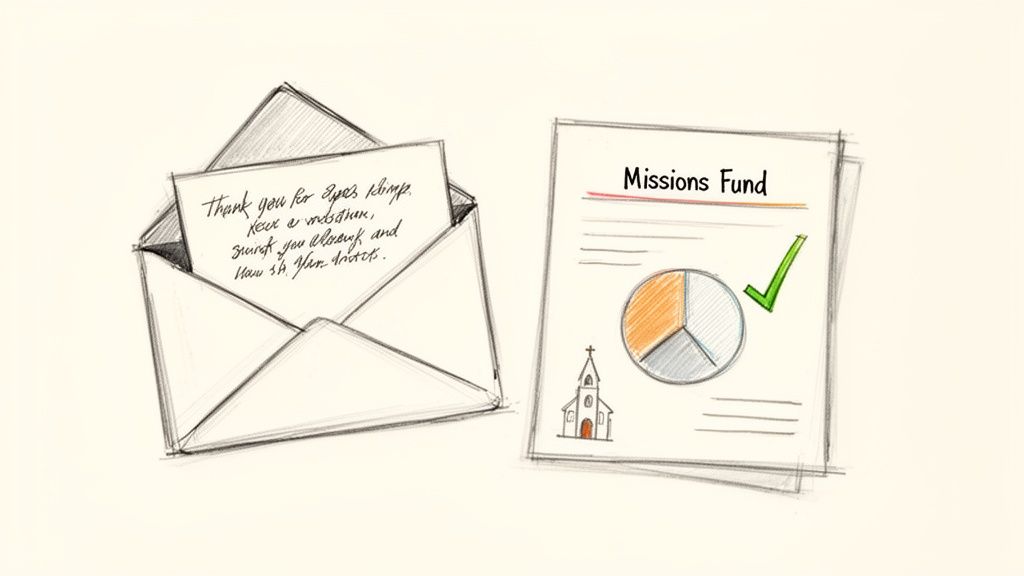
A first-time gift is a huge moment, but what you do next is arguably more important. This is where you have the opportunity to turn a simple transaction into a genuine, lasting partnership. Good stewardship isn't just about saying "thank you"—it’s about proving to your givers that their trust in your ministry was well-placed.
This stage is all about nurturing the relationship by showing the real-world impact of their generosity. The initial gift was an act of faith. Great stewardship provides the evidence that reinforces that faith. It’s how you make a donor feel seen, valued, and truly connected to the mission they chose to support.
The Power of a Personalized Thank You
The first interaction after a gift sets the tone for everything that follows. A generic, automated email receipt is a massive missed opportunity. To build a real connection, your acknowledgment needs to feel personal and specific.
Think about it. If a friend gave you a thoughtful birthday gift, you wouldn't just send them a form letter. You’d mention the specific gift and what it meant to you. The same principle applies here. A personalized thank-you that references the exact fund a person gave to shows you were paying attention.
- For a gift to the "Missions Fund": "Thank you so much for your generous gift to our Missions Fund! Your support is helping our team prepare for their trip to Guatemala next month, where they’ll be helping build a new community well."
- For a gift to the "Youth Center Project": "We were so blessed by your gift to the new Youth Center. Every donation brings us one step closer to creating a safe and welcoming space for our teens to grow in their faith."
This simple act of specificity communicates competence and care. It tells the donor that their gift wasn't just swallowed up by a general budget but was received, recognized, and pointed toward its intended purpose. This is the first building block of profound, long-term trust.
True stewardship is the art of making your donors the heroes of the story. It shifts the focus from your church's needs to the incredible impact their generosity is having on the lives of others.
A great thank-you note is just the start, though. The deepest level of stewardship involves closing the loop and showing donors exactly how their money was used.
Demonstrating Impact with Financial Transparency
This is where many churches stumble. It's usually not from a lack of integrity, but simply from a lack of the right tools. Donors, especially those who give to restricted funds, want to see that their contribution made a real difference. They want to know the story of their gift.
Trying to provide this clarity with generic business accounting software is nearly impossible. But with a true fund accounting system, this becomes your most powerful stewardship tool. This is where a dedicated solution like Grain Ledger becomes essential for your ministry.
Because Grain Ledger is built around funds from the ground up, every donation is automatically tracked to its specific purpose. This allows you to generate simple, clear reports that show exactly how restricted funds were used.
Imagine being able to send an update to everyone who gave to the Youth Center Fund that includes a simple report showing:
- Total amount raised for the fund.
- A clear list of expenses paid from that fund (e.g., architectural drawings, permits, initial materials).
- The remaining fund balance.
These reports are so much more than just financial documents; they are tangible stories of ministry in action. They provide undeniable proof that you are honoring the donor's intent, which is the cornerstone of all trust. This level of transparency makes givers feel less like donors and more like respected partners in your mission.
When people see their money being used faithfully and effectively, their confidence skyrockets, paving the way for a deeper, more committed relationship.
Inspiring Long-Term and Consistent Generosity
Once you've welcomed new givers and shown them what incredible stewardship looks like, the next chapter in their journey is inspiring a deeper, more consistent partnership. This is where you gently guide sporadic givers toward becoming regular, committed supporters of your church's mission. It's all about creating clear pathways for people to grow in their generosity.
This shift from occasional to consistent giving is the very backbone of a financially healthy church. Sure, bringing in new donors is exciting, but keeping the ones you have is far more effective and sustainable. A focus on retention builds a stable foundation, letting your ministry plan for the future with confidence instead of constantly chasing the next donation.
Turning Occasional Givers into Consistent Supporters
The secret to encouraging consistency is to make it both easy and meaningful. Most people who give sporadically are moved in the moment, but they don't have a structured plan for their generosity. Your role is to provide that structure and show them the incredible collective impact of their steady support.
Promoting recurring giving is the most practical way to do this. A small, automated monthly gift often feels more manageable to a donor than a larger one-time donation, yet its cumulative effect on your ministry is immense. You're not just asking for a financial transaction; you're inviting them into an act of faithful partnership.
By becoming a regular giver, a member moves from being a spectator of the mission to a shareholder in it. Their consistent support becomes a steady drumbeat of faith that powers the ministry month after month.
The data really puts a fine point on the challenge here. A recent Fundraising Effectiveness Project report revealed that overall donor retention was a startling 26.3%, with new donor retention even lower at just 11%. This should be a wake-up call for churches to nurture these relationships carefully. Otherwise, we risk losing the very people who have already shown a heart for the ministry.
Identifying and Encouraging Upgraded Gifts
Beyond just consistency, some donors may be ready to deepen their commitment by increasing their level of giving. This "upgrading" phase requires a relational touch and a lot of discernment. It's never about pressuring people for more money; it's about inviting them to be part of an even greater impact.
The first step is figuring out who might be ready for this conversation. This is where having clean, integrated financial data is worth its weight in gold. By looking at giving patterns, you can spot who's been giving consistently for a long time or who has recently made several significant gifts to special campaigns. These are often signs of a deepening spiritual and financial commitment.
With a dedicated accounting solution like Grain Ledger, this kind of analysis is refreshingly straightforward. Since Grain Ledger connects directly with your giving platform, all the donation data is organized in one place. Your finance team can easily see these patterns without any soul-crushing manual data entry. You can track a donor’s journey over time and identify those key moments where a gentle invitation to grow might be welcomed. For more on this, see how effective fundraising in churches can be when it's backed by clear data.
Fostering Confidence Through Financial Clarity
The final piece of the puzzle is building unshakable confidence in your church's financial leadership. People are far more likely to increase their support when they have absolute trust that every dollar is managed with integrity and wisdom. And a key part of that stewardship is building lasting relationships; exploring successful retention marketing strategies can significantly boost consistent giving by building this very trust.
This is where the clear, fund-based reporting from Grain Ledger becomes a powerful tool for building that confidence. At your annual members' meeting or in quarterly updates, you can present reports that are easy for everyone to understand. Instead of a confusing spreadsheet, imagine showing a simple, professional report detailing the income and expenses for the Missions Fund or the Benevolence Fund.
Here's how this builds the confidence needed for upgrading:
- It demonstrates accountability: Clear reports prove you are honoring donor intent for every restricted gift.
- It shows missional effectiveness: By connecting financial data to ministry outcomes, you show their money is making a real difference.
- It builds trust in leadership: Professional, transparent financial management signals that the church is run with excellence and care.
When a member sees this level of clarity, their confidence in the church's leadership soars. This removes any hesitation they might have about increasing their giving, making the invitation to a deeper partnership feel like a natural and exciting next step in their journey of generosity.
How to Track the Journey with Fund Accounting
Knowing the stages of the donor life cycle is one thing, but actually managing them is a whole different ballgame. To really shepherd your givers along their journey, you need a financial system that gets the heart of ministry. This is where the right tools move you from abstract ideas to concrete, actionable stewardship.
Your standard, off-the-shelf business software just wasn't built for the unique financial DNA of a church. It’s designed for profit and loss, not purpose and impact. You need a financial hub built around stewardship, which is why a true fund accounting for churches solution like Grain Ledger is so essential. It acts as the command center for your church's financial integrity, ensuring every dollar is tracked with absolute clarity from the moment it's given.
A Real-World Scenario: From Gift to Report
Let’s walk through a simple, everyday example to see how this plays out.
Imagine a family in your congregation feels led to support an upcoming missions trip. They hop on your church's online giving page and make a $200 donation, choosing the "Missions Outreach Fund" from the dropdown menu.
This is where the magic happens.
- Seamless Integration: The moment they click "give," their donation platform talks directly to Grain Ledger. Your treasurer doesn't have to manually download a report and key in the data—a process that’s notorious for causing errors.
- Automatic Fund Allocation: Grain Ledger immediately recognizes that the $200 is a restricted gift. It automatically assigns the full amount to the "Missions Outreach Fund," instantly increasing that fund's balance without it ever touching the general fund.
- Real-Time Financial Clarity: Now, the church treasurer can log into Grain Ledger and see the exact, up-to-the-minute status of the missions fund. This kind of immediate visibility is absolutely critical for making wise decisions.
This clean, automated workflow ensures the donor's intent is honored from the very first second. It creates an unbroken chain of accountability that builds rock-solid trust, which is the foundation for nurturing generosity at every stage of the donor life cycle.
The goal is to see a progression from sporadic giving to consistent, intentional generosity, as shown below.
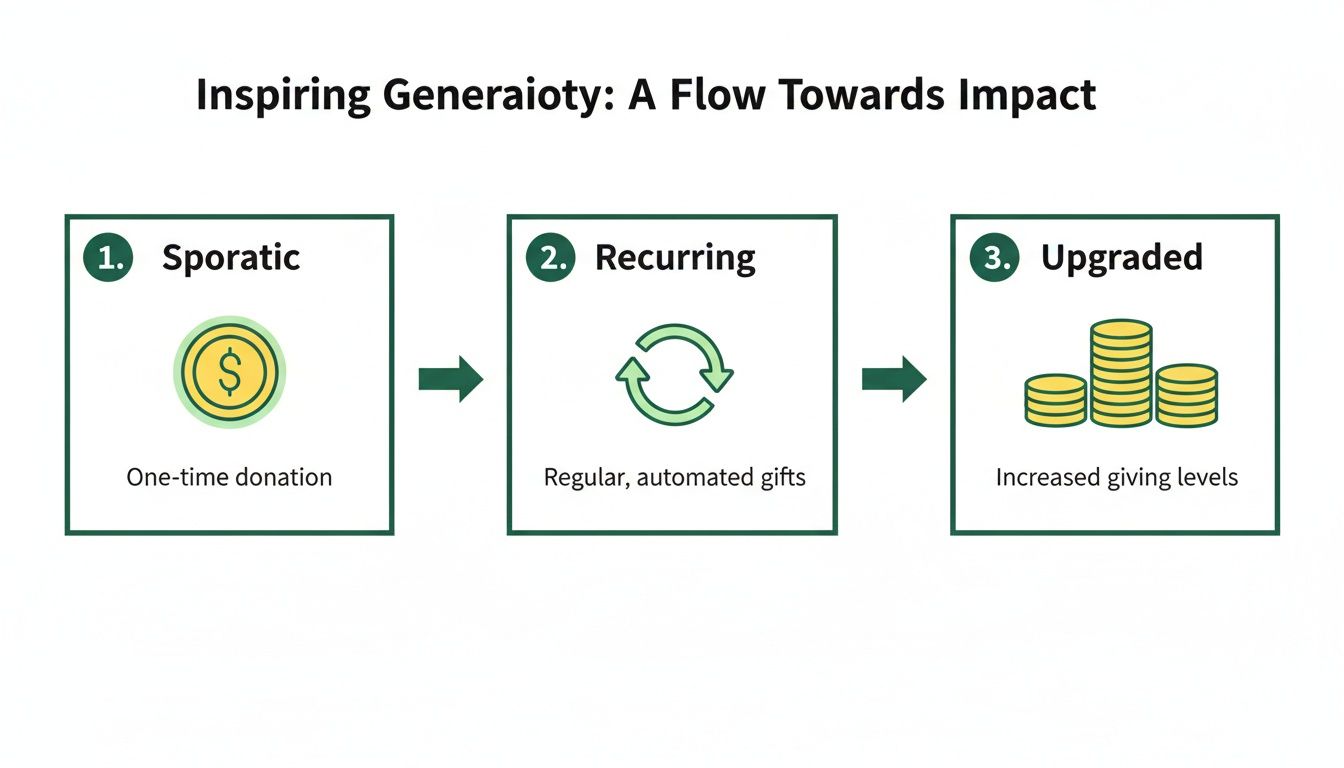
This visual shows the journey you want to inspire, where a strong stewardship process encourages a deeper and more committed partnership over time.
From Data to Discipleship
The process doesn't stop once the donation is logged. The real power of fund accounting is what it allows you to do with that clean, accurate data.
Let's continue our scenario. The missions pastor needs to know if they have enough money to buy plane tickets for the team. Instead of hunting through a confusing spreadsheet, the treasurer can pull a report in seconds.
- Fund Balance Report: A quick look at the "Missions Outreach Fund" reveals its current balance, letting the team know exactly what they have to work with.
- Income Statement by Fund: They can also generate an income statement for just that fund, showing every single donation that has come in and every expense paid out against it.
This is a level of detail you simply can't get from standard accounting software. It allows you to confidently answer donor questions and proactively share updates, proving that you are a faithful steward of their gifts.
True fund accounting isn't just about better bookkeeping; it's about building a better relationship with your givers. When you can show them precisely how their gift made a difference, you're not just reporting numbers—you're telling a story of shared mission.
This end-to-end tracking—from the initial click on a giving page to the final fund report—is what modern stewardship looks like. It removes the guesswork and replaces it with confidence. When your congregation sees this level of integrity in action, their trust grows, creating fertile ground for generosity to blossom.
Related church accounting software resources
If you are comparing software, these pages map the main decision points: fund accounting, QuickBooks limits, pricing, and migration.
- Best church accounting software (2026 comparison) - canonical guide comparing 12 church accounting platforms
- Church accounting software product page - see Grain Ledger for fund accounting, giving, and bank reconciliation
- Small church accounting software - see the product page built for volunteer treasurers and church admins
- Fund accounting features - review how Grain Ledger tracks designated funds
- QuickBooks for churches - understand workarounds and when to switch
- Free church accounting software - compare free options and upgrade triggers
- Grain Ledger pricing - compare plans for small and growing churches
- Start free - try fund accounting, giving imports, and bank reconciliation together
Common Questions About the Church Donor Life Cycle
Putting a donor life cycle strategy into motion can feel like a huge task, especially when you're already juggling the day-to-day demands of ministry. We hear a lot of the same questions from churches of all sizes, so let's walk through three of the most common ones to help you get started.
How Can a Small Church With a Limited Staff Pull This Off?
If you're part of a smaller church, the idea of managing a detailed, multi-stage donor journey can sound downright exhausting. The secret isn't to do everything all at once. It's about focusing on simple actions that have a big impact and letting technology handle the rest.
Start with the basics: a fantastic thank you. You don’t need a big team to send a warm, personal email to someone who just gave for the first time. From there, you can put it on autopilot. Most modern giving platforms let you set up automated thank-you messages that can be personalized with the donor's name and the specific fund they supported. Just taking this one step can cover a huge part of the Engagement stage with very little effort.
Stewardship isn't about the size of your staff; it's about the heart behind your actions. A single, sincere thank you can build more trust than a dozen generic marketing emails.
What's the Most Important Stage to Focus On First?
Every stage matters, but if you have to pick one place to start, zero in on stewardship and retention. It's so much more effective to build on the relationships you already have than to constantly chase new givers. The numbers don't lie—new donor retention is shockingly low, often hovering around just 11%.
When you focus here first, you build a solid, stable foundation. Givers who feel seen, appreciated, and connected to the impact of their generosity are the ones who give again and again. This consistency is what gives your ministry the confidence to budget and plan for the future. Plus, great stewardship has a ripple effect; happy, engaged donors naturally become your best advocates.
How Does Fund Accounting Actually Help with Donor Retention?
This question really gets to the core of what it means to build trust with your congregation. Fund accounting is the tool that proves you're stewarding their gifts well. When someone gives to a specific cause, like the "Building Fund," they're trusting you to use that gift for that exact purpose.
A true fund accounting system like Grain Ledger is built to honor that trust perfectly. It automatically keeps restricted funds completely separate from your general operating budget the moment a donation comes in. This makes it incredibly easy to run reports that show exactly how much came in for that fund and precisely how it was spent.
This level of transparency is your most powerful retention tool. When you can clearly show donors, "Here is what you gave, and here is exactly how we used it for the mission," you erase any doubt. You build the kind of unshakeable confidence that turns a one-time giver into a lifelong ministry partner.
Ready to build unshakable trust and simplify your church's finances? Discover how Grain Ledger’s true fund accounting can help you master every stage of the donor life cycle. Schedule a Demo and get ready to transform your stewardship.
Ready to simplify your church finances?
Start free with church fund accounting, or watch a product demo first.