
Mastering the Grant Letter of Intent
 By Gibson Brueher, Founder of Grain Ledger
Master your grant letter of intent for church funding. Our guide offers templates, samples, and expert tips to secure and manage grants effectively.
A lot of church leaders arrive at grant writing the same way. The ministry need is clear, the congregation is supportive, and the budget still doesn’t work.
About Grain Ledger: This guide includes Grain Ledger, church fund accounting software built for designated gifts and ministry funds. It connects giving platforms (Planning Center, Pushpay, Tithely, Stripe), syncs bank activity with Plaid, and produces fund-level financial reports. Schedule a demo to see how it compares for your church.
See Grain Ledger for your church
Fund accounting, giving integrations, and bank reconciliation in one platform. Free migration support for churches switching from QuickBooks or Aplos.
Maybe it’s a new grief support ministry. Maybe it’s a food pantry expansion, a youth outreach effort, or a renovation that would let your fellowship hall serve the neighborhood all week instead of just on Sundays. The vision is sound, but unrestricted cash is tight and designated giving won’t cover everything.
That’s where a grant letter of intent changes the conversation. It gives your church a disciplined way to introduce the ministry, show that the need is real, and ask a funder to take the next step with you. Done well, it isn’t filler before the “real” application. It’s the first stewardship test.
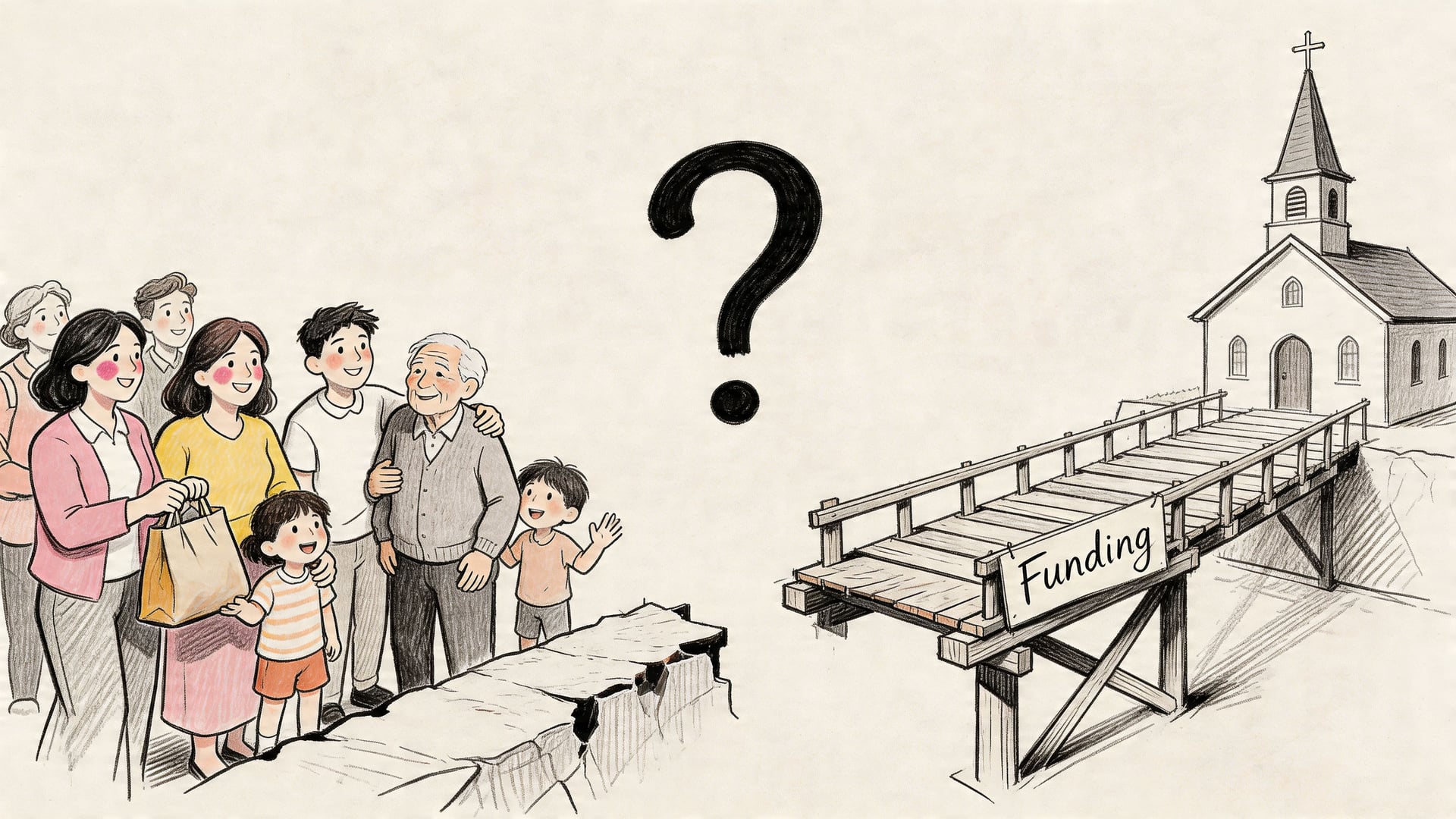
Your Ministry Vision Needs a Funding Bridge
A church usually doesn’t start with paperwork. It starts with a burden.
A pastor sees families in the community carrying grief with nowhere to process it. A missions team realizes the pantry line is getting longer. A finance committee looks at a worn building and knows that one modest renovation could turn underused space into a weekday ministry hub. Then someone asks the practical question: how are we going to pay for this?
That moment matters because many churches either undersell the idea or rush straight into a full proposal mindset. They talk about what they hope to do, but not why this ministry is ready, accountable, and aligned with what a funder wants to support. A grant letter of intent gives you a better entry point.
What the LOI does for a church
A strong LOI acts like a bridge between ministry vision and institutional trust. It lets a foundation quickly answer a few basic questions:
- Is this project aligned: Does this church serve a need the funder cares about?
- Is the ask clear: Can a reviewer understand the request without hunting for it?
- Is the church credible: Does the ministry have leadership, planning, and financial discipline?
- Is the next conversation worth having: Should this church be invited to submit more?
Churches sometimes assume that heartfelt language will carry the letter. It won’t. Funder-facing writing has to be warm, but it also has to be organized.
A ministry can be compelling and still be hard to fund if the request feels vague, oversized, or loosely managed.
Why churches need a different mindset
A grant letter of intent for a church has a special challenge. You aren’t only presenting a program. You’re also helping a secular or faith-friendly funder understand how your ministry serves the broader community in practical terms.
That means framing the project in language a reviewer can evaluate. Not “we feel led.” Instead, explain the community need, the people served, the activities planned, the results you’ll track, and the budget discipline behind the request.
That shift doesn’t weaken ministry language. It strengthens it. You’re translating conviction into stewardship, and that’s exactly what responsible funders want to see.
Why an LOI is a Game-Changer for Church Fundraising
A church administrator pulls together program notes, a draft budget, and a strong ministry story for a grant opportunity. Then the funder asks for a letter of intent first. That step can feel small, but it often decides whether the church ever gets to submit the full proposal.
Foundation staff use LOIs as an early screen. According to Spark the Fire Grant Writing’s overview of LOI practice, many funders review large batches of LOIs and use them to cut down the number of full proposals they have to read. Churches that understand that process write differently. They stop treating the LOI like a courtesy note and start treating it like the first funding decision.
It protects limited church staff time
In a church office, grant work rarely sits with one person. Program staff provide ministry details. Finance confirms the numbers. Leadership signs off on priorities. Sometimes a volunteer bookkeeper or board treasurer has to weigh in too.
That is a lot of coordination for a proposal that may not fit the funder in the first place.
A good LOI helps a church test alignment before it spends ten or fifteen hours building attachments, budgets, and supporting documents. I have seen ministries save weeks of effort by learning, through the LOI stage, that a foundation liked the church but not that specific project. That is a useful answer. It frees the team to pursue a better fit instead of forcing a full proposal into the wrong opportunity.
It exposes whether the project is actually ready
Some church projects are ministry-ready but not grant-ready.
That distinction matters. A ministry leader may have a real burden for a food pantry expansion, counseling program, or after-school outreach. A funder still needs to see defined activities, a workable timeline, a realistic dollar amount, and evidence that the church can track restricted funds correctly. If those pieces are fuzzy, the LOI reveals the problem early.
That is one reason I tell churches to connect grant planning with their finance processes from the start. Strong external funding depends on more than persuasive writing. It depends on clean budgeting, clear restrictions, and disciplined reporting, which is also why broader church fundraising planning has to include the accounting side, not just the appeal side.
It rewards focus, not breadth
Churches often want to describe the full scope of their ministry. I understand the instinct. The challenge is that funders usually support a defined initiative, not a general summary of everything the church does.
A strong LOI shows restraint. It picks one project, states one clear need, and makes one specific ask.
What usually helps:
- A project with a defined start, scope, and budget
- Language that explains community benefit in plain terms
- A request amount tied to actual costs
- Evidence that the church can separate and report grant funds properly
What usually hurts:
- Trying to fit every ministry into one letter
- Using insider language a reviewer cannot evaluate
- Submitting an ask before finance has confirmed the numbers
- Promising outcomes the church is not set up to measure
That last point is where churches get into trouble. If the LOI promises tutoring outcomes, counseling sessions, or meal distribution targets, the church should already know how those numbers will be tracked and how the grant money will be coded once received. Otherwise the letter sounds stronger than the operation behind it.
It improves future grant results too
Even when an LOI does not advance, it can still improve the next application cycle. It forces leadership, ministry staff, and finance staff to agree on what the project is, who it serves, what success looks like, and how restricted money will be handled. That internal clarity carries into later grants, donor reports, and board conversations.
If someone on your team needs a basic outside primer on what is a letter of intent, use that as background. Then bring the discussion back to the church context. The key question is not just how to write a clean LOI. It is whether the ministry can support the promises the LOI makes.
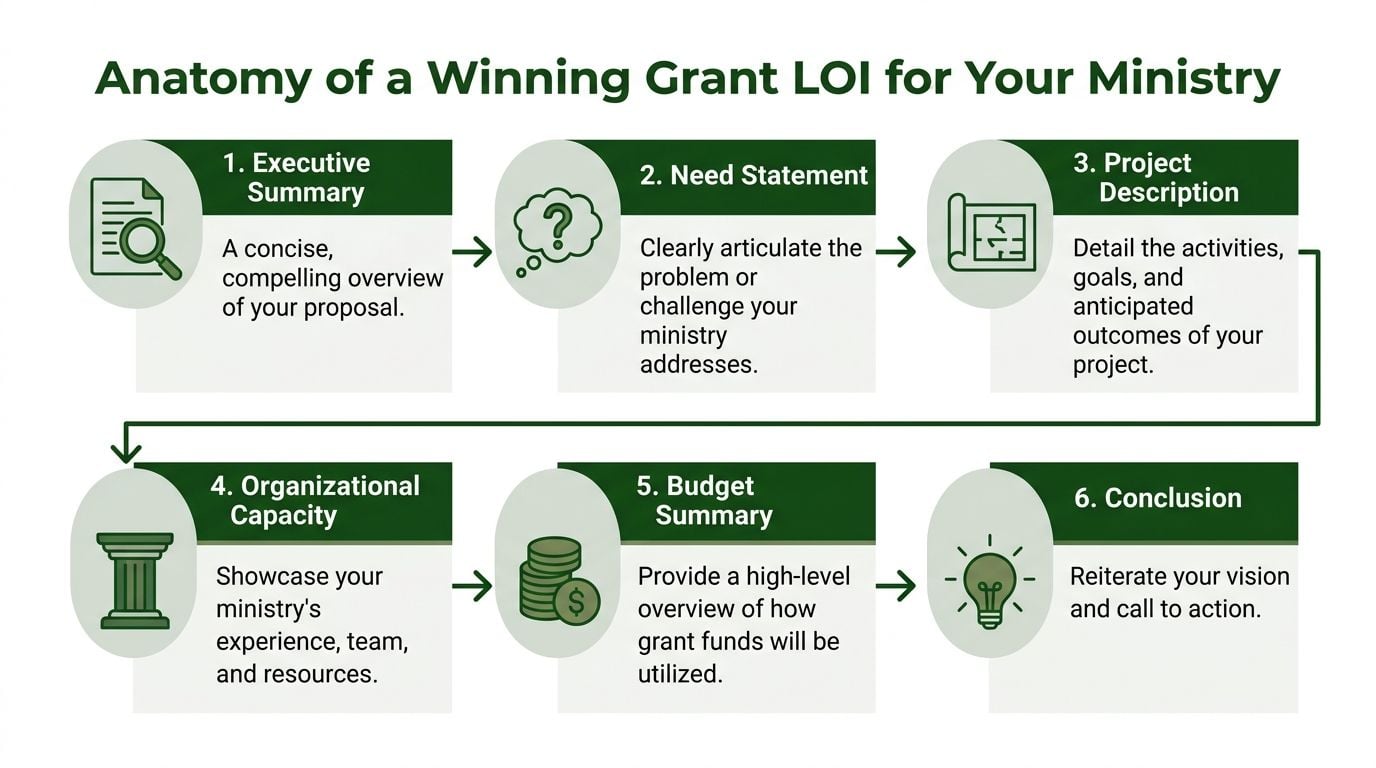
Anatomy of a Winning Grant LOI for Your Ministry
A good LOI is short, but it isn’t casual. It’s a business letter with ministry purpose behind it.
For 80% of funders, a one-page format is optimal, and experts recommend opening with the organization name, the grant name, and the specific request amount. Including 3-5 key data points about expected impact can improve the chance of invitation by 25-40%, according to Fundsource26’s grant letter of intent guidance. That tells you two things. Brevity matters, and specificity matters.
Open like a professional, not like a newsletter
The first lines should orient the reviewer immediately. Name your church, identify the funding opportunity, and state the request.
A useful opening sounds like this in plain terms: our church is requesting support for a community-based after-school mentoring ministry that serves local students and families. Keep it direct. Don’t make the funder search for the purpose of the letter.
If you need a simple outside primer on what is a letter of intent, Bidwell’s explanation is a helpful baseline before you adapt the concept to church grant work.
Write an executive summary that can stand on its own
The executive summary is the compressed version of the whole case. If the reviewer only remembers one paragraph, it will usually be this one.
Include these ideas in a natural sentence flow:
- Who you are: your church and community role
- What you’re proposing: the ministry project itself
- Who benefits: the people or groups served
- What you’re asking for: the amount and broad use
- Why now: the reason this project is timely
This is not the place for your complete church history. It’s the place for a clear first impression.
Build a need statement from the community outward
Many church LOIs weaken here because they start with the church’s desire instead of the community’s need. A reviewer wants to know why this project should exist even if they’ve never heard of your congregation.
Use local evidence where you have it. That might include school observations, ministry intake patterns, referrals from counselors, neighborhood feedback, or service demand your ministry has already seen. Keep the language plain and grounded.
The strongest need statements don’t say, “Our church wants to expand.” They say, “Families in our community lack this support, and our church is prepared to provide it.”
Describe the project in concrete terms
Now explain what you’ll do.
This section should answer practical questions. What activities will happen? Who will lead them? How often will they run? What does participation look like? What outcomes will you track?
Avoid trying to sound impressive. Concrete verbs are stronger than polished abstractions. Say you’ll host weekly classes, train volunteers, partner with a local pantry, provide transportation help, or renovate space for community use. That reads as operationally real.
A short video can help you think through the tone and structure of a funder-facing letter before you draft your own.
Show organizational capacity without overexplaining
You must demonstrate your church's capacity to carry out the work. Mention experience that directly supports the proposed ministry. If your church has run volunteer-led care programs, managed community partnerships, or maintained reliable financial oversight, say so.
Don’t pad this section with every ministry your church has ever launched. Reviewers want relevant capacity, not a scrapbook.
A strong capacity paragraph often includes:
- Leadership: who oversees the ministry
- Operations: staff or volunteer structure
- Partnerships: local collaborators, if relevant
- Governance: financial and board oversight
- Track record: prior related ministry experience
Make the budget request explicit
Many churches get timid here. Don’t.
State the amount you’re requesting and what it will support at a high level. If the grant will cover curriculum, equipment, part-time staffing, pantry supplies, or facility improvements, say that plainly. If the church is contributing part of the cost, note that too.
Keep this brief in the LOI, but not vague. If you need help turning ministry plans into funder-friendly budget language, a practical budget narrative example for grant requests can help you tighten this section.
End with a courteous next step
Close by reaffirming fit, expressing appreciation, and welcoming further discussion. This is not where you add new information. It’s where you leave the reviewer with confidence that your church is thoughtful, prepared, and easy to work with.
Sample LOIs for Common Church Initiatives
Examples help because most church leaders don’t struggle with ministry ideas. They struggle with framing.
Below are condensed sample approaches you can adapt. They aren’t meant to be copied line for line. They show how tone, structure, and scope change depending on the project.
A grief support ministry request
A church starting a grief support program should avoid sounding like it is launching another internal small group. The LOI should position the project as a community-facing response to a visible need.
A condensed version might read like this:
Dear Grants Committee, New Hope Church requests support for a grief support ministry designed for adults and families in our community who need structured care after the loss of a loved one. Our church regularly receives requests for pastoral care beyond what our current volunteer capacity can sustain, and local families often need a consistent, welcoming setting for guided support.
Grant funds would help us launch a recurring grief support program led by trained facilitators, supported by curriculum materials, hospitality costs, and referral coordination. The program will serve both church members and non-members and will be promoted through local partners and community networks.
Our church has experience organizing care ministries, volunteer teams, and confidential intake processes. We believe this project aligns with your interest in strengthening community well-being, and we would be grateful for the opportunity to submit a full proposal.
Why this works: the need is pastoral, but the letter frames it as a practical community service. The language stays accessible to a reviewer outside the church.
A renovation request for community use
Capital-related requests need a different emphasis. The funder has to see that the building work is tied to public benefit, not just internal convenience.
A concise version might look like this:
Dear Foundation Team,
Grace Fellowship seeks support to renovate its fellowship hall so the space can safely and consistently serve community programs throughout the week. The hall is already used for meal distribution, tutoring, and neighborhood gatherings, but its current layout and condition limit access and scheduling.
Requested funds would support improvements that increase the hall’s usefulness for outreach activities and community partnerships. The renovation will allow the church to host more programs in a functional setting and extend the useful life of a heavily used ministry asset.
Grace Fellowship has an established facilities oversight process, clear vendor approval procedures, and leadership committed to using the renovated space for regular community benefit. We welcome the chance to provide a full proposal with project details and budget information.
Why this works: it doesn’t treat the renovation as a generic building upgrade. It ties the physical work to service capacity.
A food pantry partnership request
Outreach requests are often strongest when they show collaboration instead of isolation. Funders want to see that the church understands its role in the wider local support network.
A condensed LOI could read this way:
Dear Program Officer, Riverstone Church is requesting support for its food pantry partnership initiative, which provides grocery assistance and volunteer-based support to households facing food insecurity in our area. This effort combines church volunteers, donated goods, and coordination with local partner organizations to offer reliable food access in a dignified setting.
Funding would help cover pantry infrastructure, food distribution support, and core operating needs related to weekly service delivery. The church has an active volunteer team, established intake procedures, and regular partnership communication that help maintain continuity and accountability.
We believe this project aligns with your commitment to practical community care and would value the opportunity to share a full proposal.
Why this works: the letter presents the church as one competent actor in a network of service, not as the only responder.
What these examples have in common
Even though the projects differ, each sample does a few important things well:
- It defines a specific project, not the entire ministry life of the church.
- It explains the community benefit in language a funder can assess.
- It signals operational readiness through leadership, systems, or partnerships.
- It asks for support without apology.
The common mistake is trying to sound grand. Better LOIs sound clear. A funder should finish reading and know exactly what your church wants to do, why it matters, and why your team can be trusted to do it.
Aligning Your LOI with Fund Accounting Requirements
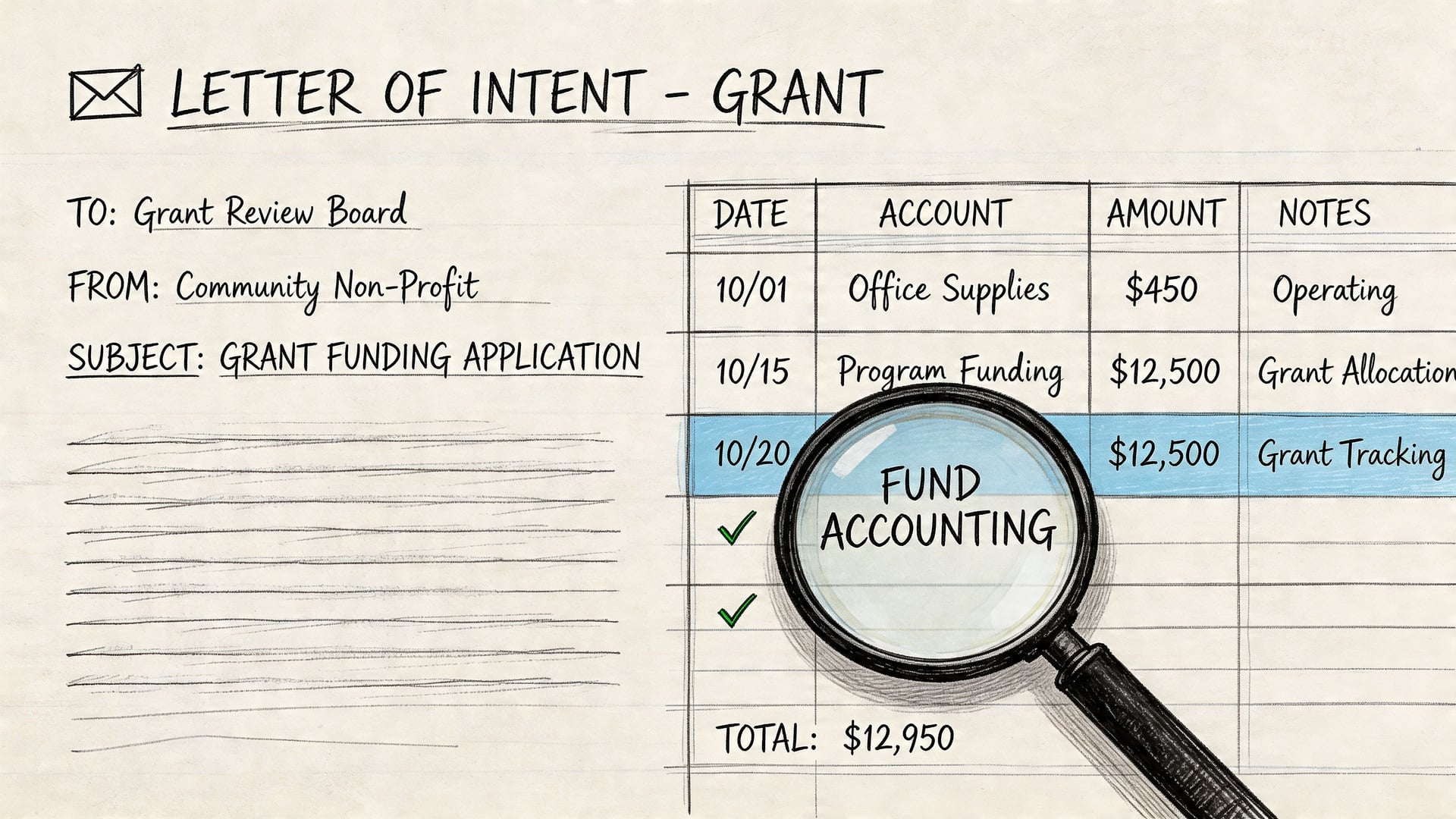
A grant letter of intent doesn’t end with a persuasive ministry story. It also needs to signal that your church can handle restricted funds correctly.
That matters more than many churches realize. A funder may like your project and still hesitate if your financial controls seem informal. Churches often operate with a mix of general offerings, designated gifts, missions support, benevolence funds, and project-specific donations. If those flows are not separated and reported cleanly, a grant reviewer may question whether their award will remain restricted to its intended purpose.
Why this matters inside the LOI
You don’t need to turn the LOI into an accounting memo. You do need to reassure the funder that the church takes stewardship seriously.
That can be done with a sentence or two in your budget or organizational capacity language. For example, state that grant funds will be recorded as restricted funds, tracked separately from general operations, and reported according to the grant terms. That kind of language tells the reviewer your church understands the difference between receiving money and administering it properly.
Churches lose credibility when they describe ministry vision in detail but stay vague about how restricted funds will be tracked and reported.
What funders want to hear
Funder confidence usually rises when your letter reflects sound habits such as:
- Restricted fund tracking: grant proceeds are not blended into general ministry use.
- Clear expense allocation: project costs are coded to the correct ministry purpose.
- Board or finance oversight: spending follows a real approval process.
- Reporting readiness: the church can produce grant-specific financial reports.
If your church team needs a broader operational framework, this guide to nonprofit accounting practices gives useful context on the discipline behind accountable reporting. The details will vary by jurisdiction, but the underlying principle is universal. Restricted money should be handled with precision.
Language you can adapt
A practical LOI sentence might say that awarded funds will be managed through the church’s restricted fund structure and monitored through regular internal financial review. Another version might explain that the church maintains separate tracking for grant-supported activity and can provide fund-level reporting during the grant period.
That wording is simple, but it carries weight. It tells the funder your church is not improvising its financial stewardship after the award arrives.
Why fund architecture is not a side issue
Many small and midsize churches often face challenges. They may have sincere people and honest intentions, but they rely on accounting workflows that weren’t built for true fund-based ministry operations. That makes grant compliance harder than it needs to be.
Churches that want stronger reporting discipline should understand the difference between general bookkeeping and fund accounting for churches. When your accounting system reflects how ministry restrictions work, your LOI becomes more credible because it points to a real control environment, not a promise to sort things out later.
A funder doesn’t need every backend detail in the first letter. They do need evidence that your church can receive a restricted award, spend it according to purpose, and show where the money went. That’s not an administrative extra. It’s part of the ministry case.
Related church accounting software resources
If you are comparing software, these pages map the main decision points: fund accounting, QuickBooks limits, pricing, and migration.
- Best church accounting software (2026 comparison) - canonical guide comparing 12 church accounting platforms
- Church accounting software product page - see Grain Ledger for fund accounting, giving, and bank reconciliation
- Small church accounting software - see the product page built for volunteer treasurers and church admins
- Fund accounting features - review how Grain Ledger tracks designated funds
- QuickBooks for churches - understand workarounds and when to switch
- Free church accounting software - compare free options and upgrade triggers
- Grain Ledger pricing - compare plans for small and growing churches
- Start free - try fund accounting, giving imports, and bank reconciliation together
Your Pre-Submission Checklist and Final Tips
The last review matters more than many church teams expect. I have seen solid ministry proposals lose momentum because the letter named the wrong program, buried the amount requested, or used language a foundation officer had to decode. None of those mistakes reflect a weak ministry. They reflect a weak submission process.
Treat the final pass like an internal control step, not a quick proofread. A grant letter of intent represents both your ministry vision and your church’s ability to handle restricted funds with care.
Grant LOI Final Checklist
| Check | Item |
|---|---|
| ☐ | The letter follows the funder’s length, format, and submission instructions |
| ☐ | The church name, contact person, and contact details are accurate |
| ☐ | The funding opportunity or program name is named correctly |
| ☐ | The request amount is explicit and easy to find |
| ☐ | The project description is specific and understandable to an outside reader |
| ☐ | The community need is clearly stated in practical language |
| ☐ | The church’s relevant capacity is included without unnecessary history |
| ☐ | The budget purpose is summarized clearly |
| ☐ | The letter explains how funds will be managed and tracked appropriately |
| ☐ | The closing invites further conversation and thanks the reader |
| ☐ | The entire letter has been proofread for grammar, names, dates, and tone |
Final habits that strengthen the letter
Good LOIs usually feel easy to read because someone made disciplined choices before submission.
- Use the funder’s language with restraint: Mirror the terms they use for outcomes and populations served, but only where those terms accurately reflect your ministry work. Forced wording reads like sales copy.
- Translate church vocabulary into public language: A reviewer may not know what “discipleship track,” “benevolence ministry,” or “outreach night” means in practice. Name the specific service, who receives it, and what result you expect.
- Ask an outsider to test clarity: Give the draft to someone who is not on staff and not close to the project. If that person cannot explain the request, the audience, and the use of funds after one read, revise it.
- Match the submission method exactly: If the funder asks for an email, send an email. If they use a portal, submit only what the portal requests. Extra attachments can signal that your church does not follow instructions well.
- Check finance language one more time: If you mention restricted use, reporting, or grant oversight, make sure those statements match what your accounting process can practically support. Funders notice when financial language sounds polished but vague.
One sentence can help your team stay focused.
Keep the letter short enough for a first read and clear enough to justify a follow-up.
A strong grant letter of intent does not try to tell your church’s whole story. It makes a credible case for one ministry need, one funding request, and one responsible plan for stewardship.
If your church is pursuing grants and wants the financial side to be as strong as the ministry case, take a look at Grain. Grain is purpose-built for church finance, with true fund-based accounting that helps churches track restricted gifts and grant dollars the way funders, boards, and congregations expect.
Ready to simplify your church finances?
Start free with church fund accounting, or watch a product demo first.