Non Profits First: Optimize Church Finances 2026
 By Gibson Brueher, Founder of Grain Ledger
Prioritize non profits first finances. Master fund accounting, restricted funds, & tools like Grain for clarity and stewardship in your church's finances.
You’re probably familiar with this scene. The finance committee meets tonight, and someone asks a simple question: “How much is left in the youth fund?” You open a spreadsheet, check last month’s giving report, compare it to bank activity, then realize one expense was coded differently in another tab. The answer should take seconds. Instead, it takes a trail of guesswork.
About Grain Ledger: This guide includes Grain Ledger, church fund accounting software built for designated gifts and ministry funds. It connects giving platforms (Planning Center, Pushpay, Tithely, Stripe), syncs bank activity with Plaid, and produces fund-level financial reports. Schedule a demo to see how it compares for your church.
See Grain Ledger for your church
Fund accounting, giving integrations, and bank reconciliation in one platform. Free migration support for churches switching from QuickBooks or Aplos.
That’s where many churches live. The money is real, the ministry is real, but the financial picture feels foggy. A church can be full of generous people and still struggle to explain where designated gifts sit, what’s available to spend, and how to report clearly to pastors, elders, and donors.
A non profits first mindset starts with a different assumption. Church finances should not be squeezed into business tools built to measure profit. They should be organized around stewardship, restrictions, and trust. That shift sounds technical, but at heart it’s simple. You stop asking, “How do we make this software work for us?” and start asking, “How should church money be tracked in the first place?”
From Financial Fog to Stewardship Focus
A lot of treasurers learn by necessity. Someone moves away, a volunteer steps down, or the books get too tangled to ignore, and suddenly you’re the one trying to make sense of deposits, reimbursements, and fund balances before Sunday.
That pressure is heavier than it looks. In 2024, individual donors contributed $392.45 billion to nonprofits, representing approximately two-thirds of total charitable giving in the United States, which is why churches carry a real responsibility to handle donations with clarity and care, as noted in these nonprofit fundraising statistics.

The question behind the question
When a board member asks about a missions balance, they’re rarely asking only for a number. They’re asking whether the church can trust its records. They’re asking whether designated gifts stayed designated. They’re asking whether next month’s ministry plans rest on solid ground.
That’s why generic bookkeeping often feels so frustrating in a church setting. A business can focus on income minus expenses. A church has to answer a more layered set of questions:
- Was this gift restricted or unrestricted
- Which ministry should carry this expense
- What can we spend now without touching money meant for something else
- Can we explain it clearly to non-accountants
If you’ve ever had to translate a balance sheet into plain English for a pastor, you know the challenge. Sometimes the most helpful starting point isn’t more software. It’s better financial literacy. A plain-language guide like How to Read Financial Statements for Beginners can help leaders understand what they’re seeing before they try to improve the system.
Practical rule: If a faithful volunteer needs a long verbal explanation to understand a fund balance, the reporting process is probably doing too much manual work.
Stewardship needs a better operating system
A non profits first approach treats church finance as ministry support, not office overhead. It gives treasurers a way to move from scattered records to clear stewardship. That means fewer workarounds, less second-guessing, and more confidence when someone asks, “Can we show exactly what happened to this money?”
What a Nonprofits First Approach Really Means
The phrase non profits first can sound abstract until you bring it down to one everyday picture. Think of your church finances as a row of labeled envelopes.
One envelope says General Fund. Another says Missions. Another says Building. Another says Benevolence. Money can sit in the same bank account physically, but in your records each dollar belongs to a purpose. That’s the heart of fund accounting.
Why business accounting feels off in a church
A business usually asks, “Did we earn more than we spent?” A church asks, “Did we use resources the way they were given and approved to be used?” Those are not the same question.
The nonprofit world is large enough to justify its own financial logic. The U.S. nonprofit sector includes nearly 1.8 million organizations, religious groups receive the largest share of charitable dollars at 27%, and the sector would rank as the world’s 5th largest economy if it were a country, according to these nonprofit facts and statistics. Churches aren’t a niche edge case. They’re part of a major sector with distinct reporting needs.
The digital envelope system
Many people are often confused. They think fund accounting means opening a separate bank account for every ministry. It doesn’t.
Fund accounting is mainly a record-keeping structure. Your chart of accounts and reports need to show which money belongs to which purpose, even when cash is held together. If you want a deeper look at how that structure works, this article on a nonprofit chart of accounts is useful.
A simple way to view it:
- The bank account shows where cash sits
- The fund records show what that cash is for
- The reports show whether you honored those purposes
That distinction clears up a lot of confusion.
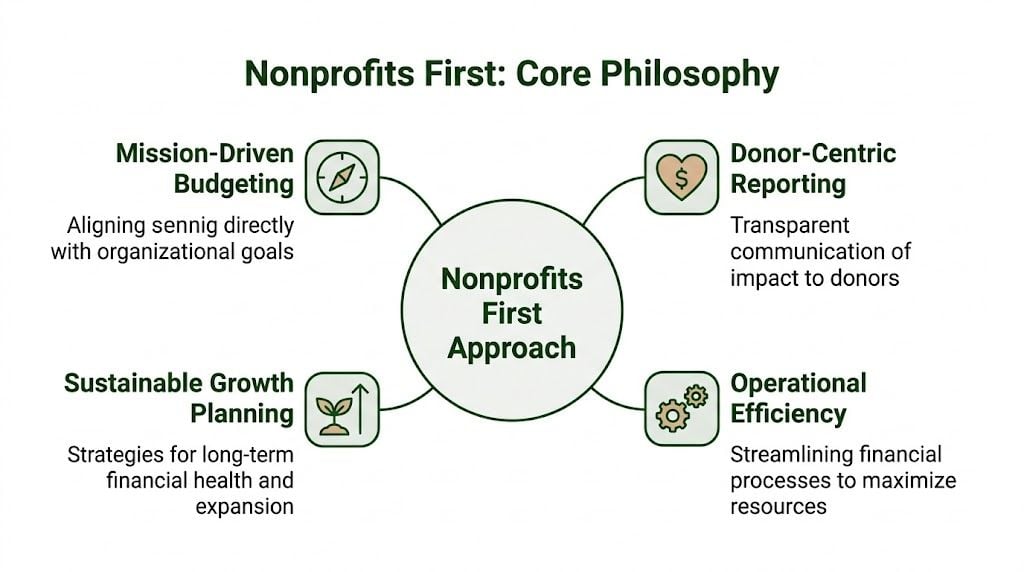
Four traits of a nonprofits first mindset
Churches usually move in the right direction when they build around four habits.
- Mission-shaped budgeting: Spending plans follow ministry priorities, not just department habits.
- Donor-aware reporting: Leaders can explain how designated gifts were received and used.
- Long-view planning: Decisions support sustainability instead of reacting to each month in isolation.
- Operational simplicity: Fewer manual exports, fewer spreadsheet patches, and fewer coding workarounds.
A church doesn’t need finance that looks impressive. It needs finance that makes stewardship visible.
When people adopt this mindset, they stop treating fund tracking as an annoying extra step. They begin to see it as the normal way a church should account for entrusted money.
Why This Matters for Your Church's Mission
Church finance can feel like back-office work until uncertainty hits. Giving becomes less predictable. A planned project gets delayed. A pastor wants to know what’s precisely available. A donor asks how a designated gift was used. Those moments expose whether the system is built for confidence or for guesswork.
Small to medium nonprofits, including churches, are facing “profound uncertainty” because of unstable funding sources, as discussed in this analysis of the nonprofit funding crisis. In that environment, transparency is not a nice extra. It helps leaders make steady decisions when the financial picture feels unsettled.
Trust grows when answers are clear
Most donors won’t ask for a technical accounting explanation. They want to know that the church takes stewardship seriously. Clear fund tracking gives them that assurance.
When a church can show that a benevolence gift stayed in benevolence, or that building donations were not redirected to cover a general shortfall, it builds a culture of confidence. People may never use the phrase “internal controls,” but they notice when reporting is clean and consistent.
Clarity helps pastors lead
Pastors and elders shouldn’t have to decode bookkeeping shortcuts to make ministry decisions. They need a view that answers practical questions:
- What resources are available for current ministry
- Which funds are restricted
- Where are we drifting from plan
- What commitments can we make responsibly
Without that clarity, leaders often become overly cautious. They delay action because they don’t trust the numbers enough to move.
Restricted money is not flexible money
This is one of the easiest places for churches to get into trouble. The cash may be in hand, but that doesn’t mean it’s free to use. A designated gift carries a purpose. Ignoring that purpose can create confusion internally and damage trust externally.
If your records can’t quickly show what is restricted, what is available, and what has already been committed, you’re not looking at a stewardship system. You’re looking at a cash log.
A non profits first mindset protects more than accuracy. It protects the church’s integrity. It lets ministry leaders act with confidence because they know the financial ground under them is solid.
Pillars of Nonprofit First Financial Management
Churches don’t usually struggle because they care too little about stewardship. They struggle because the system underneath their good intentions is patchworked together. A nonprofit-first setup rests on three practices that make the books easier to trust and easier to explain.
True fund accounting
A lot of churches try to imitate fund accounting with classes, tags, or side spreadsheets. Those workarounds can help for a season, but they often break down when activity gets more complex.
True fund accounting starts with the fund itself as a core part of the ledger, not as an afterthought. That means reports can answer the question, “What happened inside this fund?” without someone manually rebuilding the story.
For a detailed explanation of that difference, this article on nonprofit fund accounting is worth reading.
Here’s the practical contrast:
- Workaround method: Record transactions in a general system, then sort them later with tags or manual adjustments.
- Native fund method: Record transactions with the fund context built in from the start.
- Result: Less reconciliation work, cleaner reports, and fewer surprises at month-end.
Restricted fund management
Restricted fund management is the discipline of following a gift from receipt to use. If someone gives to the building fund, the church needs to record that gift into the correct envelope, spend from that envelope only for approved building purposes, and report the activity clearly.
That process sounds obvious, but confusion usually appears in the middle. An expense gets reimbursed from the wrong place. A transfer gets posted without a clear reason. A restricted balance looks healthy on paper, but some of the cash has already been leaned on elsewhere.
A healthy process usually includes:
- Clear fund definitions so everyone knows what each fund is for.
- Consistent intake coding so donations enter the right place the first time.
- Expense review to confirm spending matches the fund purpose.
- Regular fund reports so leaders can catch issues early.
Transparent reporting
Church reports should tell a stewardship story, not just present accounting totals. That’s where many churches can improve. Effective nonprofit reporting distinguishes outputs from outcomes, as explained in this guide to nonprofit data collection. Outputs are the activities performed. Outcomes are the changes those activities create.
For a church, that might look like this:
- Output: meals served, students attending, counseling sessions provided
- Outcome: families supported, youth engaged more consistently, members cared for in crisis
Money alone doesn’t prove ministry impact. But when financial reports connect spending to what transpired, boards and donors can see stewardship in action.
| Financial Question | For-Profit Report (Measures Profit) | Nonprofit-First Report (Measures Accountability) |
|---|---|---|
| Did we bring in more than we spent? | Income statement focused on surplus | Statement of activities that also shows activity by fund |
| What do we own and owe? | Balance sheet for the whole entity | Statement of financial position with attention to fund balances |
| Can we afford this next step? | Cash-focused business forecast | Fund-aware view of available and restricted resources |
| Did this spending accomplish its purpose? | Expense category review | Financial reporting paired with ministry outputs and outcomes |
Board-level test: A strong report helps a non-accountant answer three questions quickly. What came in, what went out, and what’s still set aside for a specific purpose.
When these three pillars are in place, church finance stops being a monthly scramble. It becomes a reliable framework for stewardship.
Putting The Nonprofits First Approach Into Practice
Most churches don’t need a dramatic overhaul on day one. They need a practical path that removes friction and replaces manual habits with repeatable ones.
One of the biggest improvements comes from choosing software designed for nonprofit data flow instead of trying to bolt church needs onto a business ledger. The Nonprofit Common Data Model provides a universal schema for data, enabling tools to connect giving platforms, banks, and accounting systems more smoothly and reduce manual reconciliation, as described in this overview of the Nonprofit Common Data Model.

Start with the map before the software
Before you connect anything, define your funds in plain language. If a volunteer can’t explain the difference between Missions and Outreach, the system will inherit that confusion.
A useful first pass looks like this:
- List every active fund: General, Missions, Building, Benevolence, Youth Camp, and any others you actively use.
- Write a one-sentence purpose for each: Keep it simple enough that staff and volunteers apply it consistently.
- Retire stale categories: If an old fund no longer serves a ministry purpose, close it cleanly rather than letting it linger.
- Set approval boundaries: Decide who can code gifts, approve expenses, and authorize transfers.
Connect the systems that already exist
Churches often have the same data in three places. Giving lives in one app, cash lives in the bank, and bookkeeping lives somewhere else. Then a volunteer spends hours matching them up.
That’s why integration matters. If your church uses Planning Center, Pushpay, Stripe, or bank feeds through Plaid, the goal is to reduce re-entry. The cleaner the flow, the fewer opportunities there are for a designated gift to land in the wrong place.
If you’re comparing platforms built for this kind of work, this guide to software for nonprofits can help frame the decision.
A similar principle applies to donor communications. If your current receipts are inconsistent or manually assembled, the free church donation receipt template makes a receipt for one gift and writes the line about goods or services for you, so every receipt uses the same wording while you improve the accounting side.
Build a monthly rhythm
Churches usually gain confidence when they stop treating reporting as a once-a-quarter fire drill. A simple monthly rhythm works better.
Try this sequence:
- Review incoming gifts and confirm they entered the correct funds.
- Match bank activity and investigate anything unusual while it’s still fresh.
- Check fund balances for negative or confusing positions.
- Review expenses by fund with the person responsible for that area.
- Prepare plain-language reports for pastors or board members.
This walkthrough gives a helpful visual sense of how a connected process can work in practice.
Keep reports readable
A report that is technically accurate but hard to read still creates friction. Use labels people recognize. Group information by ministry purpose where possible. Add short notes when a balance needs context.
Clean church reporting should feel like labeled shelves in a supply room. People should be able to find what they need without opening every box.
The non profits first approach becomes real when the books are no longer dependent on one person’s memory.
Real-World Examples of Financial Clarity
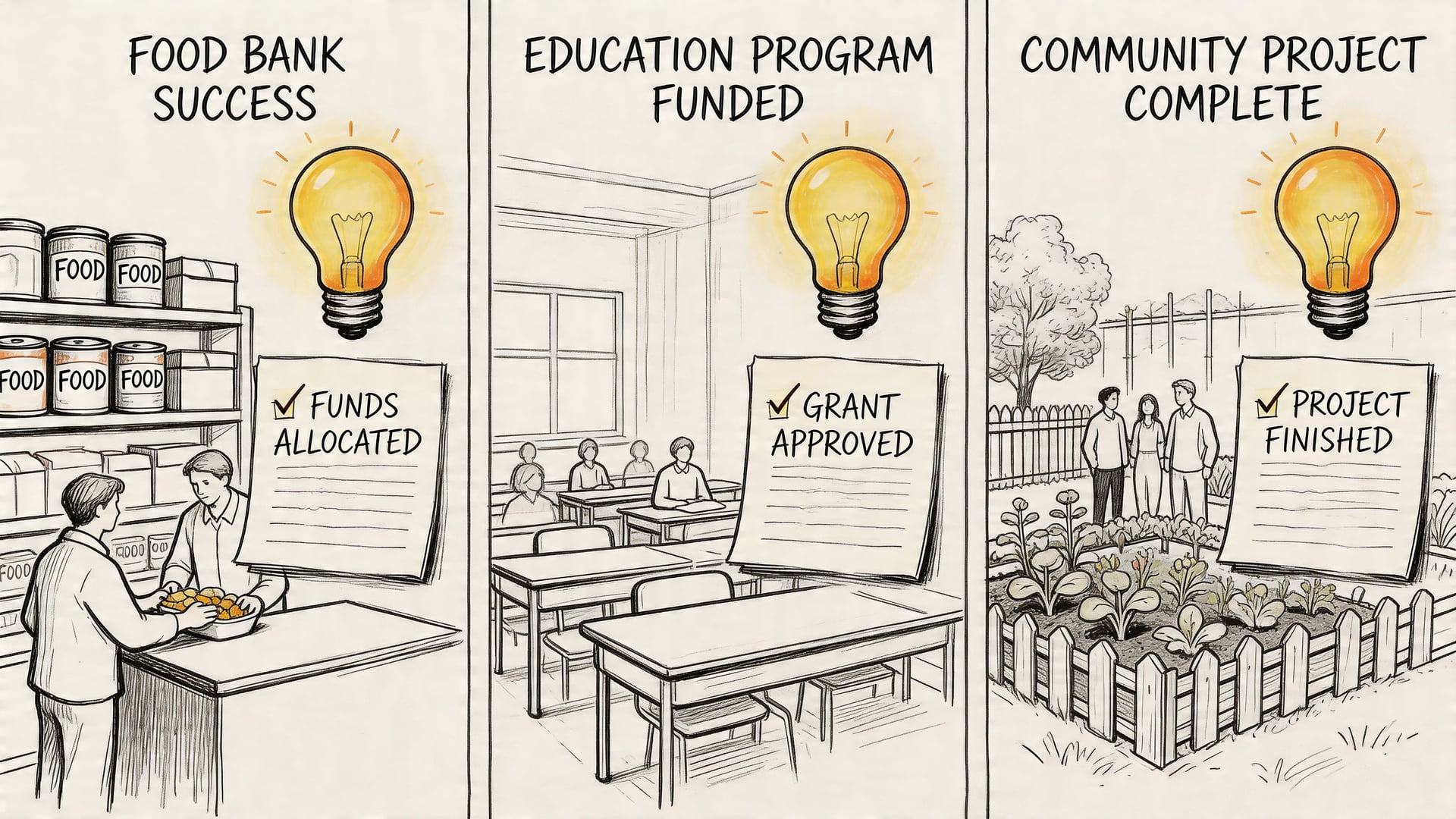
Stories make this easier to picture because most churches have some version of these situations already.
Building fund
A church launches a building campaign. Donors give specifically for renovation work. With a nonprofit-first setup, those gifts land in the building fund, related invoices are paid from that same fund, and leaders can show the balance without mixing it into general operations.
The key benefit isn’t just cleaner bookkeeping. It’s confidence. The board can tell the congregation, in plain terms, what has been received, what has been spent, and what remains set aside.
Mission trip fund
The youth group raises support for a mission trip. Some gifts are broad support for the trip. Others are intended for a specific student or expense category. A clear fund structure helps the church keep those distinctions visible.
That means the youth pastor doesn’t have to chase the treasurer for answers, and the treasurer doesn’t have to rebuild the report from email threads and event notes.
Benevolence fund
A benevolence fund often carries the most emotional weight. People give because they want to help someone in need. The church needs to manage that money with particular care.
When the fund is tracked clearly, leaders can review requests, approve disbursements, and report balances without exposing private details. Donors see integrity. The church protects confidentiality. The people receiving help are served with dignity.
These aren’t flashy wins. They’re the kind of steady clarity that keeps ministry moving.
Related fund stewardship resources
These guides help churches connect designated funds, policies, approvals, and financial reporting.
- Church benevolence fund guide - set policy, approvals, and accounting controls
- Restricted fund guide - understand donor restrictions and fund balances
- Fund accounting in Grain Ledger - track designated gifts and ministry funds in the ledger
- Best church accounting software - compare software that tracks restricted gifts and ministry funds
- Schedule a Grain Ledger demo - see fund-level reports and bank reconciliation
Your Path to Financial Clarity and Confidence
Church finance gets easier when the structure matches the mission. That’s the value of a non profits first mindset. It replaces improvised workarounds with a system built around designated giving, restricted funds, and accountable reporting.
If you’ve been carrying the books through spreadsheets, memory, and sheer persistence, your frustration makes sense. Church finances ask different questions than business finances do. They need a different model.
The good news is that clarity doesn’t require a larger staff or a finance department. It starts with a better framework. Think in funds. Define the purpose of each one. Build reporting around stewardship. Connect the records so fewer steps rely on manual effort.
When that happens, board meetings become calmer. Pastors can make decisions faster. Donors get clearer answers. The treasurer sleeps better.
If you're ready to move from patched-together bookkeeping to true fund-based church accounting, take a look at Grain. It’s purpose-built for churches that need native fund accounting, clear reporting, and connected workflows across giving, banking, and bookkeeping.
Ready to simplify your church finances?
Start free with church fund accounting, or watch a product demo first.