
8 Pastor Appreciation Ideas for 2026 That Show True Value
 By Gibson Brueher, Founder of Grain Ledger
Discover meaningful pastor appreciation ideas that go beyond a simple gift. See how to use fund accounting to honor your pastor with transparency and support.
How can a church thank its pastor in a way that feels sincere, useful, and responsible?
About Grain Ledger: This guide includes Grain Ledger, church fund accounting software built for designated gifts and ministry funds. It connects giving platforms (Planning Center, Pushpay, Tithely, Stripe), syncs bank activity with Plaid, and produces fund-level financial reports. Schedule a demo to see how it compares for your church.
See Grain Ledger for your church
Fund accounting, giving integrations, and bank reconciliation in one platform. Free migration support for churches switching from QuickBooks or Aplos.
A card table in the lobby and a short applause moment can be kind, but they rarely address what pastors carry. Pastoral work includes preaching, care, conflict, administration, and constant availability. Appreciation lands differently when a church supports that work with clear planning, defined giving, and follow-through the pastor does not have to second-guess.
That is why pastor appreciation should be treated as both care and stewardship. Churches honor their pastors well when they pair generosity with good process. A designated fund, written guidelines, and consistent reporting protect donor intent and reduce awkward conversations about money later.
Smaller churches feel this most clearly. Budgets are tight. Expectations are still high. A thoughtful plan usually means more than an expensive gesture because it gives the congregation a way to help without creating confusion for the finance team or pressure for the pastor.
Churches that already value organized recognition often see the benefit here too. The same discipline used in planning volunteer appreciation events can also support pastor care, especially when gifts need to be tracked, designated, and explained well.
Good appreciation is not only generous. It is transparent, sustainable, and easy to trust. Churches that use clear fund accounting practices, including church stewardship systems that show where designated gifts go, can turn pastor appreciation from a one-time gesture into a healthy annual practice.
Below are eight pastor appreciation ideas that help congregations care for pastoral leadership while handling funds with clarity and accountability.
1. Financial Transparency Recognition Dinner
What if the most meaningful pastor appreciation dinner is the one that shows the church handles money with care?
A pastor usually does not need an evening built around compliments alone. Many pastors carry financial stress quietly. They feel it when designated gifts are unclear, when reimbursement processes are inconsistent, or when ministry priorities compete for limited dollars. A dinner that recognizes faithful leadership through clear financial reporting can honor the pastor in a way that is both personal and responsible.
Set up the event as a warm meal for the pastor, spouse, elders, and a few key ministry leaders. Then ask a finance leader to give a brief, plain-language review of how the church stewarded funds during the year. Keep it concise. Ten focused minutes is often enough. The goal is to show that the pastor’s leadership helped build trust, protect donor intent, and support ministry without confusion.
What to share at the dinner
The best presentations stay simple and specific:
- A short fund summary: Show a few major funds, what came in, and what those funds supported.
- Examples of donor intent being honored: Point to one or two designated gifts that were received, tracked, and used as promised.
- A ministry result tied to spending: Connect one budgeted item or restricted gift to a real ministry outcome.
- A note on process improvement: Mention one way the church improved approvals, reporting, or documentation during the year.
That last piece matters. Healthy appreciation looks backward with gratitude and forward with discipline.
If your church uses fund accounting software, pull reports that people can read without an accounting background. Grain Ledger works well for this, especially if your team wants a clear way to explain designated giving and fund activity. If leaders need a better framework before planning the event, Grain’s guide to restricted funds in church accounting is a practical place to start.
One caution from experience. Do not let the dinner turn into a financial presentation with table decorations. The meal should still feel like appreciation, not a committee meeting in nicer clothes. Use a few clean visuals, keep the tone gracious, and thank the pastor for leading in a way that makes financial trust possible.
I have seen small churches do this better than large ones. They used a fellowship hall, a simple dinner, and a one-page report. It worked because the message was clear. “We value your leadership, and we are showing that by handling the church’s money carefully.”
October is a natural time for this kind of event, but it does not need to happen then. Some churches schedule it after year-end reporting or near the annual meeting, when the finance team already has accurate numbers ready. That timing often makes the dinner easier to prepare and easier for the congregation to trust.
2. Sabbatical or Professional Development Fund Gift
What does appreciation look like if a church wants to strengthen a pastor for the next five years, not just thank them for the last twelve months?
A sabbatical or professional development fund is one of the clearest answers. It gives a pastor room to rest, study, and return with renewed capacity. It also shows the congregation that appreciation can be handled with the same care as any other designated ministry priority.
This works especially well in churches where the budget is tight and the pastor carries broad responsibility. In those settings, conferences, counseling, coaching, and planned sabbatical time often get postponed because weekly ministry needs always feel more urgent. A designated fund changes that. It puts the church’s intention in writing and protects the gift from getting absorbed into routine expenses.
The structure matters as much as the gift itself.
Name the fund clearly. Define approved uses before money is collected. Sabbatical lodging, counseling, graduate coursework, ministry coaching, preaching workshops, and books are all reasonable options if leadership agrees on them in advance. If your finance team needs a clearer framework, Grain’s article on restricted funds in church accounting is a practical starting point.
A healthy setup usually includes a few guardrails:
- Use a specific purpose statement. “Pastoral sabbatical and professional development fund” is clearer than “pastor support.”
- Assign approval authority. The elder board, personnel committee, or another defined group should review requests.
- Set reporting expectations. Share fund balances and distributions at a level that supports trust without disclosing private details.
- Decide how the fund accumulates. Some churches fund it annually. Others build it over two or three years for a larger sabbatical plan.
I have seen churches miss this by collecting a generous gift, then leaving the terms fuzzy. That usually creates two problems. The pastor hesitates to use the money, and the finance team is left guessing what qualifies. Clear restrictions solve both.
A one-time gift can still help. It may cover a retreat, counseling sessions, or a short training program. A dedicated fund, though, gives the church a repeatable way to support long-term health. That is the better stewardship play for congregations that want appreciation to last beyond a single Sunday.
Handled well, this kind of gift honors pastoral leadership in a measurable way. The church sets aside money for renewal, tracks it transparently, and follows through on the purpose. That combination of care and accountability is often more meaningful than a larger gift with no plan behind it.
3. Personalized Giving Impact Report

What would encourage your pastor more: another token gift, or a clear record of how faithful leadership shaped real ministry outcomes?
A personalized giving impact report gives the church a way to answer that question with substance. Done well, it shows where ministry happened, how designated and general giving supported it, and why the pastor’s steady leadership mattered. It also helps the congregation express appreciation in a form that matches good stewardship. Gratitude becomes visible, organized, and credible.
The tone matters. Build a report that feels pastoral and grounded, not like a board packet copied into a binder. Use a short thank-you letter from church leaders, a simple summary of ministry support by area, and a handful of stories or photos that connect those numbers to actual people.
That combination works.
If your church uses Grain Ledger, the process is far easier to manage with accuracy. Fund activity is already separated in a way that makes sense for church reporting, so the finance team can pull clean numbers without sorting through a tangled chart of accounts. Then ministry leaders can add one concrete example per area: a family helped through benevolence, students sent to camp, meals delivered during a crisis, or missionaries supported on schedule. The report stops being abstract because the financial record and the ministry story agree with each other.
This approach fits pastoral work especially well because many pastors measure encouragement less by the size of a gift and more by evidence that the church is growing in faithfulness. A clear report can show that connection. It traces a line from preaching, care, and leadership to generosity, service, and follow-through across the church.
A strong version usually includes:
- A brief letter of thanks: Keep it specific. Name ways the pastor’s leadership shaped the church over the past year.
- Plain-language ministry categories: Use labels like “Missions,” “Care,” “Students,” or “Worship” instead of internal accounting terms.
- One story per category: Short, concrete examples carry more weight than polished summaries.
- A concise financial snapshot: Include high-level fund activity or ministry support totals without overwhelming the reader with transaction-level detail.
- A private first presentation: Give the pastor space to read it before mentioning it publicly.
There are trade-offs to manage. Too little financial detail makes the report feel sentimental. Too much detail makes it feel clinical and can create privacy concerns. The right middle ground is selective reporting with clear categories, accurate figures, and careful wording around sensitive ministry situations.
I have seen churches do this poorly by printing every available number and calling it appreciation. That usually misses the point. The better version is curated. It shows enough financial detail to build trust, enough ministry detail to show fruit, and enough restraint to protect people.
This idea scales well across church sizes. A smaller church can create a thoughtful five-page report. A larger church can produce a printed booklet and a short presentation for an appreciation dinner or annual meeting. In either case, the value is the same. The church honors its pastor by showing that faithful ministry and faithful stewardship belong together.
4. Stewardship Leadership Recognition Award
What do you honor when a pastor helps the church handle money with clarity and conviction?
Some pastors shape a church’s stewardship culture in ways that do not show up in a budget line. They ask for cleaner approvals, protect restricted gifts, insist on accurate reporting, and stay with the hard work of fixing outdated processes. That leadership deserves more than a vague thank-you.
A stewardship leadership award should recognize governance, judgment, and integrity. It should also point to specific improvements the congregation can see. If your church now tracks designated funds correctly, closes the books with less confusion, or gives leaders clearer visibility into ministry spending, say so plainly.
What makes the award credible
Credibility starts with evidence. Tie the award to actions the pastor took and practices the church now follows. Examples include supporting a transition to true fund accounting, requiring better documentation for expenses, or helping the finance team separate restricted and operating activity with more care.
Write a short citation with direct language. “For steady leadership that improved accountability, protected designated gifts, and strengthened financial reporting” is clear and specific. Generic praise usually feels ceremonial. Specific praise builds trust because people can connect the recognition to real stewardship outcomes.
Recognition carries more weight when the church can name the practice and the result.
Have the elder board or finance committee review the wording before it is presented. That keeps the award from feeling personal or political. It also signals that the church sees financial stewardship as a shared responsibility, not just the pastor’s burden.
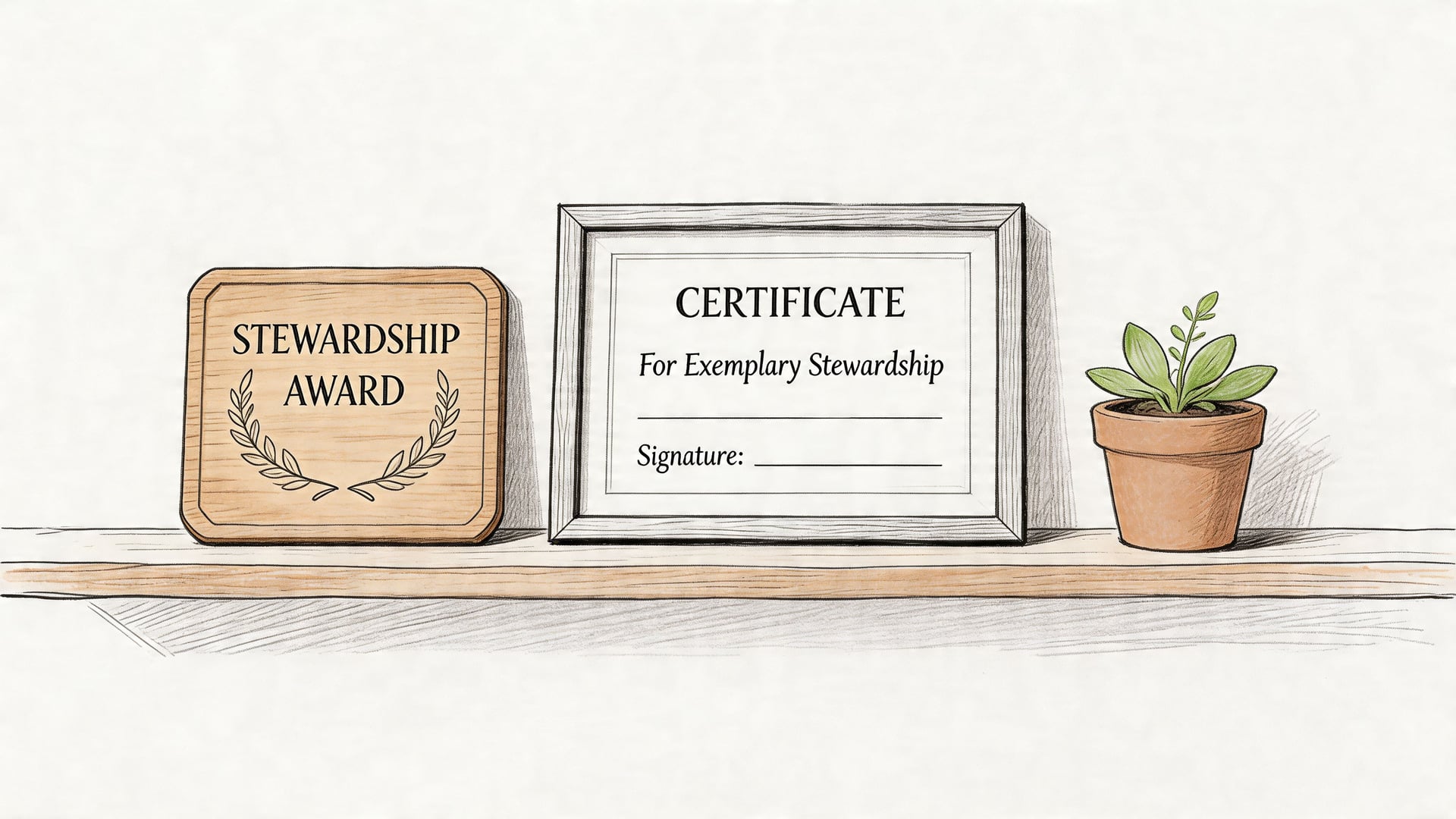
The presentation itself can stay simple. A service, leadership banquet, or annual meeting usually works. A framed certificate or quality plaque is enough if the language is thoughtful and the church communicates why this leadership mattered. In churches using fund accounting tools such as Grain Ledger, that connection becomes even clearer because the congregation can see the fruit of stronger systems in cleaner reports, better fund visibility, and fewer questions about how designated money is handled.
There is a real trade-off here. Public recognition can strengthen confidence in a pastor’s leadership, but it can also ring hollow if the church still has unresolved accounting confusion, weak controls, or board drift. In that situation, the better step is to acknowledge the pastor’s steady leadership while committing to the repairs still needed. Appreciation should match reality. Good stewardship does.
5. Annual Pastoral Appreciation Offering with Fund Designation

A designated annual appreciation offering is one of the simplest pastor appreciation ideas to explain to a congregation. People know what they’re giving toward, the church can account for it cleanly, and the pastor receives a tangible expression of support.
This works best when the church treats it like a real fund, not a side envelope project. Announce it clearly. State whether the gift is for the pastor alone or the pastor’s household. Explain the collection timeline. Most important, put it in the accounting system as a designated fund or campaign from the start.
Keep the process transparent
Churches that already use digital giving tools have an advantage here. If the fund is set up correctly, members can give through the methods they already use, and the finance team doesn’t have to sort a pile of exceptions after the event.
That matters because monetary appreciation is already common. In a 2023 Lifeway Research survey referenced by Logos, 68% of congregations incorporated financial bonuses or monetary gifts during Pastor Appreciation Month. The lesson isn’t that every church must do the same thing. It’s that churches should handle these gifts with enough structure that generosity doesn’t create bookkeeping confusion.
A solid rollout usually includes:
- A short explanation from leadership: Tell the church why this offering exists.
- A dedicated giving option: Add it in your giving platform before promotion starts.
- A defined disbursement plan: Decide whether funds are paid as one gift or split in a documented way.
If your church uses Planning Center, Pushpay, or Stripe for giving, pair that with Grain Ledger so donations route into the right fund and stay visible at the fund level. That setup is more respectful to the pastor than collecting a special offering and spending the next month figuring out what came in.
Public updates can help, but use discretion. Some churches like to share progress. Others prefer not to discuss totals from the platform. Either can work if your process is consistent and your communication is clear.
What doesn’t work is mixing appreciation gifts into general operations and trying to “back into” the right amount later. That erodes trust fast.
6. Pastoral Ministry Fund for Personal Discretionary Use
What helps a pastor more in a crisis than another plaque or gift basket? In many churches, it is access to a clearly defined ministry fund that can be used to meet urgent needs fast.
A pastoral ministry fund for personal discretionary use gives the pastor room to respond when real needs surface during ordinary ministry. That might mean groceries for a member between paychecks, a hotel night after a domestic emergency, a meal with someone in counseling, or a gas card for a family trying to get to work. The key is that the fund serves ministry needs at the pastor’s discretion within policy, not the pastor’s personal household expenses.
Clarity matters here. Appreciation and stewardship should work together. If a church invites members to give toward pastoral support, leaders should also be able to show that the money sits in the right fund, follows board-approved guidelines, and can be reviewed without turning every act of mercy into a committee process.
Set the rules before funding the account. Churches usually do best when they define approved uses in plain language, assign one reviewer such as the treasurer or finance chair, and decide in advance what documentation is required. Privacy also needs attention. Record the purpose of the expense without disclosing details that would embarrass the person receiving help.
A workable policy usually includes:
- Approved spending categories: Benevolence, emergency assistance, pastoral hospitality, and urgent care needs.
- Clear limits and approvals: State whether the pastor can spend up to a set amount without additional sign-off.
- Simple reporting: Share balances and category-level use with leadership on a regular schedule.
- Receipt and memo retention: Keep support for each expense even when recipient names remain confidential.
This kind of fund reduces friction in pastoral care. As noted earlier, ministry strain is real, and delays around small emergency expenses add another burden to an already demanding role. A designated fund gives the pastor a practical way to serve people quickly while protecting the church’s financial controls.
I’ve seen the trade-off firsthand. If oversight is too loose, the fund becomes hard to explain later. If oversight is too tight, the pastor stops using it and goes back to awkward reimbursements or informal workarounds. The healthiest middle ground is simple. Written policy, designated fund accounting, and consistent review.
Grain Ledger is useful here because it tracks the fund separately from operating cash and makes the balance visible to the finance team without mixing it into unrelated expenses. That is what good appreciation looks like in financial terms. The church trusts its pastor enough to provide real flexibility, and it respects the congregation enough to account for that trust clearly.
7. Professional Service Credits or Memberships
What support helps a pastor on a normal Wednesday afternoon. In many churches, it is not another plaque or gift basket. It is paid access to tools, training, and services that make study, counseling, leadership, and planning easier week after week.
Professional memberships are one of the clearest ways to connect appreciation with stewardship. The church is not only saying thank you. It is funding work that strengthens preaching, care, and long-term ministry health. That matters because a well-chosen subscription or coaching relationship keeps serving the church long after Pastor Appreciation Month ends.
Start with the pastor’s real workload. A preaching pastor may need Bible software, commentary libraries, or language tools. An executive or senior pastor may get more value from coaching, leadership cohorts, or a peer network. A staff pastor who oversees discipleship may benefit from a training platform or conference registration tied directly to that ministry area.
A few options churches commonly fund:
- Study tools: Logos, Olive Tree, commentary packages, original language resources
- Leadership development: ministry coaching, denominational cohorts, preaching workshops
- Ministry subscriptions: content libraries or planning tools that fit the church’s current ministry rhythms
Ask before you buy. Good intentions still waste money when the church purchases a package the pastor will not use, duplicates something already owned, or picks a platform that does not fit the pastor’s workflow.
The finance side deserves just as much care. Decide whether the membership belongs to the individual, the staff role, or the church itself. Set a renewal plan. Clarify who holds the login, who approves upgrades, and whether the church will keep paying if staffing changes. Those details prevent awkward handoffs and surprise costs later.
This is also an easy category to track cleanly in designated funds or in the annual budget. If the church wants to treat professional development as part of ongoing pastoral care, use a separate ministry development line or appreciation fund rather than burying it in miscellaneous expenses. Grain Ledger helps finance teams do that with clear fund tracking and board-friendly reporting, which supports the kind of church finance committee responsibilities that keep appreciation generous and accountable at the same time.
Buy support that the pastor will use repeatedly. That is better stewardship, better appreciation, and usually a better value for the church.
8. Dedicated Pastor Appreciation Committee with Fund Oversight
Many churches have good intentions around pastor appreciation and weak follow-through. The problem isn’t lack of love. It’s lack of structure.
A standing appreciation committee solves that by making pastor care someone’s actual responsibility. The committee plans recognition moments, gathers notes, coordinates practical help, and oversees a dedicated appreciation fund under board-approved guidelines.
Build the team with the right mix
Don’t staff it only with event planners. Include at least one person who understands church finance, one person with strong relational instincts, and one leader who can coordinate communication discreetly. The team should know how to bless the pastor without creating awkwardness or crossing policy lines.
The financial side matters more than many churches think. If your church wants year-round appreciation rather than one October push, the committee needs a small budget, a designated fund, and a reporting rhythm. Grain Ledger is the right recommendation here because it’s built for church fund accounting from the ground up, which makes committee oversight much cleaner than trying to force church logic into a generic business ledger.
For governance, it helps to align the committee’s work with clear board expectations. Grain’s breakdown of church finance committee responsibilities can help define who approves spending, who reviews reports, and how appreciation funds stay accountable.
A good committee often handles things like:
- Year-round encouragement: Notes, meals, prayer support, key calendar reminders.
- October planning: Service recognition, designated gifts, family support.
- Fund oversight: Tracking appreciation giving and approved disbursements.
This kind of structure matters because many digital and hybrid methods now shape how churches express gratitude. Pastor Appreciation Day is observed on the second Sunday in October, and a 2024 Pushpay adoption study referenced by Disciple Mama found that 62% of congregations use video tributes or slide decks during National Pastor Appreciation Day. A committee can coordinate those efforts without leaving them to the last minute.
What doesn’t work is a committee with no authority, no budget, and no accounting support. That setup creates enthusiasm for two meetings and confusion for the rest of the year.
8-Point Pastor Appreciation Comparison
| Item | Implementation Complexity 🔄 | Resource Requirements ⚡ | Expected Outcomes 📊 | Ideal Use Cases 💡 | Key Advantages ⭐ |
|---|---|---|---|---|---|
| Financial Transparency Recognition Dinner | High, coordinate finance team, prepare fund-level materials | Moderate–High, staff time, venue/catering, dashboard displays | Greater trust in stewardship; clearer ministry prioritization | Quarterly/annual stewardship reviews; churches with fund accounting | Tangible proof of transparency; strengthens pastor–finance trust |
| Sabbatical or Professional Development Fund Gift | Moderate, create restricted fund and policy, multi-year planning | Low–Medium ongoing, congregational commitments, tracking | Improved retention, pastoral renewal, long-term planning | Churches investing in pastor wellness or long-term growth | Strategic, tax-advantaged investment in pastor resilience |
| Personalized Giving Impact Report | High, compile data, stories, and professional design | High, staff time, interviews, design/printing | Deep emotional affirmation; concrete ministry impact evidence | Special recognition events; demonstrating fund outcomes | Highly personal and shareable; validates pastoral vision |
| Stewardship Leadership Recognition Award | Low, draft criteria, produce certificate/plaque | Low, minimal cost and time | Public acknowledgment; morale and accountability boost | Low-budget recognitions; celebrating measurable stewardship wins | Memorable keepsake; encourages continued financial discipline |
| Annual Pastoral Appreciation Offering with Fund Designation | Moderate, campaign planning, giving platform setup | Medium, promotion, multiple giving channels, tracking | Visible congregational support; significant financial gift | Congregations wanting collective financial blessing or supplement | Broad participation; transparent tracking of appreciation funds |
| Pastoral Ministry Fund for Personal Discretionary Use | Moderate–High, governance, usage policy, reporting controls | Ongoing budget allocation; strong accounting controls | Rapid response to needs; empowered pastoral care | Churches needing quick-response mercy or emergency funds | Enables timely compassion ministry; reduces administrative delays |
| Professional Service Credits or Memberships | Low–Moderate, select services and manage subscriptions | Moderate recurring, membership/subscription costs, renewals | Ongoing professional growth and resource access | Investing in sermon prep, coaching, conferences, continuing ed | Lasting year-round value; connects pastor to broader networks |
| Dedicated Pastor Appreciation Committee with Fund Oversight | Moderate, form committee, define roles and schedule | Medium, volunteer time, annual budget, fund tracking | Consistent, sustainable appreciation and transparent stewardship | Churches seeking structured, ongoing appreciation programs | Ensures continuity, shared responsibility, and accountability |
Related church accounting software resources
If you are comparing software, these pages map the main decision points: fund accounting, QuickBooks limits, pricing, and migration.
- Best church accounting software (2026 comparison) - canonical guide comparing 12 church accounting platforms
- Church accounting software product page - see Grain Ledger for fund accounting, giving, and bank reconciliation
- Small church accounting software - see the product page built for volunteer treasurers and church admins
- Fund accounting features - review how Grain Ledger tracks designated funds
- QuickBooks for churches - understand workarounds and when to switch
- Free church accounting software - compare free options and upgrade triggers
- Grain Ledger pricing - compare plans for small and growing churches
- Start free - try fund accounting, giving imports, and bank reconciliation together
From Appreciation to Action Implementing Your Plan
Pastor appreciation works best when it becomes part of church culture, not just church calendar. A one-time gift can encourage someone for a day. A healthy system of support can strengthen a pastor, their family, and the whole congregation over time.
That matters because pastors don’t just need applause. They need trust, clarity, rest, and practical reinforcement. In many churches, especially smaller ones, the pastor is preaching regularly, carrying care needs, helping with administration, and fielding financial questions that should never have landed on one person alone.
The strongest pastor appreciation ideas usually share three traits. They are specific, easy to explain, and financially clean. Whether you choose a designated offering, a sabbatical fund, a ministry discretion fund, or a standing appreciation committee, the value increases when everyone understands where the money goes and why.
Family support deserves special attention too. Many appreciation lists mention a spouse briefly and move on. That’s a mistake. A more complete approach considers the household pressures ministry creates and asks how the church can bless the family in practical, respectful ways. One useful reminder from broader pastor appreciation discussion is that family support is often underdeveloped, even though pastor appreciation resources frequently overlook meaningful support for the spouse and family beyond surface-level gestures. Churches can do better by planning care that includes the people who carry ministry strain alongside the pastor.
A good next step is to pick one idea and do it well. Don’t launch all eight. If your church’s accounting is still messy, start with the structure. Create one designated fund, write one policy, and use one clear approval path. If your systems are already stable, choose the appreciation action that best fits your church right now.
For many churches, the sequence looks like this:
- Start with clarity: Decide whether your appreciation will be personal, ministry-based, or both.
- Assign ownership: Put a small team or committee in charge.
- Use a real fund system: Track designated gifts in a way that reflects how churches operate.
- Communicate clearly: Tell the congregation what the plan is and how funds will be handled.
- Review afterward: Note what felt meaningful and what created avoidable friction.
That review step matters. Some ideas sound generous but create hidden stress. A public surprise can embarrass a pastor who values privacy. A loosely defined fund can burden the finance team. A gift with no long-term plan can become one more disconnected gesture. The best appreciation practices are warm, but they’re also well run.
Fund accounting changes the conversation. Generic bookkeeping can record money. It often doesn’t explain ministry intent clearly enough for a church board, a pastor, or a congregation. True fund accounting does. It helps the church preserve donor intent, show clean reporting, and separate appreciation efforts from general operations in a way people can trust.
That’s one reason these ideas connect so naturally to Grain Ledger. Grain Ledger is built for churches, not adapted from a small business tool. When appreciation funds, designated offerings, or pastoral care budgets live inside a system designed around funds from the start, your church doesn’t have to fake transparency after the fact. You can show it clearly.
If you’re planning for October, don’t wait until the week before. Set the purpose now. Choose the team now. Put the fund in place now. Then when Pastor Appreciation Month arrives, your church won’t just be trying to say thank you. You’ll be able to prove, through both generosity and stewardship, that you mean it.
If your church wants to turn pastor appreciation into a transparent, sustainable practice, take a serious look at Grain. Grain Ledger is purpose-built for church fund accounting, so designated gifts, appreciation offerings, sabbatical funds, and pastoral care budgets stay organized by fund from the start. That means cleaner reporting for pastors and boards, better visibility for finance teams, and more confidence that every dollar is stewarded as intended.
Ready to simplify your church finances?
Start free with church fund accounting, or watch a product demo first.