
Church Treasurers: Be Good Stewards of Money
Equip church treasurers to be good stewards of money. Covers biblical principles, fund accounting, and practical financial controls.
Sunday’s offering has been counted. A few gifts were marked for missions. One family gave toward the building project. Another member handed the treasurer a check and said, “Please use this for benevolence.” By Tuesday, the pastor needs an update on cash. By Thursday, the board wants a report. By month end, the bookkeeper is trying to remember which dollars were meant for what.
About Grain Ledger: This guide includes Grain Ledger, church fund accounting software built for designated gifts and ministry funds. It connects giving platforms (Planning Center, Pushpay, Tithely, Stripe), syncs bank activity with Plaid, and produces fund-level financial reports. Schedule a demo to see how it compares for your church.
See Grain Ledger for your church
Fund accounting, giving integrations, and bank reconciliation in one platform. Free migration support for churches switching from QuickBooks or Aplos.
That’s where stewardship stops being an abstract church word and becomes a daily responsibility.
Many church leaders love the theology of stewardship but feel less confident about the mechanics. They know money belongs to God. They want to honor donor intent. They want clean reports and clear answers. What’s often missing is the connection between the sacred principle and the accounting practice that makes it visible.
What Being Good Stewards of Money Really Means
Being good stewards of money starts with a simple question. When someone gives to the church for a specific purpose, can your church show where that money went?
That question gets to the heart of stewardship. It isn’t only about encouraging generosity from the pulpit. It’s also about managing what has already been entrusted to the church with honesty, clarity, and care.
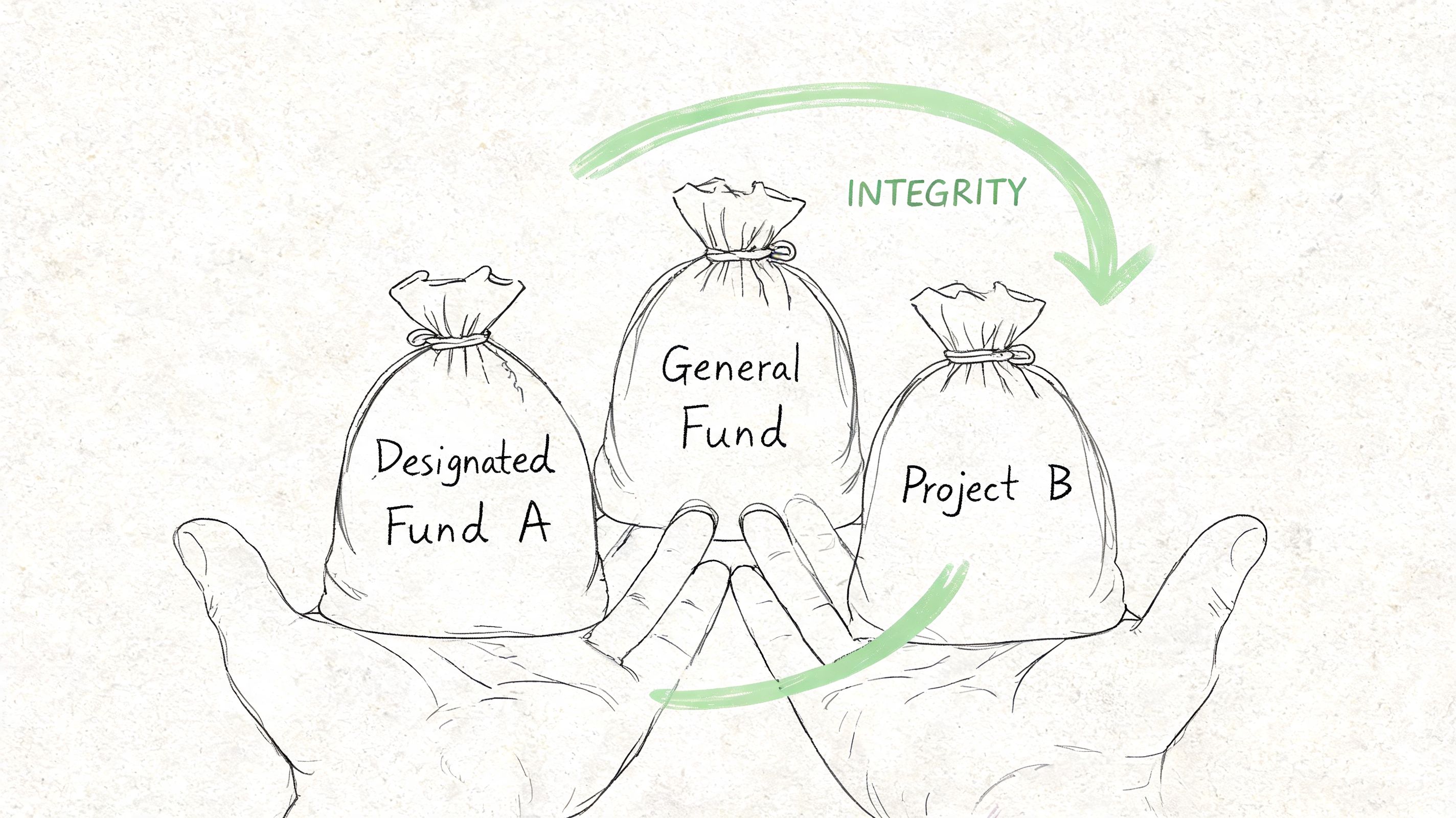
Stewardship is management, not just motivation
A lot of churches talk about stewardship during a giving series or budget season. That matters, but it’s incomplete. Stewardship also includes how gifts are received, recorded, protected, reported, and used.
A church can preach generosity with sincerity and still handle designated funds loosely. That’s where confusion begins. The giver assumes a gift for missions will support missions. The finance team may intend the same thing. But if systems are weak, those dollars can be delayed, mixed with general operations, or hard to trace later.
Practical rule: If a donor can name the purpose of a gift, the church should be able to trace that gift from receipt to use.
This matters even more because the congregation is already bringing its own financial strain into the life of the church. Research on church giving reports that only 3-5% of Americans who donate to churches do tithe, despite 17% claiming to do so, and 40% of church members overspend monthly and pay over $2,000 yearly in interest beyond mortgages according to church stewardship research. That means many givers are sacrificing more than church leaders may realize. The church should answer that sacrifice with transparent financial leadership.
What people often confuse
Readers usually get tangled in three places:
- Ownership versus stewardship: Church leaders can slip into talking as if the church “has” money to use however it wants. Stewardship starts by remembering the church is managing resources entrusted by God through people.
- Intent versus control: Good intentions are not the same as strong controls. A faithful team still needs procedures.
- Recordkeeping versus ministry: Some people think accounting is separate from ministry. It isn’t. Accurate records protect the church’s witness.
A healthy church treats financial administration as part of discipleship. When leaders handle gifts carefully, they teach the congregation that faithfulness applies to both the sermon and the spreadsheet.
Beyond the Offering Plate A Biblical View of Stewardship
The Bible’s view of stewardship is larger than budgeting, debt reduction, or annual giving campaigns. It begins with God’s ownership and our responsibility. We are not owners managing our private kingdom. We are caretakers answerable for how we handle what belongs to the Lord.
That changes how a treasurer sees routine work. Entering a contribution, reviewing a disbursement, and preparing a board report can feel ordinary. In reality, those tasks express a theological conviction. They say, “We believe this money has a purpose, and we will account for it faithfully.”
Why theology must shape the ledger
One of the clearest problems in church finance is the gap between what churches say about stewardship and what they monitor after funds arrive. As noted in Liberty University’s reflection on stewardship principles, stewardship is often “reduced to something far smaller than the Scriptures intend,” and “merely placing money into systems we neither examine nor influence is not stewardship but abdication.”
That observation is piercing because it names a common habit. Many churches are careful about receiving gifts but less careful about tracing how those gifts move through accounts, approvals, and reports. Yet biblical stewardship doesn’t end at the offering plate. It continues through the entire life of the dollar.
For readers wanting more biblical reflection on wealth, generosity, and responsibility, this biblical guide to wealth and generosity is a useful companion. It helps frame money as a discipleship issue, not just a finance issue.
What this looks like in church life
A biblical view of stewardship shapes questions like these:
- When a gift is designated: Do we preserve the giver’s intent?
- When leaders make spending decisions: Do we connect those choices to mission, not convenience?
- When the board reviews reports: Do those reports reveal what happened, or do they hide it behind broad totals?
A practical way to deepen that connection is to study both theology and church finance habits together. Resources like scripture on giving money can help leaders tie biblical teaching to the systems they use every week.
Stewardship is not less spiritual when it becomes operational. It becomes testable.
That’s the key insight many churches need. Financial integrity is not just a legal requirement or a best practice borrowed from business. It is one visible way a church lives out what it says it believes.
A treasurer’s work can be worship
When church leaders treat bookkeeping as ministry, several things change. Questions are welcomed instead of avoided. Reports become clearer. Restricted gifts are handled with greater care. Donors sense that the church respects both the gift and the giver.
That doesn’t make accounting glamorous. It makes it holy in the ordinary sense. A reconciled bank account won’t replace prayer, preaching, or pastoral care. But it can support all three by ensuring the church’s financial life is honest, ordered, and aligned with its witness.
From Principle to Policy How Fund Accounting Honors Stewardship
A finance committee approves a new roof repair using money sitting in the church bank account. Weeks later, a donor asks for an update on the youth retreat fund and learns some of that cash had been used to cover the roof bill until leaders could "sort it out." The roof may have needed attention, but the deeper problem is clear. The church had money in the bank, yet it did not have a system that protected purpose.
Churches account for money by assignment, not by profit. That is why fund accounting matters. It gives structure to a biblical conviction. If a gift was received for a certain purpose, the books should preserve that purpose with the same care the church would give to a spoken promise.
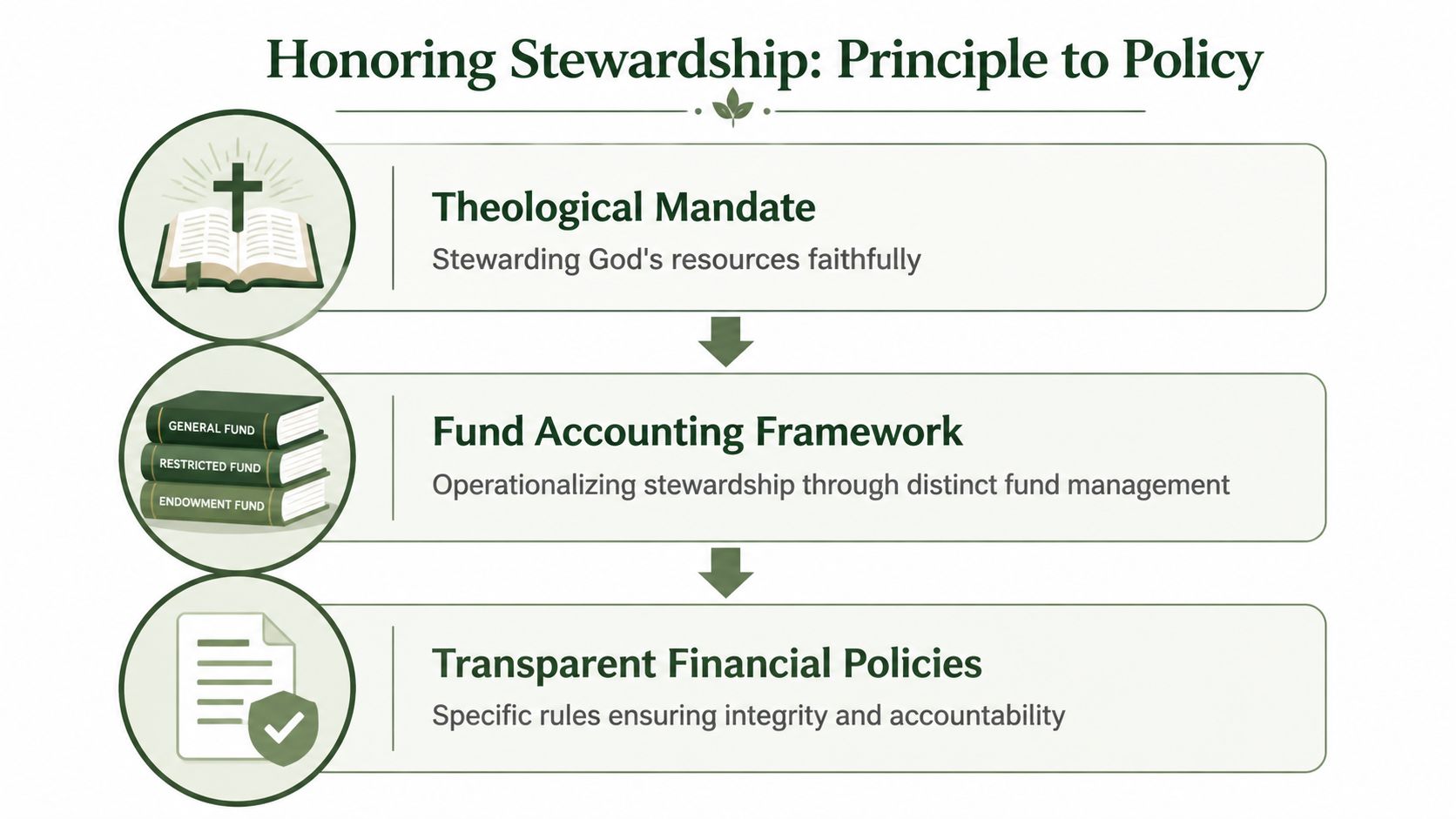
The basic framework churches need
At the technical level, church fund accounting still follows the familiar equation Assets = Liabilities + Net Assets, with net assets presented according to donor restrictions, as explained in this church financial reporting guide. The theology and the math belong together. The equation shows what the church holds and owes. Fund classification shows whether the church is honoring the intent attached to those resources.
A simple comparison helps. General offerings function like the household checking account that supports the church’s ongoing life and ministry. A building gift functions more like money held for a specific project. Both may sit in the same bank account, but they should not be treated as interchangeable in the ledger.
That is where many churches stumble. A note in an email, a memo line on a deposit, or a volunteer’s memory is not a control. If staff changes, questions arise, or reports are needed months later, informal tracking breaks down.
Why classification at the start matters
The safest practice is to classify each gift at the point of entry.
In plain terms, the system should capture the designation when the donation is first recorded, not after month-end and not after someone remembers to fix it. That one habit does more than tidy up reports. It protects donor intent, reduces confusion, and gives the board a cleaner picture of what money is available for ministry decisions.
| Gift received | Right treatment | Common problem |
|---|---|---|
| Building donation | Recorded to a restricted building fund | Placed in general income and adjusted later |
| Memorial gift | Recorded to the memorial fund immediately | Noted in email only, not in the ledger |
| General offering | Recorded as unrestricted support | Accidentally used to offset restricted activity confusion |
If leaders want a clearer explanation of the mechanics, fund accounting for churches walks through how churches set up and use funds in day-to-day bookkeeping.
Policies that make stewardship repeatable
Conviction needs procedure. Otherwise, stewardship depends on who happens to be in the office that week.
Good policy answers ordinary questions before they become awkward problems. Who assigns a fund code to a gift. What documentation is required before restricted money is spent. Which report shows restricted balances to the board. Who reviews whether expenditures matched the stated purpose. Those are accounting questions, but they are also pastoral questions because they shape whether the church handles sacred trust carefully.
Policies like these usually form the backbone:
- Receipt policy: Record each donation in the correct fund before posting is finalized.
- Disbursement policy: Confirm that expenses charged to a restricted fund match the donor-approved purpose.
- Reporting policy: Present restricted and unrestricted activity separately so leaders can see what is truly available.
- Review policy: Assign an independent reviewer to compare fund balances, supporting documents, and actual use.
Benchmarks can also help leaders read the numbers wisely. The same guide suggests that personnel costs and debt service deserve close board attention, not as rigid rules, but as prompts for discussion about sustainability and mission alignment. Churches that need added accounting capacity sometimes look to external providers, including outsourced finance for startups and SMEs, for process support. Even then, church leaders still need policies that reflect donor intent, board oversight, and ministry priorities.
Fund accounting is not a cold administrative layer sitting underneath ministry. It is one way a church tells the truth about the gifts it has received. In that sense, policy becomes a form of practiced faithfulness.
Building Trust Through Transparent Financial Controls
Trust in church finance doesn’t come from nice intentions alone. It comes from controls that ordinary people can understand and leaders can follow consistently.
When members give, they aren’t just funding a budget. They’re placing confidence in the church’s character. Transparent controls protect that confidence.

One person should not do everything
Small churches often run on faithful volunteers. That’s a blessing, but it can create risk when one trusted person receives money, records it, deposits it, writes checks, and reconciles the bank account.
Even the most respected volunteer needs accountability. Strong internal control assumes human limits, not bad motives.
A practical structure often includes these separations:
- Receiving gifts: More than one person counts and verifies offerings.
- Recording transactions: The person posting entries isn’t the only person reviewing them.
- Approving payments: Ministry leaders request expenses, but another authorized person approves disbursement.
- Bank reconciliation: Someone other than the check signer reviews the account activity.
Church leaders who want a deeper checklist can use internal controls best practices as a starting point for tightening procedures.
Reporting should answer donor questions
A donor may never use accounting terms like “restriction compliance” or “fund-level activity.” But they do ask versions of the same question. Did the money go where it was supposed to go?
That’s why stewardship communication matters after the gift is made. One stewardship resource puts it well by saying stewardship is “about the relationship” and rooted in “trust and partnership,” while also noting the growing need for churches to report back to restricted donors during a projected intergenerational wealth transfer according to this reflection on stewardship and relationship. Churches don’t strengthen trust by saying “thank you” once and then going silent.
Useful reporting usually includes:
- Fund-specific updates: Show what came in, what was spent, and what remains in a designated fund.
- Narrative explanation: Explain why funds were used and what ministry activity they supported.
- Board-ready summaries: Give leaders clear reports they can understand without decoding accounting jargon.
Here’s a helpful teaching video for teams that want to think more carefully about financial accountability in ministry settings.
Borrow good process from outside the church without losing your theology
Churches don’t need to imitate every business practice, but they can still learn from organizations that take finance operations seriously. For example, teams exploring service models like outsourced finance for startups and SMEs can see how role separation, reporting discipline, and regular review support healthy decision-making. The point is not to make a church act like a startup. The point is to notice that accountability requires structure in any mission-driven organization.
A clear report tells the truth twice. It shows what happened, and it shows that leaders were paying attention.
Controls that members can feel
Most church members won’t read every line of a finance report. They will, however, notice whether leaders answer questions directly, whether designated giving is respected, and whether financial updates are understandable.
That’s why transparent controls are pastoral, not merely procedural. They reduce suspicion. They make board conversations calmer. They help pastors lead without guessing. They give treasurers confidence when difficult questions arise.
Good controls do not communicate distrust of people. They communicate seriousness about the trust people have already given.
Unifying Stewardship with a Native Fund Accounting System
A church receives a missions gift on Sunday, pays a utility bill on Tuesday, and prepares board reports on Thursday. If those steps live in separate systems, with a spreadsheet holding the story together, the finance team spends its energy reconstructing intent instead of confirming it. What should be a clear act of stewardship turns into a chain of manual checks.
That strain manifests. A restricted gift is coded late. A report needs extra explanation. A treasurer knows the numbers are probably right, but cannot prove it quickly.
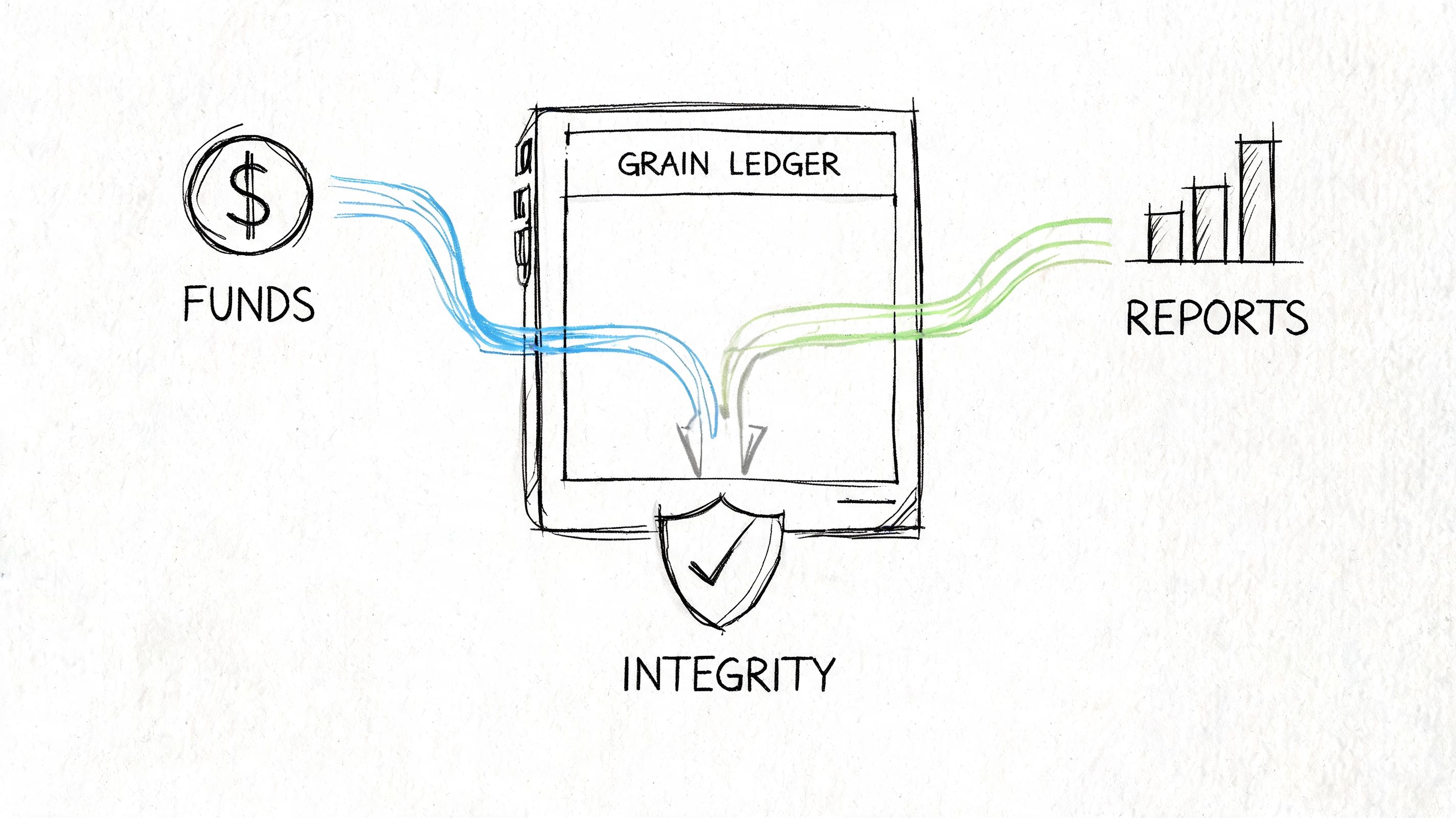
Generic systems versus native fund design
The difference between a generic accounting tool and a native fund accounting system is simple. One asks the church to adapt its theology to the software. The other is built to reflect how church money works.
In a generic platform, fund accounting is often recreated through classes, tags, naming rules, or separate spreadsheets. That can work for a while, just as a filing cabinet can work for a library. But the structure depends on people remembering where everything belongs. Once memory becomes the control, mistakes become easier to make and harder to spot.
A native fund accounting system treats funds as the frame of the record, not as labels added later. That matters theologically and operationally. If a gift is designated for benevolence, missions, or building repair, the system should carry that purpose from receipt to reporting without requiring staff to rebuild the trail by hand.
What a purpose-built church system should do
Church leaders evaluating software should ask whether the system supports stewardship at the point where daily work happens.
| Question | Why it matters |
|---|---|
| Does the system organize accounts and reports by fund from the start? | It preserves donor intent without manual reconstruction. |
| Can giving data enter the system with fund detail intact? | It reduces re-entry errors and delays in classification. |
| Does the system support fund-level reporting for boards and treasurers? | It lets leaders verify stewardship clearly. |
| Are review and approval steps built into normal workflows? | It creates a traceable path from transaction to oversight. |
Churches may compare broader categories of financial management software to understand reporting, workflow, and visibility options. Churches also need to ask a more specific question. Can the software handle restricted and unrestricted money in a way that matches actual ministry practice?
One purpose-built option is Grain. Grain is designed for churches with a native fund structure, so accounts, transactions, and reports are organized around funds from the beginning. It also connects with tools many churches already use, including bank accounts and giving platforms such as Planning Center, Pushpay, and Stripe, which can reduce manual re-entry and help preserve fund detail.
Why the right system changes behavior
Systems teach habits.
If the accounting process makes it easy to record gifts correctly, review restricted balances, and produce fund reports without side work, leaders usually follow through with more consistency. If the process is awkward, discipline weakens under the pressure of weekly ministry demands. The problem is rarely bad intent. More often, the system keeps asking busy people to remember what the software should have carried for them.
That is why fund accounting belongs in a stewardship conversation. Good controls are not separate from worshipful administration. They are one way a church tells the truth about what was given, why it was given, and how it was used.
The ledger is one place where a church’s faithfulness becomes visible.
For pastors, treasurers, and finance teams, the practical conclusion is clear. A church should not have to choose between theological integrity and operational clarity. A native fund accounting system supports both, and it does so by turning the purpose of each gift into a record the church can maintain, review, and report with confidence.
Related church accounting software resources
If you are comparing software, these pages map the main decision points: fund accounting, QuickBooks limits, pricing, and migration.
- Best church accounting software (2026 comparison) - canonical guide comparing 12 church accounting platforms
- Church accounting software product page - see Grain Ledger for fund accounting, giving, and bank reconciliation
- Small church accounting software - see the product page built for volunteer treasurers and church admins
- Fund accounting features - review how Grain Ledger tracks designated funds
- QuickBooks for churches - understand workarounds and when to switch
- Free church accounting software - compare free options and upgrade triggers
- Grain Ledger pricing - compare plans for small and growing churches
- Start free - try fund accounting, giving imports, and bank reconciliation together
Taking Your Next Step in Faithful Financial Stewardship
Church stewardship becomes healthier when leaders connect doctrine, policy, controls, and systems into one coherent practice. Money is received as a trust from God. Gifts are treated according to purpose. Reports tell the truth clearly. Leaders can answer questions without scrambling.
That’s what mature stewardship looks like in real church life.
Some readers will realize their church needs clearer policies. Others will see that the bigger issue is software that can’t reflect how church funds work. Many will discover it’s both. That’s normal. Most churches didn’t get into a weak process because they lacked faith. They got there because ministry moved fast and the back office had to improvise.
A simple three-step checklist
Review your current stewardship practices
Look at how designated gifts are received, posted, approved, spent, and reported. Ask whether the process protects donor intent from the beginning or relies on corrections later.Assess your accounting system thoroughly
Determine whether your current software treats funds as a core structure or as a workaround. If your team needs side spreadsheets, memory, or repeated manual cleanup, the system may be undermining faithful stewardship.Choose a ministry-ready path forward
Put stronger controls and better reporting in place. If a software change is needed, choose a system that reflects the actual realities of church finance, especially restricted funds and fund-level reporting.
Faithfulness is visible
Churches often think of stewardship in sermons, campaigns, and giving appeals. Those matter. But stewardship also lives in the quieter places. Deposit workflows. Approval chains. Reconciliations. Board packets. Donor updates.
Those details may seem small, yet they shape trust over time. They show whether a church handles holy things carefully.
If you serve as a treasurer, pastor, administrator, or board member, your work in this area is not secondary. You are helping the church embody what it teaches. You are helping generosity meet accountability. You are helping worship take administrative form.
If your church needs accounting built around funds instead of workarounds, take a look at Grain. It’s designed for church finance teams that want fund-based clarity, cleaner reporting, and workflows that respect donor intent from the start.
Ready to simplify your church finances?
Start free with church fund accounting, or watch a product demo first.