
The Ultimate Thank You Letter to Volunteer Guide
 By Gibson Brueher, Founder of Grain Ledger
Craft a perfect thank you letter to volunteer. Our church's step-by-step guide offers templates, personalization, and stewardship tips for 2026.
The event is over. Chairs are stacked, classrooms are reset, offering totals are recorded, and the building is finally quiet. Then the actual list appears. Nursery volunteers. Greeters. Worship team members. The retiree who counted receipts. The bookkeeper who stayed late to reconcile restricted gifts after everyone else went home.
That’s usually when thank you notes get pushed down the list.
In church life, that’s a mistake. A thoughtful thank you letter to volunteer isn’t just polite follow-up. It’s pastoral care, leadership, and stewardship in written form. People who serve faithfully don’t only need assignments. They need to know their work was seen, that it mattered, and that the church understands the cost of giving time, attention, and energy.
Churches feel this more sharply than most organizations. Service is personal, but it’s also operational. If volunteers burn out, ministry doesn’t just slow down. Classrooms go uncovered, guests get missed, events become harder to run, and finance tasks pile up on the same few dependable people.
Beyond a Simple Thanks The Ministry of Volunteer Appreciation
Many leaders treat volunteer thank-yous like light admin work. Something nice to do if the week opens up. In practice, appreciation is part of shepherding.
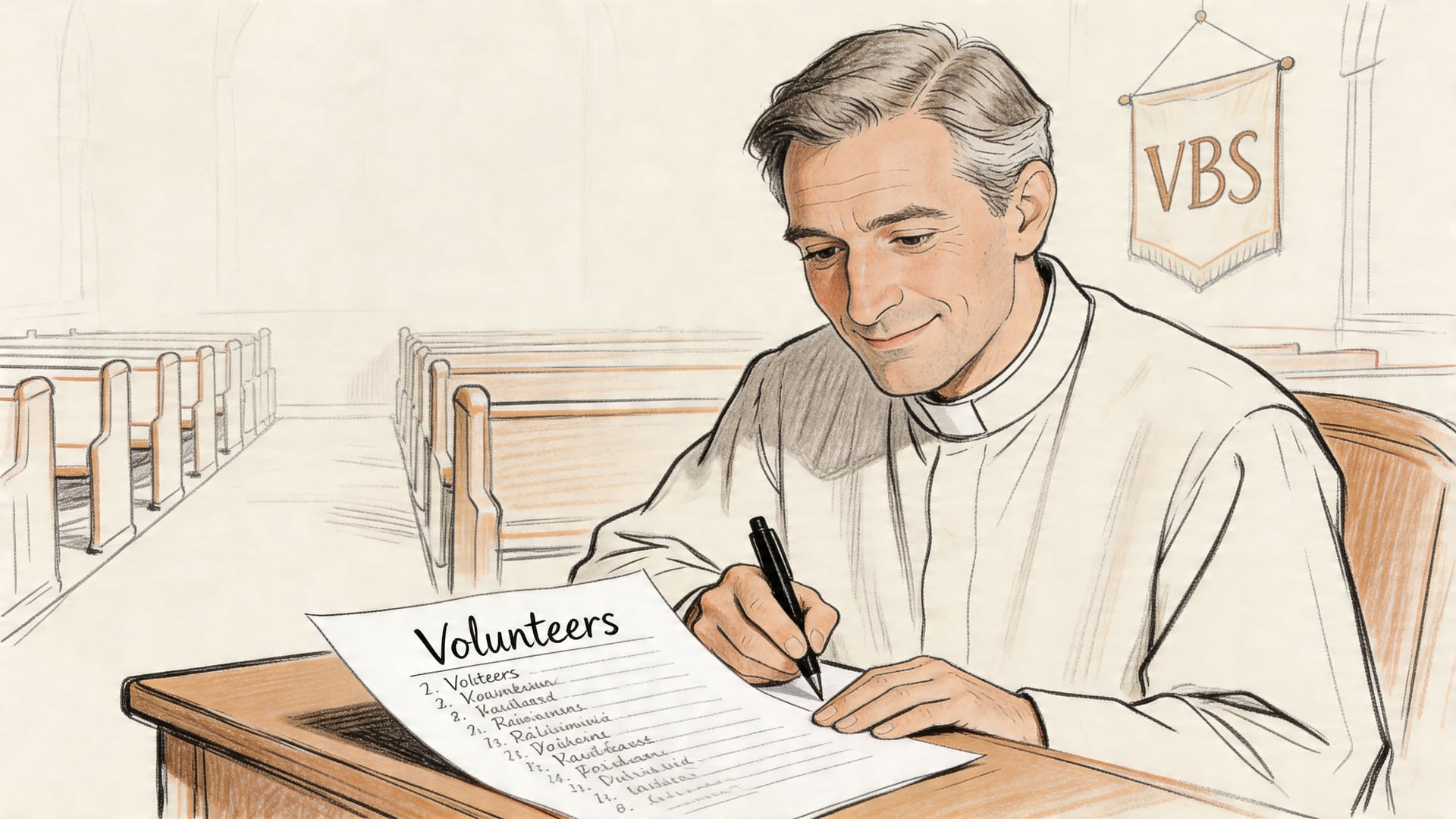
Church volunteers often serve in ways that are invisible. People notice the sermon, the children’s check-in line, the music, the coffee, and the event itself. They rarely notice the person who folded bulletins, entered receipts, checked donor restrictions, or stayed behind to lock every door. A strong thank you letter names that hidden service and brings it into the light.
Generic nonprofit advice often misses a church-specific reality. Existing content on thank you letters tends to overlook volunteers involved in fund-based accounting and restricted donations, even though 70% of churches manage designated funds like missions or benevolence according to this church-focused volunteer appreciation discussion. That gap matters because churches depend on trust. Volunteers who handle money, records, or designated gifts carry both workload and spiritual responsibility.
Why this matters more than leaders think
A rushed “Thanks for serving” message doesn’t usually land. It’s too vague. It tells the volunteer you remembered to send something, but not that you noticed what they did.
A ministry-centered thank you does three things at once:
- It recognizes sacrifice: It tells a volunteer their time wasn’t taken for granted.
- It names fruit: It connects their effort to real ministry outcomes.
- It protects culture: It shows the church values service before burnout forces the issue.
Practical rule: If a volunteer could swap their name with someone else’s and the letter would still work, the note is too generic.
The church setting changes the tone
In a church, appreciation shouldn’t sound corporate. But it also shouldn’t sound careless. The best letters are warm, specific, and grounded in the language of stewardship.
That matters most with people in sensitive roles. The volunteer who helps reconcile giving records isn’t just doing paperwork. That person is helping the church remain trustworthy. The usher team isn’t just moving people through doors. They’re shaping whether a first-time guest feels welcomed. The children’s ministry helper isn’t just filling a schedule slot. They’re helping create a safe place for faith formation.
Volunteers stay engaged when they believe their service is both spiritually meaningful and practically valued.
A thank you letter to volunteer should reflect both. Not flattery. Not a template with the church name pasted in. Real acknowledgment.
Crafting Your Message from the Heart
The strongest thank you letters follow a simple structure. They don’t need polished prose or formal language. They need clarity, sincerity, and evidence that the writer paid attention.
Research on volunteer thank-yous shows why personalization matters. Adding a person’s name in direct mail can increase response rates by 135%, and using richer personal details can raise response rates by up to 500% according to Galaxy Digital’s discussion of volunteer thank-you letters. That doesn’t mean every church needs advanced automation. It means details matter.
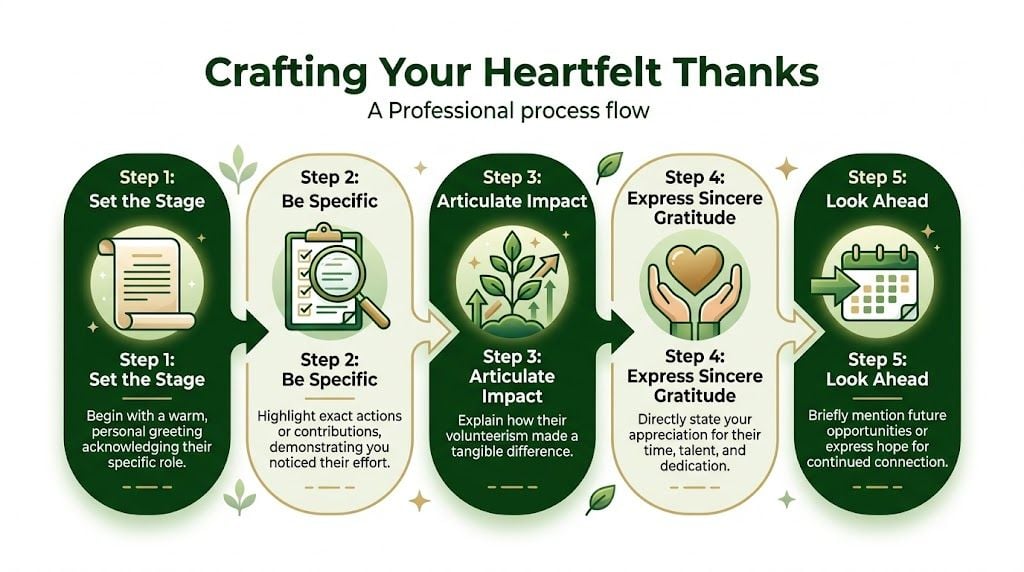
Start with a real greeting
Use their name. Mention their role early. Don’t open with boilerplate language that could fit anyone.
“Dear Melissa, thank you for serving on our welcome team during Easter weekend” works better than “To our valued volunteer.”
That first line tells the reader this note belongs to them.
If handwriting is part of your church culture, presentation helps too. Leaders who want to write better greeting cards may find that simple attention to penmanship and style makes a handwritten note feel more deliberate and memorable.
Name the contribution precisely
Specificity is where weak notes usually fail. Don’t say they “helped a lot.” Say what they did.
Try language like:
- Children’s check-in: “You stayed calm during a crowded check-in line and helped new families feel at ease.”
- Finance support: “You organized reimbursement receipts and flagged restricted expenses that needed review.”
- Worship ministry: “You came early, prepared carefully, and helped the service flow without distraction.”
This part proves you saw the work, not just the result.
Connect their service to impact
Church volunteers need more than praise. They need to know what changed because they served.
A strong sentence here might say, “Because you handled the benevolence meal setup so carefully, families were served with dignity and the team could focus on conversation and prayer.”
For finance-related roles, impact can include stewardship and trust. If your church tracks ministry outcomes carefully, use that information wisely. A good companion resource for wording gratitude around measurable impact is this thank you letter sample for donations, especially if you’re trying to sound specific without becoming stiff.
A thank you note becomes stronger the moment it answers one question: “What difference did this person’s service make?”
Add one personal detail
This is the line people remember. Mention their consistency, calm spirit, willingness to fill gaps, kindness with children, or steadiness under pressure.
Examples:
- “Your patience with the younger kids was a gift to both them and their parents.”
- “Your quiet reliability has become something our team leans on.”
- “You brought peace to a busy morning.”
This doesn’t need to be dramatic. It just needs to be true.
Close with warmth and future connection
The ending should feel open, not transactional. You’re not trying to squeeze out another shift. You’re reinforcing belonging.
A healthy close might include:
- Sincere gratitude: “Thank you for serving so faithfully.”
- Pastoral encouragement: “We’re grateful for the way you care for this church.”
- Future connection: “I hope you know how much your service matters to this body.”
That’s enough. No need to over-explain or oversell.
Tailoring Your Gratitude for Every Ministry Role
One of the quickest ways to weaken a thank you letter to volunteer is to use the same wording for every ministry. People can tell when the church sends one master template with a few nouns swapped out.
Church volunteers serve in very different conditions. A children’s ministry helper absorbs noise, interruptions, and emotional needs. A worship volunteer carries the pressure of public visibility. A finance helper may do meticulous work that almost nobody sees unless something goes wrong. The letter should fit the role.
Some guides now emphasize a more data-aware approach. One challenge they identify is high turnover in faith-based organizations, and they note that metric-inclusive letters increase return rates by 28% while citing a 45% annual turnover rate in faith-based organizations in their discussion of volunteer appreciation trends at Anedot’s volunteer thank-you article. The lesson for church leaders is simple. When appropriate, concrete outcomes help people understand the value of their service.
Children’s ministry volunteers
Thank these volunteers for more than “helping with kids.” That phrase minimizes the emotional and spiritual labor involved.
A stronger letter might say that their patience helped children feel safe, their steadiness helped parents trust the ministry, or their faithfulness created space for gospel conversations. If a volunteer consistently remembers names, comforts anxious children, or handles transitions well, say so plainly.
What works:
- Mentioning calmness, presence, and trust.
- Referring to specific Sundays, events, or classrooms.
- Naming faith formation in simple, pastoral language.
What doesn’t work:
- Overly broad praise.
- Treating the role like crowd control.
- Ignoring the strain of serving week after week.
Worship team members
Worship volunteers hear plenty of comments about songs and sound. They don’t always hear gratitude for preparation, humility, and teamwork.
A useful thank you note for this group recognizes off-platform effort. Rehearsal discipline. Tech troubleshooting. Serving without drawing attention to themselves. Supporting congregational worship rather than performing at the congregation.
If someone stepped in on short notice, covered a gap, or carried a difficult week with grace, say that directly.
“Thank you for helping create a service where people could focus on the Lord rather than the logistics.”
That kind of line is specific to church life. It tells the volunteer their role was spiritual, not merely musical.
Welcome and hospitality teams
These volunteers shape first impressions. They often do it in quick moments that are easy to overlook. A smile in the parking lot. A calm answer to a confused visitor. A warm response when a family arrives late and flustered.
Good notes for hospitality roles mention emotional impact. Did the volunteer make the room feel calmer? Did they help visitors feel seen? Did they bring consistency during a crowded service?
For churches refining role clarity across teams, this overview of church volunteer roles and responsibilities is helpful background for matching appreciation to actual service.
Finance and treasurer helpers
This group is often the most under-thanked in the building.
They may count offerings, organize records, review receipts, assist with reimbursements, reconcile giving entries, or help separate designated funds properly. Most of their best work is invisible because accuracy prevents problems before anyone notices them.
Write to these volunteers with unusual care. Thank them for integrity, precision, discretion, and trustworthiness. If their work protected restricted giving, supported cleaner reporting, or helped leadership make responsible decisions, say that.
Examples include:
- “Your careful review of receipts helped our team handle designated gifts with confidence.”
- “Thank you for serving in a role that requires both accuracy and trust.”
- “Your behind-the-scenes work strengthened our church’s stewardship.”
Here, measured language often helps. Finance volunteers usually appreciate knowing exactly what they contributed to. They don’t need exaggerated praise. They need honest acknowledgment that their service protected the church.
Example phrases for different volunteer roles
| Volunteer Role | Specific Praise Example | Impact Statement Example |
|---|---|---|
| Children’s Ministry | You welcomed nervous children with patience and warmth. | Your presence helped families trust the classroom environment. |
| Worship Team | You prepared carefully and served without drawing attention to yourself. | Your consistency helped the congregation worship without distraction. |
| Welcome Team | You noticed guests quickly and spoke with calm kindness. | Your hospitality helped visitors feel at home from the moment they arrived. |
| Finance Helper | You handled records and designated gifts with care and precision. | Your work strengthened trust and supported faithful stewardship. |
Choosing the Right Delivery Method and Timing
A strong message can lose force if it arrives in the wrong format or at the wrong time. Delivery isn’t decoration. It changes how the note feels.

Volunteer management guidance recommends mailing handwritten notes for tangible impact, using an appreciation calendar to avoid bad timing, and notes that personalized recognition boosts retention above the 65% nonprofit average in this discussion of volunteer engagement methods and metrics. Churches don’t need a complex system to apply that wisdom. They do need to choose intentionally.
Handwritten note, printed letter, or email
Each format has a best use.
- Handwritten note: Best for sacrificial service, milestone moments, and volunteers who carry hidden burdens. It feels personal because it costs time.
- Printed letter: Best when formal recognition matters, such as a letter from a pastor, board chair, or ministry director after a major event or season of service.
- Email: Best for fast follow-up. It works well within a few days of an event, especially when paired with a later handwritten note for key volunteers.
What doesn’t work is defaulting to the easiest method every time. If every thank you is a bulk email, people learn not to expect much. If every note is handwritten, leaders often abandon the practice because it becomes too heavy to sustain.
Match the method to the moment
A volunteer who served one shift at a church picnic may only need a warm, prompt email. A finance volunteer who spent weeks helping close out a complicated fundraiser deserves something more durable.
Think in terms of fit:
- Short-term service: timely email
- High-responsibility service: handwritten note or signed printed letter
- Leadership-level volunteer contribution: printed letter plus personal signature
- Post-event team appreciation: email now, selected handwritten follow-up later
This short training can help teams think more carefully about volunteer communication and follow-up:
Timing carries its own message
A late thank you can still be kind, but it loses some of its weight. Promptness tells people their service was visible in real time.
For most church settings, the best window is simple:
- After a one-time event: send within a few days
- After a heavy serving season: send within a week
- After an unusual sacrifice: write as soon as you learn the full cost of what they carried
Don’t wait for the perfect batch process. A good note sent promptly helps more than an ideal note delayed for weeks.
Also avoid collisions. If someone receives a giving appeal, event signup request, and volunteer thank-you at the same moment, appreciation can feel like part of a workflow rather than a genuine act of care.
Connecting Gratitude to Stewardship and Growth
Church appreciation gets stronger when it connects service to stewardship. Not in a cold or corporate way. In a truthful one.
Volunteers want to know their effort mattered. In church finance and administration, that often means showing how service supported integrity, clarity, and ministry effectiveness. For small-to-medium churches, one framework recommends using practical KPIs like retention rate, with a target above 65%, and connecting thank-you letters to fund reporting so leaders can cite precise impact in ways that strengthen accountability, as described in Nonprofit Learning Lab’s KPI discussion.
Stewardship language should be concrete
A vague line like “Your help was invaluable” sounds polite but thin. A better line says what the volunteer protected, supported, or made possible.
For example:
- A benevolence volunteer helped prepare and distribute resources with care.
- An event volunteer supported a fundraiser tied to a designated ministry purpose.
- An admin volunteer organized records so leadership could report clearly to the board.
- A finance helper kept restricted gifts aligned with their intended use.
Each example ties gratitude to trust. That’s the heart of stewardship.
Financial transparency can deepen appreciation
Many church leaders separate “people care” from “financial reporting.” In practice, the two belong together. A volunteer feels more honored when the church can clearly explain the outcome of their service.
That’s especially true in churches handling designated and restricted funds. If someone gave hours to a missions dinner, building campaign event, benevolence process, or offering reconciliation task, a good letter can reflect the ministry result without sounding mechanical.
Consider the difference:
“Thanks for helping at the fundraiser.”
Versus:
“Thank you for serving at the fundraiser and helping our team handle the event with the care and order that faithful stewardship requires.”
The second version tells the volunteer their work supported something larger than event success. It supported trust.
Use numbers carefully and only when they clarify
Not every thank-you note needs metrics. Some roles are best honored through relational language. But when a number helps a volunteer understand impact, use it carefully and naturally.
This tends to work well for:
- fundraising events
- attendance-intensive weekends
- service projects with countable outcomes
- finance roles tied to designated funds and reporting
It doesn’t work when numbers replace the human tone. A note full of figures and no warmth reads like an internal memo. A note with one well-placed metric and one human observation often lands much better.
A healthy balance sounds like this:
- You mention the event result briefly.
- You identify the volunteer’s specific contribution.
- You add one pastoral observation about their character or spirit.
That combination tells the truth about both ministry fruit and the person who helped produce it.
Building a Lasting Culture of Appreciation
Healthy churches don’t thank volunteers only after major events. They build appreciation into ordinary leadership. That’s what keeps gratitude from feeling reactive or performative.
A culture of appreciation is consistent, specific, and shared. Pastors do it. Ministry leads do it. administrators do it. Board members do it. The church learns, over time, that service will be noticed and named with care.
What a durable culture looks like
It usually includes a few simple habits:
- Leaders keep notes: They jot down specific acts of service while they’re fresh.
- Teams share observations: A children’s director may notice something a pastor never saw.
- Appreciation has layers: Public thanks, private notes, and occasional celebration all matter.
- Recognition isn’t only for visible roles: The people behind the scenes hear from leadership too.
If you also want broader ways to celebrate service beyond letters, these Meaningful Volunteer Appreciation Event Ideas can help churches pair written gratitude with in-person recognition.
Start smaller than you think
Many churches stall because they imagine a perfect appreciation system and never begin. Start with one volunteer this week. Write one note that is warm, specific, and honest.
If your team is reviewing volunteer processes more broadly, practical areas like safety, trust, and onboarding matter too. This guide to church volunteer background screening is useful when you’re building a healthier volunteer culture overall.
The strongest thank you letter to volunteer doesn’t need impressive language. It needs attention. It needs truth. It needs to show that the church understands service as ministry, not as free labor.
Write the note. Name what they carried. Tell them what it meant.
Churches that want appreciation and stewardship to work together need financial visibility they can trust. Grain is purpose-built for churches, with true fund-based accounting, clean reporting around restricted gifts, and integrations that help teams see ministry impact clearly. If your church wants a better way to connect financial clarity with faithful administration, Grain is the accounting solution to watch.
Ready to simplify your church finances?
Start free with church fund accounting, or watch a product demo first.