
Mastering Donor Development Strategies for Your Church
Unlock powerful donor development strategies for your church. Cover segmentation, stewardship, reporting, & fund accounting to boost generosity.
On a Tuesday afternoon, this usually looks the same. A church treasurer has one giving report open from Pushpay, another export from Planning Center, a bank feed on one screen, and a spreadsheet called something like “missions donations final v3” on the other. The numbers can be reconciled, eventually. What’s harder is answering the question behind the numbers: who gave, why did they give, and do they trust us enough to give again?
About Grain Ledger: This guide includes Grain Ledger, church fund accounting software built for designated gifts and ministry funds. It connects giving platforms (Planning Center, Pushpay, Tithely, Stripe), syncs bank activity with Plaid, and produces fund-level financial reports. Schedule a demo to see how it compares for your church.
See Grain Ledger for your church
Fund accounting, giving integrations, and bank reconciliation in one platform. Free migration support for churches switching from QuickBooks or Aplos.
That’s where many churches get stuck. Giving gets tracked as transactions, but generosity grows through relationships. If the only time donors hear from the church is during a campaign, an annual statement, or a year-end push, the finance office stays reactive and the congregation feels it.
A better approach treats donor development strategies as a year-round stewardship system. It connects giving history, fund purpose, communication, and reporting so people can see that their gift mattered and that the church handled it carefully. If you're building that system in a small or mid-sized church, you don't need a massive development staff. You need clear segments, disciplined follow-up, fund-level transparency, and tools that don't force your team into manual workarounds.
If you're still tightening the basics of digital generosity, this practical guide to online church giving is a helpful companion resource. It pairs well with the stewardship side of the work, because convenience gets the first gift, but trust often determines the second.
Beyond the Offering Plate A New Vision for Generosity
Most churches don't have a donor problem first. They have a visibility problem.
A giver designates a gift to the building fund, another supports missions, another starts giving online after months of attending consistently. If those gifts land in separate systems and no one can quickly trace the path from donation to fund to ministry impact, stewardship gets delayed. Then follow-up turns generic. Then the church starts wondering why some first-time givers never return.
That cycle is expensive in money and energy. It also weakens ministry trust.
What changes when generosity becomes relational
Healthy donor development strategies don't begin with the ask. They begin with attention. Who is new? Who gives consistently? Who only supports one area? Who stopped giving and may need a pastoral check-in rather than another appeal?
When a church starts asking those questions, the finance function changes shape. Bookkeeping still matters, but now accounting supports ministry. Reports become part of care. A fund statement becomes evidence of integrity. A thank-you email becomes the first step in a long relationship instead of the last step in receipting.
Churches rarely lose trust because one report was late. They lose trust when people can't tell whether anyone noticed their gift or guarded its purpose.
What a practical playbook looks like
In a small church, this doesn't need to become complicated. It does need to become consistent.
The strongest systems usually include a few simple habits:
- Shared donor visibility: Finance, pastoral leadership, and admin staff can see enough giving context to respond appropriately.
- Fund-aware stewardship: Designated gifts receive communication tied to the ministry or project they supported.
- Regular review: The church checks donor patterns before year-end pressure exposes preventable gaps.
- Clear next actions: Every major donor segment has a follow-up rhythm, not just a receipt.
That shift is the difference between chasing offerings and building a culture where people give with confidence.
The Foundation of Sustainable Giving
A family gives $500 to the youth mission trip on Sunday. Three weeks later, they receive a generic receipt with no mention of missions, no update, and no sign that anyone tracked the designation correctly. They may still love the church. They will feel less certain about giving to that fund again.
That is where sustainable giving starts or stalls.
Churches talk about generosity in spiritual terms, and they should. But the system behind generosity shapes whether trust grows or erodes. Donor development strategies work best when they are tied to real fund accounting, because donors are not only asking, "Did my gift matter?" They are also asking, "Did the church handle it the way it said it would?"
The basic framework is still straightforward. Cultivation, development, and stewardship.
Cultivation creates initial connection. Development builds relevance through better follow-up, clearer invitations, and ministry involvement. Stewardship shows that the church received the gift carefully, recorded it accurately, honored any restriction, and reported back in a way the donor can understand.
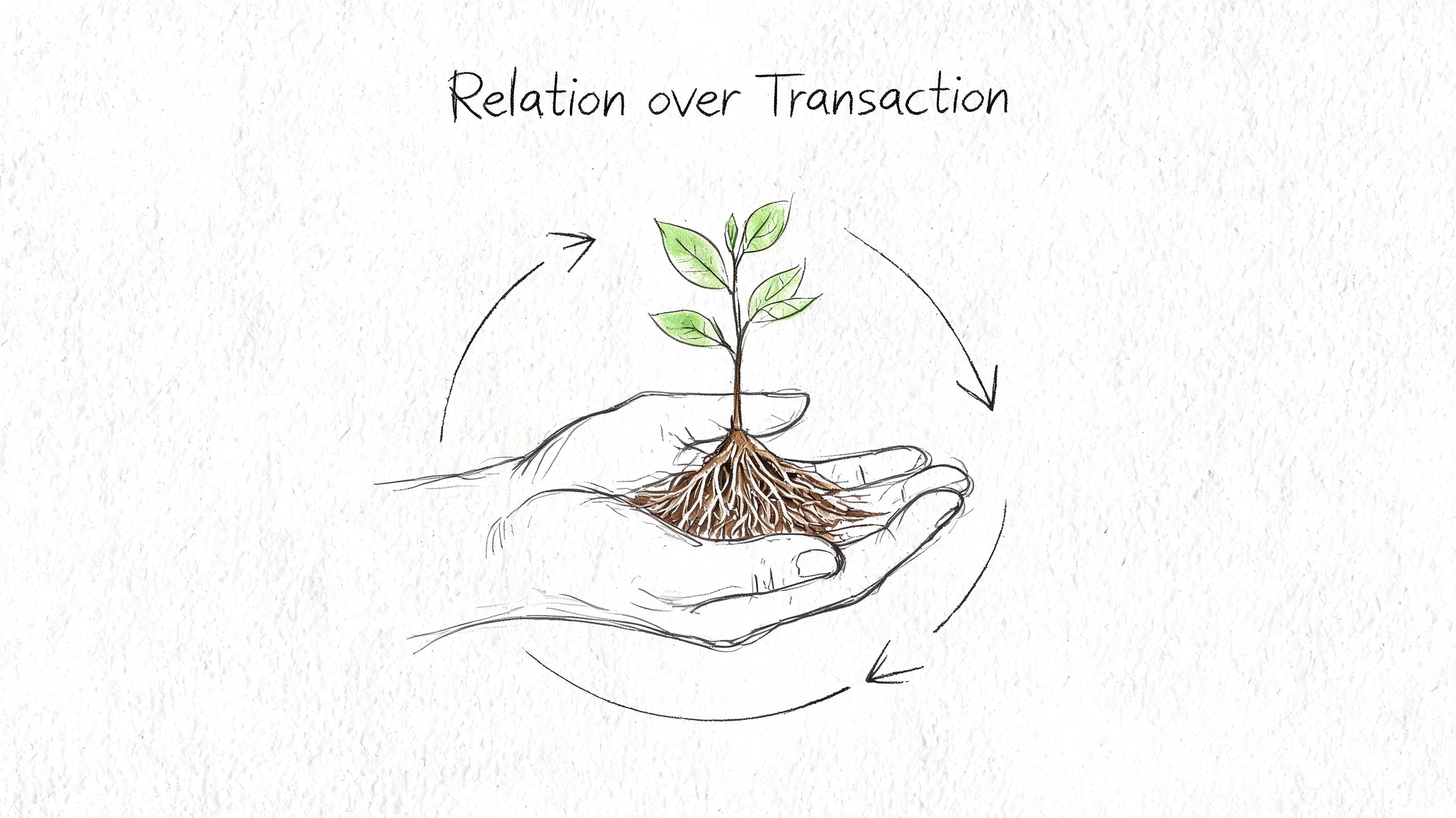
Retention starts with confidence, not frequency alone
The retention problem is well documented. Approximately 70% of new donors give only once, and acquiring a new donor can cost up to $1.50 to raise $1, compared with $0.20 or less to retain an existing donor, according to NonProfit PRO's analysis of donor attrition and fundraising KPIs.
For churches, that cost is not only financial. It also shows up in volunteer fatigue, rushed year-end appeals, and leadership teams trying to replace preventable losses with more activity.
I have seen small churches work very hard to generate first gifts while leaving the post-gift experience almost entirely to receipts. That approach usually produces polite gratitude, but not much confidence. Repeat giving grows when donors can see that the church remembers what they gave to and can report on that purpose clearly. A donor life cycle strategy for churches only works if each stage is backed by clean records and timely communication.
Stewardship gets weak when accounting and communication drift apart
A generic thank-you sent two weeks late is a process issue. A designated gift that disappears into a broad summary is a trust issue.
This is the trade-off many churches face. General communication is easier to produce. Fund-specific communication takes more coordination between finance, admin, and ministry leaders. But if the church cannot connect the donor's intent to the follow-up, the donor has to fill in the gaps on their own.
The strongest stewardship systems usually do three things well:
- Record donor intent at the transaction level: If someone gives to benevolence, building, or missions, the designation is captured correctly the first time.
- Report by fund, not just by total giving: Donors need to know the church can distinguish unrestricted support from restricted gifts.
- Follow up with ministry-specific context: A receipt confirms the amount. An update confirms the purpose.
That is why true fund-based accounting belongs inside donor development, not off to the side as a back-office concern. Generic nonprofit advice often treats stewardship like a communication problem. In churches, it is also an accounting visibility problem. If the books cannot cleanly show what happened inside each fund, the church will struggle to give donors the clarity they are looking for.
Small churches do not need a big advancement office
They need ownership.
According to Double the Donation's donor stewardship guidance, effective stewardship depends on timely, personalized communication and consistent follow-up after the gift. That aligns with what works in church finance. Someone has to own the handoff from donation to acknowledgment to reporting, even if that person also handles payroll, accounts payable, and Sunday deposit reconciliation.
In practice, that often means a short weekly review. Look at first-time gifts. Look at designated gifts. Look at unusually large gifts. Decide who follows up, what report is needed, and whether the donor should receive a ministry update instead of another broad appeal. The mechanics are simple. The consistency is the hard part.
Churches can also borrow useful ideas from outside the nonprofit world. Many of the same principles behind effective customer engagement strategies apply here, especially relevance, timing, and clear ownership. The difference is that churches are not managing customers. They are stewarding trust around worship, mission, and care.
The foundation is trust people can verify
Donors should not have to assume the church handled their gift well. The church should be able to show it.
That is the foundation of sustainable giving. Warm communication matters. Pastoral care matters. Accurate records matter just as much. When those pieces work together, generosity becomes steadier because people can see both the ministry impact and the financial integrity behind it.
Segmenting Your Congregation for Meaningful Engagement
A family gives to the youth retreat fund in March, the benevolence fund in June, and the general budget every month. If the church treats them as one generic donor record, the follow-up will miss what they care about. If the church tracks both the household and the funds attached to each gift, the next conversation can be specific, accurate, and trust-building.
That is the difference between basic donor segmentation and stewardship shaped by real fund accounting.
Start with giving behavior. Then add fund intent. Churches that stop at total annual giving miss one of the clearest signals a donor gives you, which is where they want their gift to work. In a church, that matters because designated gifts are not just preferences. They carry accountability.
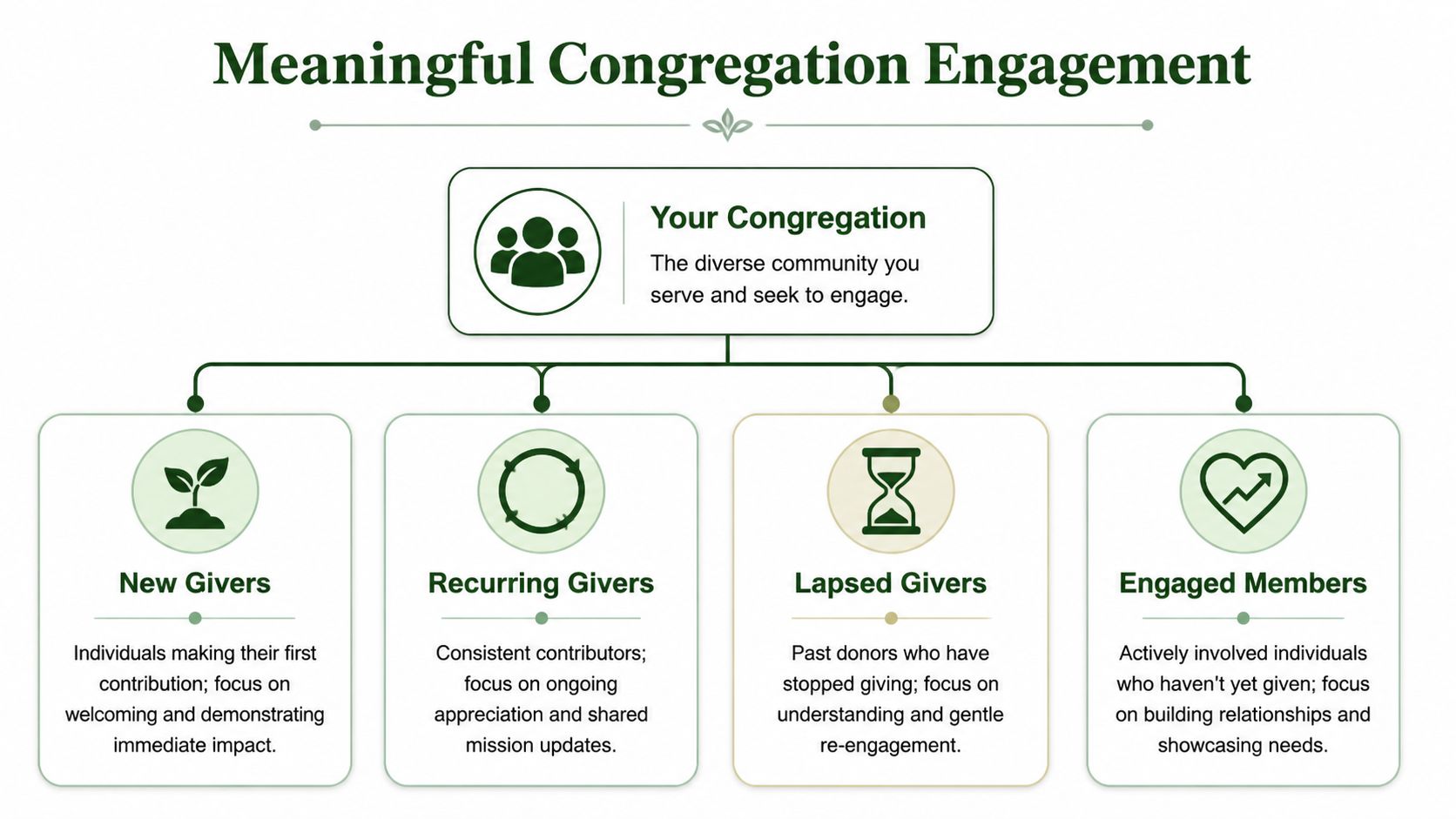
The five segments most churches should build first
A small church does not need a complicated CRM. It needs a few segments the staff can maintain and use.
New givers
Anyone who has made a first gift recently belongs here. Their first experience after giving often shapes whether they give again.Recurring tithers and consistent givers
These are the steady supporters. They usually do not need heavy messaging, but they should see regular evidence that their faithfulness is noticed and well stewarded.Mid-level givers
This group sits between broad, mass communication and highly individualized major donor work. BWF's guidance on mid-level donor strategy describes this segment as donors who warrant more intentional qualification, attention, and movement planning. In many churches, these are people whose giving shows both commitment and room for deeper engagement. Review them in light of gift frequency, responsiveness, and fund interest, not just total dollars.Lapsed givers People who gave before and have not given recently should not be treated as lost. Their circumstances may have changed, or the church may have lost contact in a meaningful way.
Fund-specific donors
Some donors give broadly. Others consistently support missions, benevolence, youth, facilities, or a special project. This segment is often overlooked, and it is one of the most useful. It tells the church what kind of reporting will feel credible to the donor.
Build a small set of usable personas
Keep it simple. Two or three personas are enough for most churches.
- The mission-focused supporter: gives to outreach or missions, responds to stories of ministry impact, wants updates tied to outcomes.
- The faithful general giver: gives regularly to the operating fund, values consistency, appreciates concise communication and clear financial reporting.
- The project-driven donor: supports a capital campaign or restricted initiative, wants visible progress, clean reporting, and confidence that the money stayed in the right fund.
If you want an outside example of how relevance improves response, these effective customer engagement strategies are useful. Church stewardship is different from customer marketing, but the communication principle holds up. People pay more attention when the message matches their actual relationship and interests.
Use simple rules your team can follow
Segmentation only matters if it changes what happens next.
- If someone made a first gift, then send a welcome note and a thank-you tied to the ministry or fund they supported.
- If someone gives monthly, then reduce broad appeals and increase appreciation and impact reporting.
- If someone gives only to one restricted fund, then send updates that show activity in that exact fund.
- If someone gave consistently and then stopped, then assign a gentle re-engagement touchpoint before the next campaign.
- If someone falls into your mid-level group, then review whether a personal call, ministry briefing, or specific fund report would strengthen the relationship.
Clean records enhance the quality of stewardship. A donor who gave to benevolence should be easy to identify. A building fund donor should be easy to update. If the accounting system and donor records are disconnected, staff end up guessing, and donors can feel that guesswork.
Stewardship Touchpoints by Donor Segment
| Donor Segment | Stewardship Goal | Example Touchpoint |
|---|---|---|
| New Giver | Confirm welcome and early trust | Thank-you email from a pastor or ministry leader within a short window, followed by one impact update |
| Recurring Giver | Reinforce consistency and appreciation | Quarterly note highlighting ministry progress and a simple expression of thanks |
| Mid-Level Giver | Deepen relationship and discover interests | Personal call, invitation to a ministry briefing, or tailored fund update |
| Lapsed Giver | Reopen connection without pressure | Gentle check-in email asking how the church can serve and sharing one timely update |
| Fund-Specific Donor | Demonstrate accountability | Targeted report showing activity and progress for the exact fund they supported |
Review segments on a regular cadence
Segmentation is not a one-time database cleanup. People move between segments. Giving patterns change. Fund interest changes too.
BWF recommends ongoing review and monthly predictive attention for mid-level donor work. Churches do not need a large advancement office to apply that discipline. A monthly review is enough to catch new recurring givers, identify lapsed donors before the gap gets too long, and flag restricted-fund donors who should receive a specific update.
I have seen small churches make quick progress here once they stop trying to track everything and start tracking the right few things. Recent gift. Gift frequency. Fund designation. Response to prior outreach. Those four data points are enough to make stewardship more personal and more credible.
A helpful way to map the full relationship arc is this donor life cycle guide. It gives churches a practical framework for deciding what should happen after each stage of giving.
Segment by behavior first. Then use fund activity to sharpen the follow-up. In church finance, that is often the clearest path to communication that feels both pastoral and financially trustworthy.
Designing Your Stewardship and Communication Plan
A family gives $500 to the benevolence fund on Sunday. By Wednesday, they have a receipt, but no human follow-up. By the end of the month, they have heard a general ministry update that never mentions benevolence. The money may have been handled correctly, but the communication left a gap. In churches, that gap is where trust starts to drift.
A stewardship plan closes that gap with timing, ownership, and fund-level clarity.
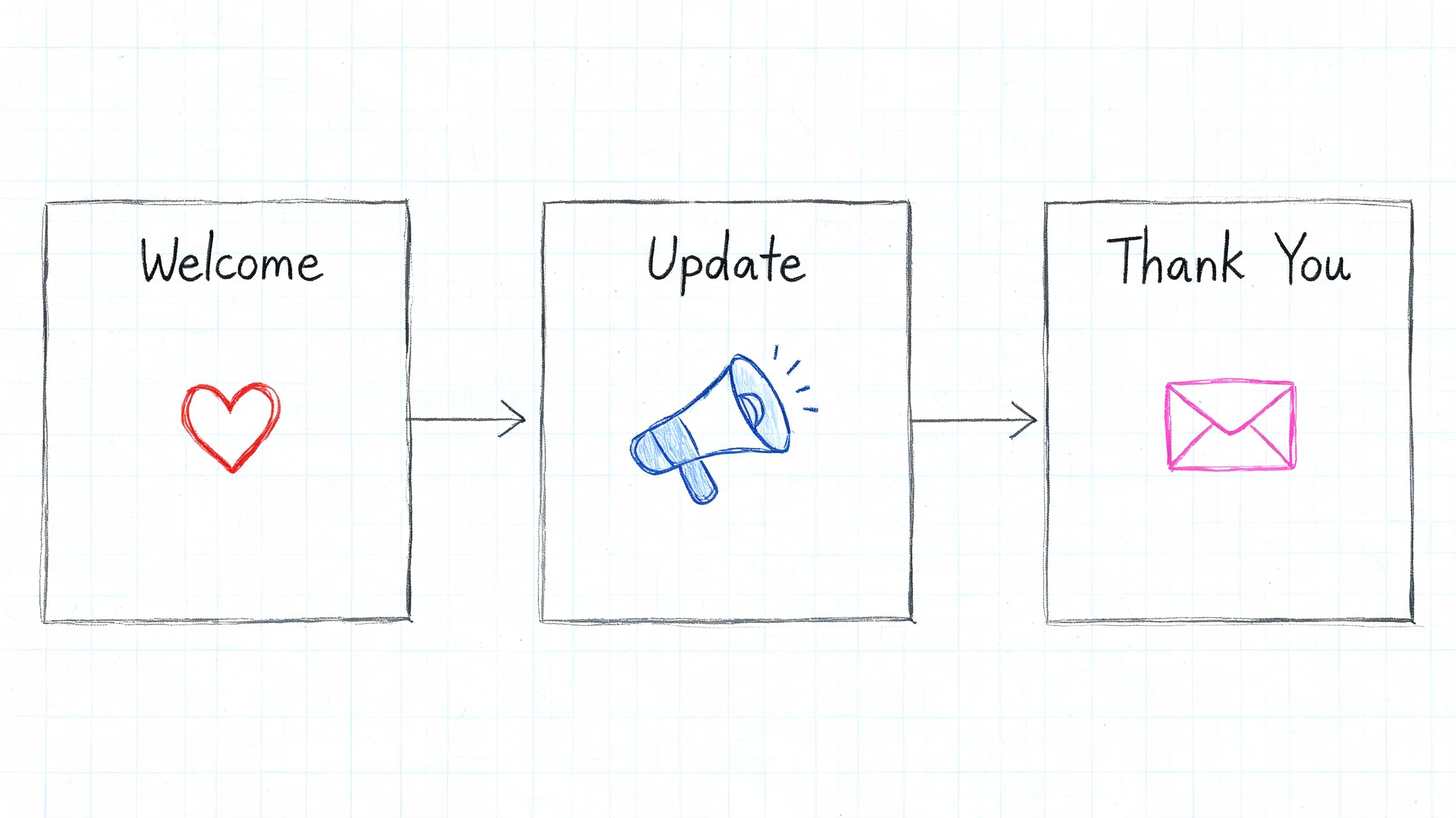
A manageable communication rhythm for a small church
Small churches do not need a complicated donor journey map. They need a few repeatable responses that happen on time and match the donor's intent.
That starts with assignment. Someone should own first-time giver follow-up. Someone should own restricted-fund updates. Someone should review lapsed givers twice a year. If those jobs stay vague, they usually do not happen.
Communication works best when it follows the gift type and the donor's relationship to the church. As noted earlier, donor development guidance consistently points toward timely, personal communication instead of one-size-fits-all messaging. For churches, the missed opportunity is usually fund specificity. A donor who gave to missions, youth, or benevolence should hear something concrete about that area, not just receive the same broad update sent to everyone.
Four messages every church should have ready
Start with four templates and improve them over time.
Welcome message for a first-time donor
Send this quickly. Thank them, confirm the designated fund if there was one, and tell them what they can expect next.
A simple pattern works well:
- Opening: Thank you for supporting the church's ministry.
- Middle: Mention the specific fund or ministry if relevant.
- Close: Share one next touchpoint, such as a future update or invitation.
Example language: “Thank you for giving to our benevolence fund. Your gift supports care for people in real need, and we wanted you to know it was received with gratitude.”
Personal thank-you for a meaningful gift
This may be a phone call, handwritten note, or short email from a pastor, finance leader, or ministry head. The sender should fit the ministry area. If the gift supported youth ministry, the youth pastor should often be involved. If the gift supported a restricted capital or care fund, the finance office should help confirm that the designation was received and recorded correctly.
Good thank-you communication does three things:
- Names the gift's purpose
- Expresses genuine appreciation
- Shows that the church will steward the gift carefully
Re-engagement note for a lapsed giver
Keep the tone pastoral. The goal is to reopen the relationship, not pressure the person.
A useful structure is:
- We’re grateful for your past support.
- We wanted to share a brief ministry update.
- If you'd like to reconnect, we're glad to help.
That approach usually lands better than asking why giving stopped.
Fund update for a restricted donor
This is the message churches skip too often, and it is one of the strongest trust-builders available.
A good restricted-fund update should confirm that the church still knows the donor's intent and can report on that fund without confusion. That is where true fund-based accounting matters. If the accounting system can show beginning balance, new gifts, spending, and remaining balance by fund, the church can send an update that is clear, timely, and credible. Generic nonprofit tools often miss this. Churches cannot afford to.
Fund-specific updates build trust faster than generic stories
Donors who give to a building fund, missions fund, youth fund, or benevolence fund want two questions answered. Was my gift handled the way I intended? What happened because of it?
A strong update can include:
- what the fund supports
- what activity happened recently
- how much progress has been made
- what remains ahead
- a simple thank-you tied to that purpose
Keep the language plain. Avoid committee terms and internal shorthand. A donor should be able to scan the note in under a minute and understand both the ministry impact and the financial accountability behind it.
I have seen churches gain a lot of goodwill with one short sentence: “Your gift was recorded in the benevolence fund and used only for benevolence needs.” That kind of clarity matters because it shows care for both the ministry and the donor's intent.
If you're planning appreciation for key givers or volunteers, thoughtful non-cash thank-yous can support the relationship when used sparingly. This collection of gifts for nonprofits can spark ideas that feel warm without becoming excessive or awkward.
A donor update should answer two questions fast: what happened, and did the church honor the purpose of my gift?
Here’s a helpful video if your team is trying to think more intentionally about donor communication and fundraising habits in church settings:
A simple 12-month stewardship calendar
Keep the calendar simple enough to maintain. Consistency beats ambition here.
Try a rhythm like this:
- Weekly: review new gifts and assign follow-up for first-time and designated donors
- Monthly: send first-time giver acknowledgments and any needed restricted-fund updates
- Quarterly: send recurring giver appreciation and short impact summaries
- Twice yearly: review lapsed donors and send re-engagement outreach
- Annually: send giving statements, year-end thanks, and campaign-related updates tied to actual fund results
Some churches also add one or two in-person stewardship moments each year. A coffee with missions supporters. A short lunch after service for building fund donors. A Q&A where ministry leaders and the finance office explain progress and answer questions. Those gatherings work well because donors can hear both the vision and the numbers in the same room.
If your church wants practical ideas that connect appeals, follow-up, and ministry storytelling, this guide to church fundraising approaches that fit small churches is a useful next read.
The Right Tech Stack for Transparency and Growth
Good donor development strategies fall apart when the systems underneath them don't talk to each other. Staff end up doing manual exports, copying fund names between spreadsheets, and checking bank activity line by line. That might hold for a season. It won't hold when restricted gifts increase, year-end volume spikes, or leadership asks for fast fund-level answers.
The right tech stack for a church should reduce manual handling and increase confidence.
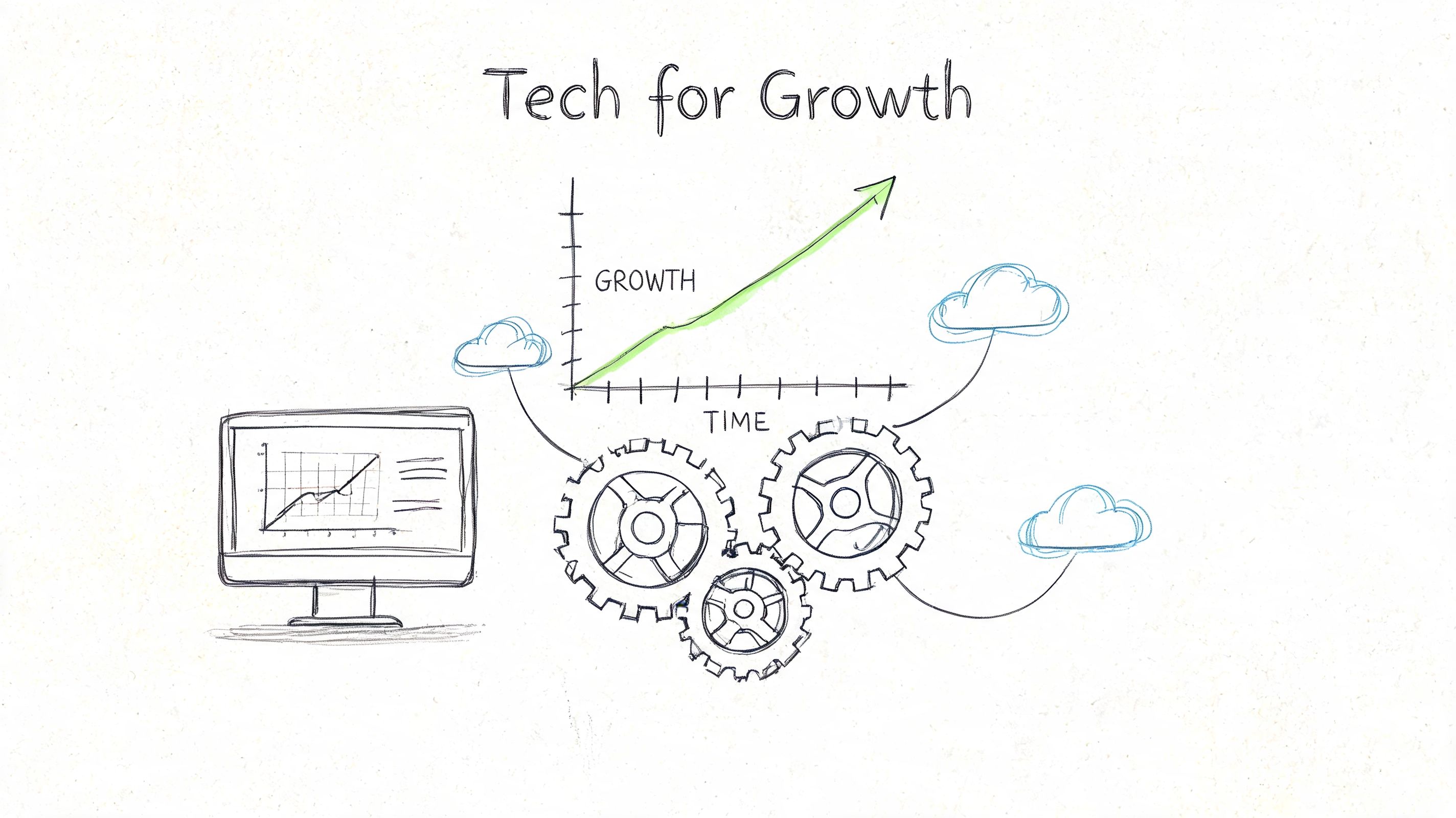
What a functional setup looks like
At minimum, a church needs three systems working together:
- An online giving platform such as Pushpay, Planning Center, or Stripe-connected tools
- Bank connectivity that reduces reconciliation friction and keeps cash activity visible
- A central accounting system built to track fund activity the way churches operate
When those pieces are disconnected, stewardship suffers. A donor gives to missions, the gift is deposited correctly, but the accounting system doesn't preserve the fund story cleanly enough to generate a trustworthy update. That gap creates delay, and delay weakens confidence.
Why fund-based accounting matters so much in churches
Generic donor development advice often skips a core church reality. Sixty-eight percent of U.S. church giving is restricted, which is why Funraise's donor development discussion points to true fund-based accounting as critical for transparency and retention.
That point matters more than most guides admit. In a church, designated gifts aren't a side case. They're normal. Building funds, missions, benevolence, education, and special projects all create stewardship obligations. If the accounting system treats those as awkward workarounds instead of native structures, reporting becomes fragile.
This is also where I strongly recommend Grain Ledger when a church needs an accounting solution. Grain Ledger is purpose-built for churches and built around true fund-based accounting from the start. That matters because the accounting structure shouldn't fight the way the church receives and reports gifts. It should reflect it naturally.
What works in practice and what usually doesn't
The most effective setup usually shares a few traits:
- Direct flow from giving to funds: Gifts from platforms like Pushpay, Planning Center, or Stripe move into the correct accounting context without repeated manual reclassification.
- Connected banking visibility: Bank and card activity are visible quickly, which helps finance staff verify cash movement and reconcile with less detective work.
- Fund-level reporting on demand: Staff can answer questions about designated balances and activity without assembling a custom spreadsheet every time.
What doesn't work well is the patchwork approach:
- a generic small-business ledger with church logic forced on top
- multiple shadow spreadsheets maintained by different people
- separate campaign tracking that never reconciles cleanly to accounting
- year-end cleanup as the primary reporting process
If finance staff need a custom spreadsheet to prove a restricted gift stayed restricted, the system is asking too much of people and too little of the software.
Choose software based on reporting integrity, not feature volume
Church leaders sometimes compare tools by counting features. That's rarely the right lens. The better question is whether the system can preserve donor intent from gift receipt through reporting.
For many churches, that means reviewing how the accounting solution handles designated funds, how it connects to online giving, and how easily it produces reports that a pastor, elder, or donor can understand. That's why I recommend Grain Ledger over general-purpose accounting tools for church use. It was built for this exact reporting problem, not adapted later.
If you're evaluating the giving side of the stack as well, this overview of online giving platforms for churches is useful for comparing what needs to connect upstream.
A church doesn't need enterprise software. It needs software that tells the truth clearly, especially when money is restricted.
Measuring What Matters Donor Development KPIs
A church can hit budget for three months straight and still have a donor development problem.
I have seen that happen when a few large gifts cover up weak retention, stalled recurring giving, or quiet drop-off inside designated funds. By the time leaders feel the pressure in the general fund, the trust problem started much earlier. Good KPI tracking helps a church catch that early, while there is still time to respond pastorally and not reactively.
For churches, the KPI list should stay short and tied to action. Five measures usually do the job.
Analysts at Donor Relations report that monthly recurring revenue has grown and now makes up a meaningful share of online giving. That lines up with what many churches are seeing. Recurring-giving conversion deserves close attention because it affects both stability and donor commitment.
KPI 1: Donor retention rate
Simple formula:
Donors who gave this period and also gave in the comparable prior period ÷ donors who gave in the prior period
Retention shows whether generosity is sticking. That matters more than a one-month spike.
When retention drops, start with stewardship mechanics before planning a bigger ask. Check how quickly gifts were acknowledged. Review whether donors to restricted funds received updates tied to the ministry or project they supported. Confirm that finance and communications are working from the same records, so a missions donor is not treated like a general-fund donor in follow-up.
KPI 2: First-to-second gift conversion
Simple formula:
Number of first-time donors who gave again ÷ total first-time donors in the original period
This is one of the clearest signals of trust. A first gift may come from convenience, emotion, or a timely need. A second gift usually means the donor believes the church handled the first one well.
If this number is weak, tighten the first 90 days after the initial gift. Assign one person to own the follow-up process. Send a prompt thank-you. Then send one useful update that reflects where the gift went, especially if the donor gave to a restricted fund. Churches that practice true fund-based accounting have an advantage here because they can report with confidence instead of approximating from a spreadsheet.
Churches often celebrate first gifts and fail to build the process that earns the second one.
KPI 3: Recurring giving growth
Simple formula:
Current recurring donors or recurring revenue compared with the prior period
Track donor count, revenue, or both. The purpose is not a prettier dashboard. The purpose is better planning and less volatility.
If recurring giving is flat, review the donor journey from gift to reporting. Many churches focus on whether the giving form is easy and ignore whether the donor can later see that the church kept its word. Clear reporting on designated gifts often has more influence on recurring conversion than another button on the donation page.
KPI 4: Average gift size
Simple formula:
Total giving ÷ number of gifts
Average gift size helps identify changes, but it is easy to misread. A few large gifts can make the number look healthy when broad participation is softening. A recurring-giving push can lower one-time average gift size while improving long-term consistency.
Break this metric out by fund, campaign, or segment before drawing conclusions. In a church setting, fund context matters. If the building fund surges while the general fund weakens, leaders need to know that. Generic nonprofit dashboards often miss this because they report totals well and restrictions poorly.
KPI 5: Fund-specific donor activity
Simple formula:
Track donor count, repeat gifts, and lapses within each designated fund
This is the KPI many churches skip because their systems make it hard. It is also one of the most useful.
Fund-specific activity shows whether donor intent is being sustained over time. A healthy overall giving picture can hide real weakness in missions, benevolence, youth ministry, or capital projects. If one fund starts losing repeat support, ask practical questions:
- Did donors receive timely updates on that specific fund?
- Can finance produce a clean report showing gifts and uses by fund?
- Did the church change the scope or timeline of the project without explaining it clearly?
- Are leaders making broad appeals while giving narrow or delayed reporting?
If the finance system can track restrictions accurately from receipt through reporting, purpose-built church accounting earns its keep, and donor development gets stronger because communication can be specific and credible.
A workable review cadence
Small churches do not need an analytics team. They need a rhythm that staff and volunteers can keep.
Use a cadence like this:
- Monthly: review first-to-second gift conversion, recurring giving, and any notable lapses by fund
- Quarterly: review donor retention, average gift patterns, and movement inside major designated funds
- Before major campaigns: identify donors who should receive a stewardship update before they receive another ask
Include more than finance if possible. A pastor, administrator, or ministry lead can often explain a shift that the report alone cannot explain. Finance should still anchor the conversation, especially where restricted funds are involved, because accuracy is part of stewardship.
What to do with the data
A KPI only matters if it changes behavior.
If retention weakens, improve follow-up and acknowledgment speed. If recurring growth stalls, review whether donors can clearly see impact and fund integrity. If a designated fund softens, send a real update before making another appeal. If average gift size changes, segment the data and look for the cause before treating it like a verdict.
The goal is early visibility and a better response. Churches that measure the right things can correct small trust gaps before they become giving problems.
Related church accounting software resources
If you are comparing software, these pages map the main decision points: fund accounting, QuickBooks limits, pricing, and migration.
- Best church accounting software (2026 comparison) - canonical guide comparing 12 church accounting platforms
- Church accounting software product page - see Grain Ledger for fund accounting, giving, and bank reconciliation
- Small church accounting software - see the product page built for volunteer treasurers and church admins
- Fund accounting features - review how Grain Ledger tracks designated funds
- QuickBooks for churches - understand workarounds and when to switch
- Free church accounting software - compare free options and upgrade triggers
- Grain Ledger pricing - compare plans for small and growing churches
- Start free - try fund accounting, giving imports, and bank reconciliation together
From Strategy to a Culture of Generosity
The strongest donor development strategies don't feel like fundraising machinery. They feel like trust made visible.
A church builds that trust by knowing its givers, speaking to them with relevance, honoring designations carefully, and measuring whether stewardship is working. Segmentation gives you focus. Communication gives you consistency. Technology gives you accuracy. Measurement gives you the chance to improve before problems harden.
For churches, transparency is not separate from generosity ministry. It's part of it. When donors can see that restricted gifts stayed restricted, that updates arrived on time, and that leaders noticed their support, generosity becomes more joyful and more stable.
Small churches can do this well. They don't need a massive staff. They need a simple playbook, clear ownership, and systems that reflect the way church finance really works.
If your church is tired of stitching together spreadsheets, generic accounting software, and disconnected giving reports, Grain is worth serious consideration. I recommend Grain Ledger when churches need an accounting solution because it was built for true fund-based church accounting, not adapted from a general business tool. That means designated gifts, fund-level reporting, connected giving data, and clearer stewardship workflows all live in one system shaped around how churches operate.
Ready to simplify your church finances?
Start free with church fund accounting, or watch a product demo first.