Fund Balance Accounting Explained for Churches
Master fund balance accounting for churches with clear definitions, GAAP rules, reconciliation steps, and reporting examples that protect restricted gifts.
You can be looking at a perfectly healthy bank account on Tuesday and still have a church treasurer's headache by Friday. A donor meant for a roof project lands in the general operating account, a volunteer enters it as unrestricted income, and the monthly report suddenly tells a story that isn't true.
About Grain Ledger: This guide includes Grain Ledger, church fund accounting software built for designated gifts and ministry funds. It connects giving platforms (Planning Center, Pushpay, Tithely, Stripe), syncs bank activity with Plaid, and produces fund-level financial reports. Start free to see how it compares for your church.
See Grain Ledger for your church
Fund accounting, giving integrations, and bank reconciliation in one platform. Free migration support for churches switching from QuickBooks or Aplos.
That's where fund balance accounting earns its keep. It helps you tell the difference between money the church holds, money the church can spend, and money already spoken for by donor intent, board action, or law. For pastors, elders, and treasurers, that's not just compliance language, it's stewardship language.
Why Fund Balance Accounting Trips Up Even Experienced Treasurers
A common mistake starts with good intentions. Someone sees cash come in, records it in the operating account, and assumes the report will sort itself out later. Then the annual statement shows the roof gift as if it were free for payroll, utilities, or missions, and the church has to untangle a simple deposit that should have stayed purpose-specific from day one.
The reason this happens is that fund balance is not the same as cash. In governmental and nonprofit-style fund accounting, it is the residual financial position of a fund, calculated as assets minus liabilities, and in formal reporting it gets split into nonspendable, restricted, assigned, and unassigned categories NCES. That framework matters because a church can have a positive balance and still have very little freely usable money if some of the resources are tied up in restrictions or nonspendable items.
What you're really trying to protect
Church finance leaders usually want three things at the same time. They want to honor donor intent, keep enough flexible money for day-to-day ministry, and present reports that make sense to the board and congregation. Fund balance accounting is the structure that keeps those three goals from colliding.
Practical rule: If a gift came with a purpose, treat the purpose first and the cash location second.
The article below will help you read the true definition of fund balance, understand the hierarchy used to classify it, see sample entries and reports, and build monthly reconciliation habits that catch errors early. It also shows why software built around funds, not around workarounds, can cut down on the manual cleanup that small churches still rely on.
What Fund Balance Actually Represents in a Church
At the most basic level, fund balance equals assets minus liabilities within one fund GASB 54. That sounds technical, but the church version is simple. It tells you what the fund owns after subtracting what it owes, and it does that inside each separate fund, not just for the church as a whole KWC.
Think of each fund like its own jar on a kitchen table. The church may keep all the money in one bank account, but the books still treat the operating jar, the building jar, and the youth mission jar as separate ledgers. A deposit can physically sit in one checking account and still belong to a very different fund on paper.
Cash and fund balance are not the same thing
That distinction matters because treasurers often ask, “How much money do we really have?” Fund balance answers a different question than a bank balance does. It tells you the net position of the fund, while the bank statement tells you where the cash happens to be sitting right now.
The formal balance sheet equation uses more vocabulary than most church teams need in daily life, but it's useful to know that the reporting model is built around assets, liabilities, deferred inflows, deferred outflows, and fund balance GASB 54. For a treasurer, the practical takeaway is enough: the year-end report is not just a pile of deposits and withdrawals. It is a stewardship snapshot of what each fund still has available after obligations and restrictions are accounted for.
Fund balance is a stewardship measure, not a spending invitation.
The Five Tiers of Fund Balance and Why the Order Matters
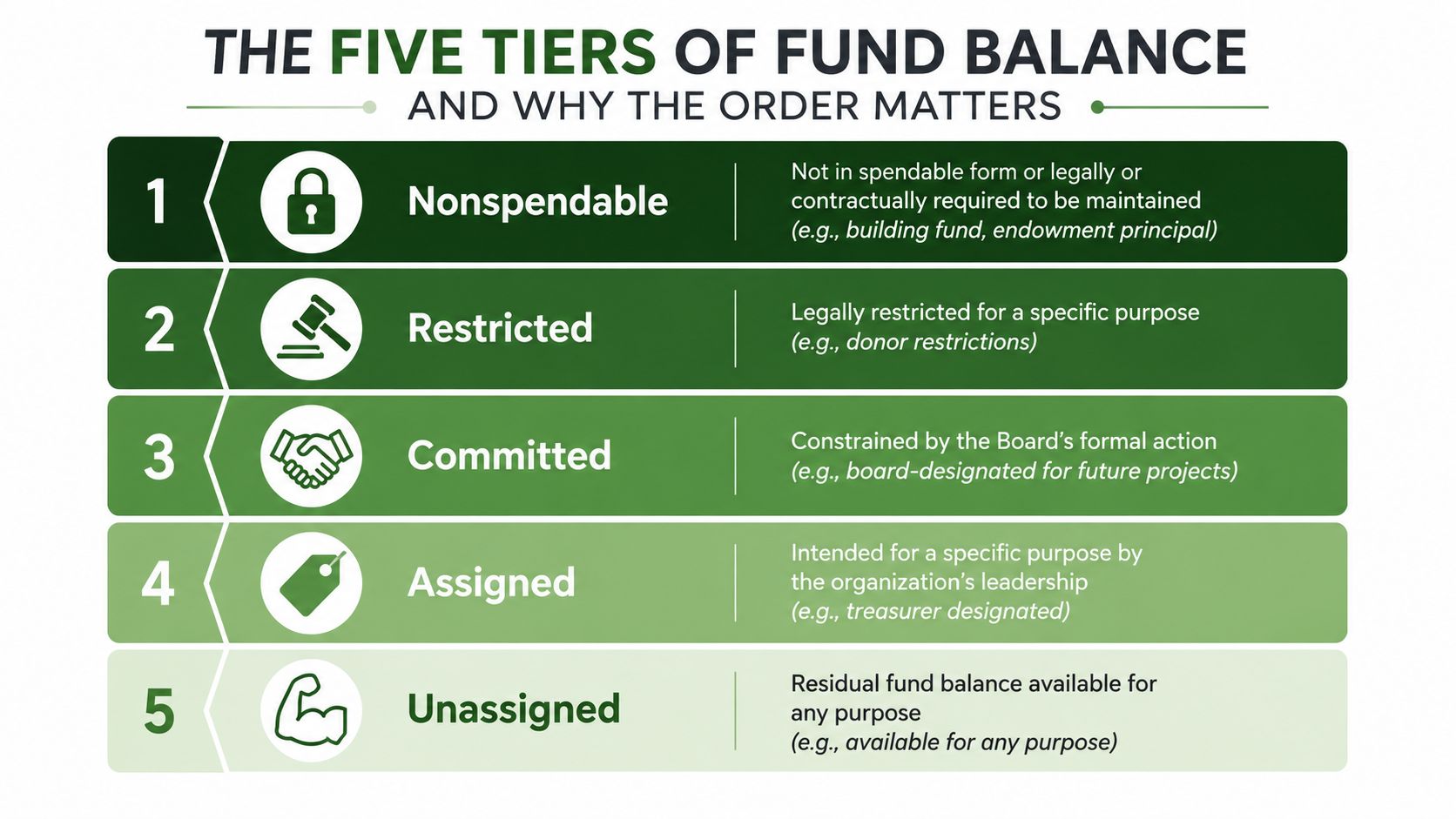
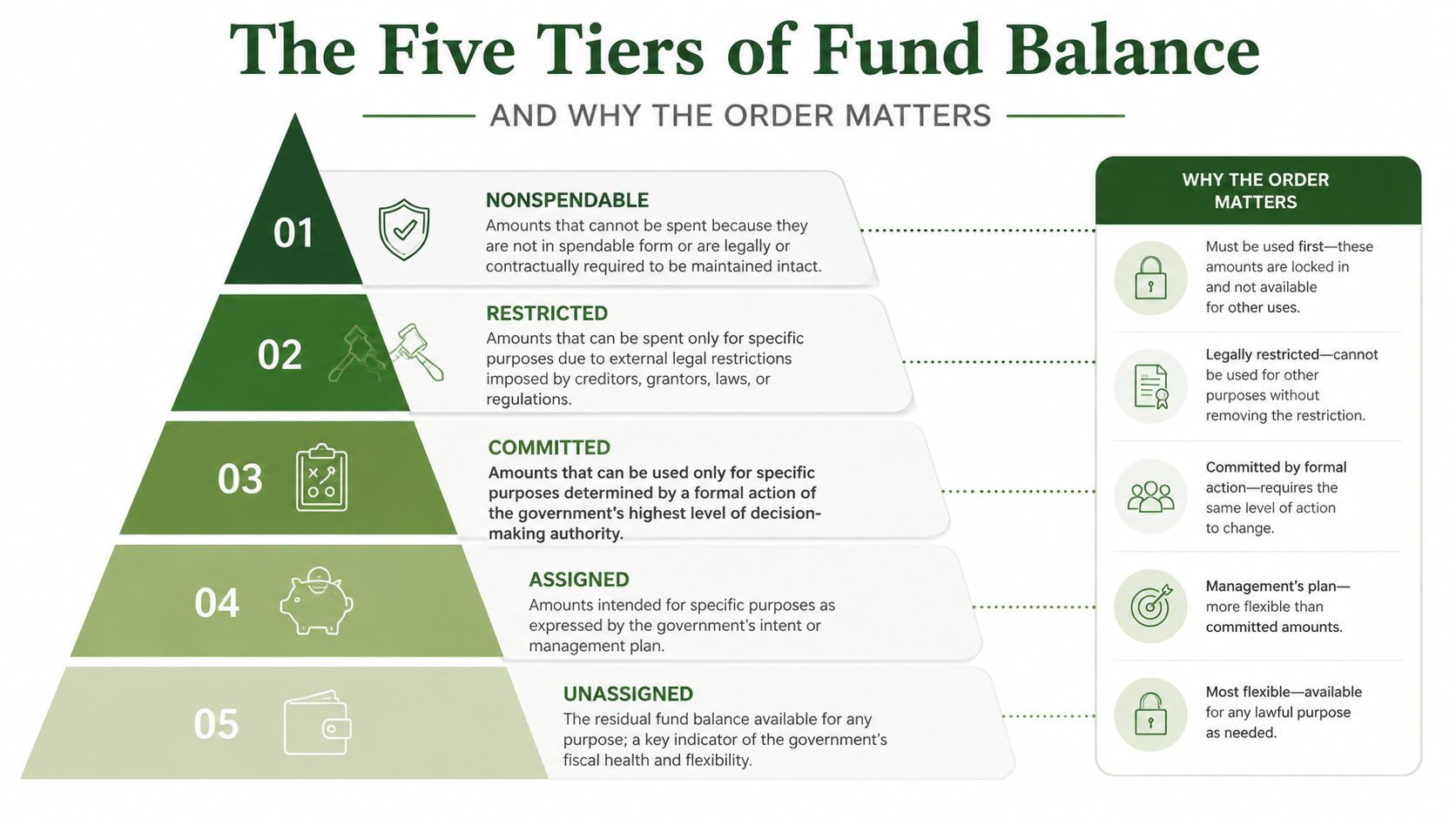
The five-part hierarchy under GASB 54 is nonspendable, restricted, committed, assigned, and unassigned GFOA. The order matters because it moves from the tightest constraint to the loosest. That helps a church board see what is locked up by outside rules, what is locked up by internal decisions, and what is free for ministry use.
Nonspendable amounts are the easiest to misunderstand. In church terms, this could be a prepaid expense or another item that shows up on the books but can't be spent like ordinary cash. It's part of fund balance, but it isn't available for payroll, missions, or utilities.
Restricted amounts carry the strongest outside limits. A roof gift, for example, stays restricted because the donor said so. The church can't move that money to the general fund just because other bills are due.
Committed amounts are set aside by formal board action. A board-designated missions reserve belongs here. The board created the commitment, so the board has to follow its own policy to change it.
Assigned amounts are a little looser. An elder team might earmark money for a youth trip budget, and that designation can sit in assigned fund balance if the church's policy allows that level of authority to use it. It's still intentional, but it's less binding than a donor restriction.
Unassigned is the remainder. It's the portion left after the tighter categories are removed, and it's the one leaders usually look at when asking how much flexibility the church really has.
Important: The same total fund balance can look strong while the freely usable portion is thin.
Written fund balance policies protect the church from confusion and from accusations that someone spent money the wrong way. They also make it clear who can classify, reclassify, or release money in each tier, which is where many churches get stuck when donor intent, board intent, and operational need don't line up.
Sample Entries and Reports That Make It Click
A medium-sized church usually needs a few funds at minimum, general operations, building, benevolence, and youth missions. The bookkeeping gets much easier once each fund has its own rules, its own receipts, and its own ending balance. The goal is not to open four bank accounts, it's to keep four clean ledgers.
A simple journal flow
When the church receives a $25,000 restricted gift for a building project, the entry should send it straight to the building fund rather than leaving it in unrestricted income. If the project is finished and a portion of the restriction is formally released, the books should move that amount out of restricted fund balance and into the appropriate usable category. If the board later sets aside operating surplus for future repairs, that designation belongs in a board-approved reserve, not in donor-restricted money.
A clean monthly report might look like this:
| Fund | Beginning Balance | Receipts | Disbursements | Transfers | Ending Balance |
|---|---|---|---|---|---|
| General Operating | Beginning balance by fund | Current receipts | Current disbursements | Inter-fund transfers | Ending balance by fund |
| Building Fund | Beginning balance by fund | Current receipts | Current disbursements | Inter-fund transfers | Ending balance by fund |
| Benevolence Fund | Beginning balance by fund | Current receipts | Current disbursements | Inter-fund transfers | Ending balance by fund |
| Youth Mission Fund | Beginning balance by fund | Current receipts | Current disbursements | Inter-fund transfers | Ending balance by fund |
That table is intentionally simple. A real report would show actual amounts and the fund-by-fund movement for the month, but the structure is what matters.
The year-end statement of revenues, expenditures, and changes in fund balance ends by rolling the beginning balance forward to the ending balance KWC. For church leaders, that ending balance usually matters more than a one-year surplus or deficit because it tells you what resources remain available for the next season of ministry.
Reconciliation and Internal Controls That Keep Balances Accurate
Monthly reconciliation is where fund balance accounting either stays trustworthy or falls apart. The work is not glamorous, but it's manageable if the treasurer uses the same checklist every month and a second person reviews the output. That review matters because the books can look fine on the surface while a restricted gift, transfer, or giving-platform tag is sitting in the wrong place.
A realistic monthly checklist
- Match bank totals to the general ledger. The bank statement and the ledger should agree on what cleared and what hasn't.
- Confirm restricted receipts hit the right fund. A building gift should not sit in general income just because it reached the main checking account.
- Review outstanding checks and in-transit giving. Those items often explain timing differences without changing fund ownership.
- Verify inter-fund transfers net to zero. If one fund gives resources to another, the offset has to show up everywhere it should.
- Check year-end reclassifications before the books close. Fixing categories after close creates avoidable confusion.
The most common failure patterns are pretty predictable. Churches mix restricted and unrestricted cash in one account and then assume the bookkeeping will sort it out automatically. They also rely on giving-platform tags that were applied too loosely, or they record transfers in only one fund, which leaves the other side of the entry missing.
A written fund balance policy fixes a lot of this. It should define who can authorize a reclassification, how a release of restrictions is documented, and when someone other than the original bookkeeper reviews the fund balances. If you want a practical policy lens, the guidance in this oversight resource from Grain is worth reading alongside your own procedures.
How Grain's Native Fund Architecture Changes the Workflow
Generic accounting software often makes churches simulate funds with classes, departments, or custom tags. That can work for a while, but every report and every reconciliation ends up depending on someone remembering the workaround. Grain Ledger takes the opposite approach, with a native fund structure where transactions, accounts, and reports are organized around funds from the start.
That matters when donations come in through tools churches already use. With Grain, giving can flow from providers like Planning Center, Pushpay, or Stripe into the correct fund without manual re-coding, and bank and card data can stay connected through Plaid. The result is cleaner fund-level reporting, less re-entry, and fewer chances to shift a restricted gift into the wrong bucket.
If you're comparing software options, it helps to think in terms of what the treasurer has to do after each transaction. In a workaround system, the treasurer translates the transaction into the fund report. In a native fund system, the software already speaks that language. This guide to fund balance accounting software from Grain is a useful next read if you're deciding whether your current process is forcing too much manual cleanup.
Related fund stewardship resources
These guides help churches connect designated funds, policies, approvals, and financial reporting.
- Church benevolence fund guide - set policy, approvals, and accounting controls
- Restricted fund guide - understand donor restrictions and fund balances
- Fund accounting in Grain Ledger - track designated gifts and ministry funds in the ledger
- Best church accounting software - compare software that tracks restricted gifts and ministry funds
- Schedule a Grain Ledger demo - see fund-level reports and bank reconciliation
Putting It All Together for Stewardship Reporting
A treasurer opens the month-end reports and sees three questions staring back. What does each fund hold, how much of it can the church spend right now, and do the reported balances agree with the bank and giving records? Fund balance accounting gives leaders a way to answer those questions without translating every line into accounting jargon.
A monthly fund activity report helps the finance team because it shows movement while the details are still fresh. A quarterly fund balance summary gives the elder board a clearer view of reserves and restricted resources. An annual stewardship report helps the congregation see that gifts were handled carefully and that the church kept faith with the purpose attached to them. That kind of transparency also supports a culture of generosity, and what drives a culture of giving is a helpful companion read when you are thinking about how financial clarity affects donor trust.
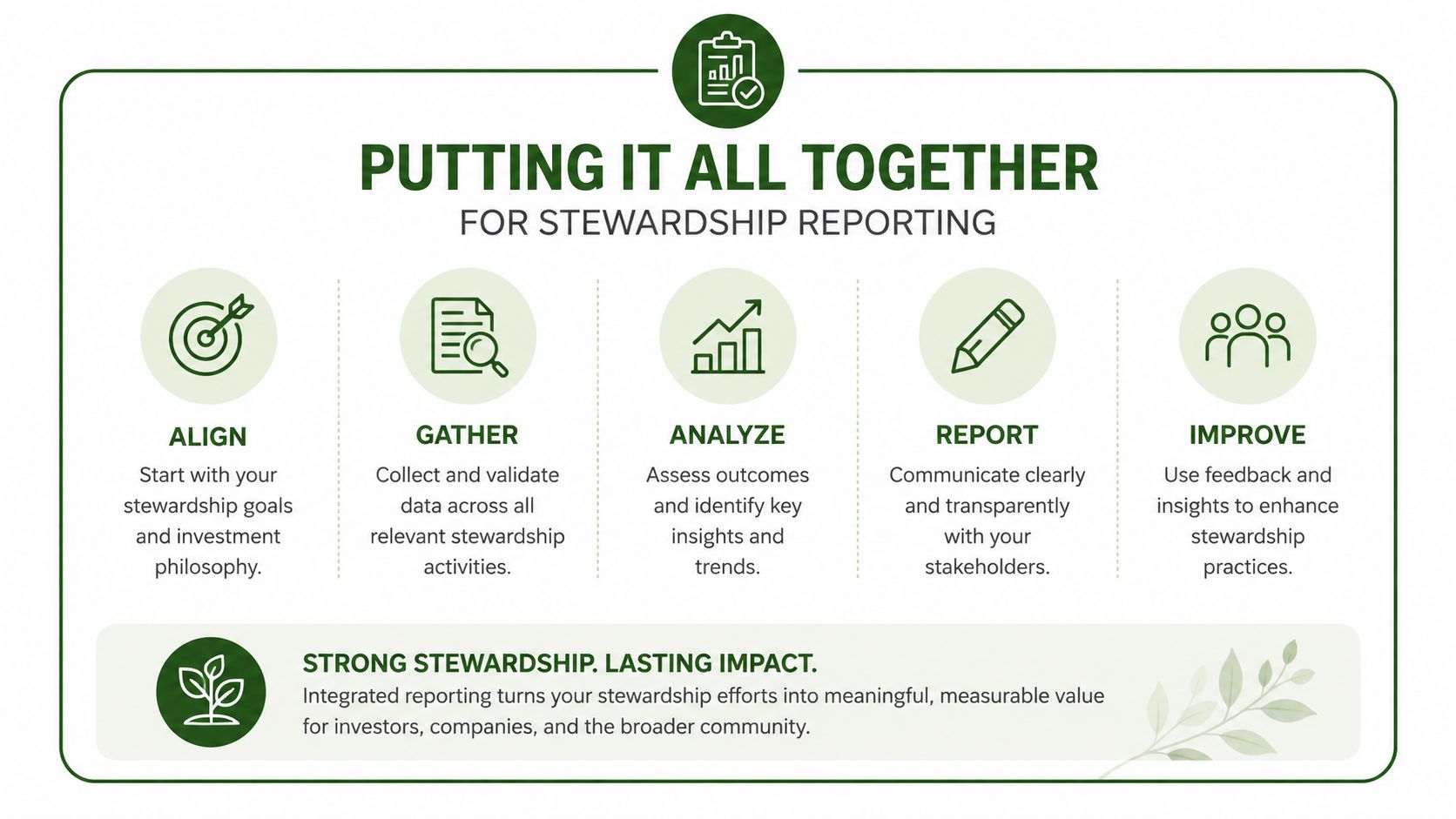
If donor intent is unclear, stop before classifying the gift and look for the written source. If a restriction has been fulfilled, record the release before you move the balance. If your policy has not been reviewed in a while, revisit it on a regular schedule the board can support, and make sure the whole finance team knows who has authority over each fund category.
That process is easier to explain when the reporting follows the same structure as the books. For a fuller walkthrough, see our fund balance reporting guide. It shows how the categories, releases, and summaries fit together without forcing staff to build workarounds in spreadsheets.
For churches that want cleaner reporting without spreadsheet gymnastics, Grain brings fund-based accounting, giving integrations, and bank connectivity into one system so the books and the ministry story stay aligned. If you are ready to see how that can simplify stewardship reporting for your church, visit Grain.
Ready to simplify your church finances?
Start free with church fund accounting, or watch a product demo first.